
How to Choose the Best WPC Decking for Your Project?

Time:2026-11-13 Author:Mason
0%

Choosing the best Wpc Decking for your project starts with how the space will actually be used. A shaded garden path has different demands from a sunny, frequently used poolside deck. Consider foot traffic, moisture, temperature changes, appearance, maintenance, and your budget together. Small details matter. Board dimensions, surface texture, and the required joist spacing can affect both installation and long-term performance.

Market interest is growing, but market size alone cannot tell you which product will suit your site. Grand View Research estimated the global wood-plastic composites market at USD 7.1 billion in 2023 and forecast growth through 2030. That figure covers multiple applications, not decking alone, and it is not evidence that every board performs equally. For a more practical reference, ASTM D7032 sets performance-rating requirements for wood-plastic composite and plastic lumber deck boards, stair treads, guards, and handrails. Check product documentation against relevant standards, and follow the manufacturer’s installation instructions. That includes leaving the specified expansion gaps and using the stated support spacing. Even a well-reviewed board may disappoint if installed in unsuitable conditions. Real use varies. This guide compares material composition, durability, slip resistance, maintenance, warranties, and cost, so you can weigh the trade-offs before choosing. A careful choice is not always the most expensive one. It is the one that fits your project and its limits.
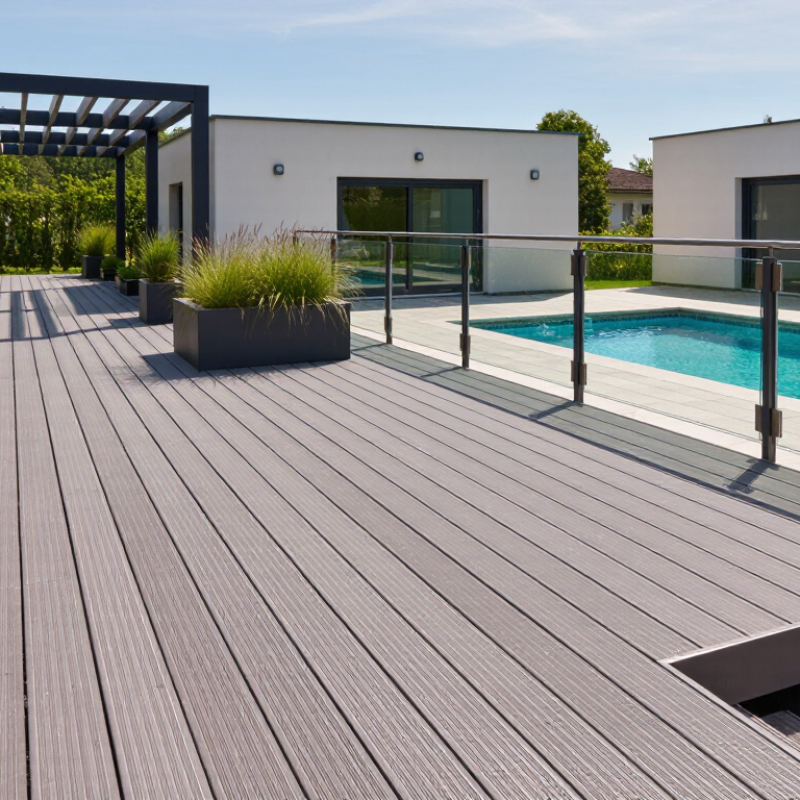
How to Choose the Best WPC Decking for Your Project?

Set Design Loads Against the IRC’s 40-psf Residential Deck Benchmark

Choose WPC decking by checking its rated span against the structure beneath it. The 2021 International Residential Code, Table R301.5, sets a 40-pound-per-square-foot live-load benchmark for residential decks. That figure describes a uniformly distributed load, not a promise that every board or joist layout will safely carry any arrangement of people and furniture. Start with the load. Check the decking’s installation guide, joist spacing, fasteners, and the framing plan together. A crowded gathering can place loads unevenly; heavy planters and hot tubs need separate, project-specific review. Local code editions and amendments may differ.

ASTM D7032 provides a recognized framework for evaluating wood-plastic composite decking and guardrail systems, including performance ratings. Look for documentation tied to that standard, then confirm that the tested span and installation conditions match your design. A sample board may feel rigid underfoot, but that quick check cannot replace structural calculations or product test data.

Not enough. I would also verify support locations and connections, where a sound-looking deck can still have weak points.

The 40-psf benchmark is a useful starting line, not a shortcut around engineering judgment.

Match Board Span and Joist Layout to ASTM D7032 and Product Span Tables

Choosing WPC decking starts with the framing plan. ASTM D7032 sets performance criteria for wood-plastic composite decking and guardrail systems, but it does not establish one joist spacing for every board. The permitted span depends on the product profile and installation conditions. Check the current product span table before building the frame, not after boards arrive.

Measure joist spacing from center to center, then match it to the table for the board’s intended use. A span listed for straight installation may not apply to diagonal layouts, stairs, or other conditions. Read any notes about load and use category. A span table is easy to mistake for a universal rule. It isn’t. Keep the table and installation guide with the project records.

On site, check that joists are level, straight, and securely fastened; a slight crown can leave a visible dip between boards. Follow the specified fastener, end-gap, and butt-joint support details. Composite boards can expand and contract with temperature. If a table is unclear, request written clarification rather than guessing. Closer spacing may add framing cost, but exceeding a listed span can lead to movement, noise, or early replacement.

Compare Core Types Using ASTM D7032 Weathering, Creep, and Water Tests

How to Choose the Best WPC Decking for Your Project?

Compare more than appearance. ASTM D7032 provides performance criteria for wood-plastic composite decking, but a test result only helps when you know the product configuration and test conditions. Ask for reports covering the exact board profile you plan to install. A solid core and a hollow core may behave differently under sustained loads, while caps and surface layers can affect weathering and water exposure.

Small details matter.

For weathering, check the reported change in color, surface condition, and strength after exposure. For creep, look for results under sustained loading; a board that bends slowly may feel different across a long span. Water testing can reveal absorption, swelling, or dimensional change, especially around cut ends.

Ask which ASTM methods and acceptance criteria were used alongside D7032, and whether the samples had sealed or exposed edges. Compare results under similar conditions, not just headline numbers. I would also inspect a cut sample after soaking; it is a useful check, though not a substitute for lab data. Some reports are hard to interpret. Request clear test conditions before choosing a board for a damp, sunny, or heavily used deck.

Check Fire and Slip Data Against ASTM E84 and ASTM E303 Test Methods

A WPC deck can look sturdy and still become slick after rain. Check test reports for the exact board profile and formulation, not just a product family. ASTM E84 measures surface flame spread and smoke development in a controlled tunnel; it does not measure a deck’s fire resistance or predict every outdoor fire scenario. The International Building Code’s familiar Class A range is flame-spread index 0–25 and smoke-developed index 0–450. These figures help compare tested materials, but they are not a complete safety verdict.

For slip performance, look for ASTM E303 results from the British Pendulum Tester. The method reports a friction value, commonly called BPN, under stated test conditions. ASTM E303 does not set one universal pass score for every deck. Wet results matter: a dry number may not represent a shaded stair tread after a shower. Check whether the report specifies wet or dry testing, specimen direction, surface texture, and conditioning. Small details can change the reading.

Tips: Ask for complete, dated laboratory reports citing ASTM E84 and E303, including test conditions and specimen details. Compare like with like. If the report omits wet testing, treat that as an information gap—not proof of failure. ASTM E84 and ASTM E303 are test methods; project requirements may depend on local codes and site conditions.

How to Choose the Best WPC Decking for Your Project?

Compare fire-test classification limits with independently reported slip-test results.

How to read this chart: ASTM E84 classifies flame-spread index (FSI) as Class A (0–25), Class B (26–75), or Class C (76–200); the chart shows each class’s upper limit. The smoke-developed index (SDI) limit shown is 450. These are classification limits, not test results for a specific decking product, and applicable building-code requirements may differ. ASTM E303 measures slip resistance using a pendulum test but does not set a universal pass/fail value. Ask for the product’s actual laboratory report and confirm suitable criteria for your project and local requirements.

Compare Installed Cost, Maintenance Needs, and Warranty Term for Lifecycle Value

How to Choose the Best WPC Decking for Your Project?

Compare installed quotes, not just board prices. The Journal of Light Construction’s 2024 Cost vs. Value report puts the average U.S. composite deck addition at $24,206, compared with $17,615 for wood. These are national estimates, not local bids. Site access, framing repairs, stairs, and railing can shift the final price. Ask contractors to itemize these costs before comparing options.

Maintenance affects long-term value. WPC usually avoids routine staining, but it still needs cleaning and can scratch or fade. Check the care instructions for the specific product. Warranty terms matter, too. Compare coverage length, fade and stain limits, labor coverage, and transfer rules. A long warranty is not a promise of trouble-free service. Read the exclusions.

Tip: Request two installed quotes and calculate the cost over your planned ownership period. One detail is easy to miss: a lower-maintenance surface may still need careful cleaning after muddy shoes or spilled food. Budget for that.

FAQS

What does the 40-psf deck benchmark mean?

It is a residential live-load reference for evenly distributed weight. It does not guarantee every framing layout is safe. Heavy planters need separate review.

How do I choose joist spacing for WPC boards?

Match center-to-center spacing to the current product span table. Check the intended layout and use conditions. I may be missing a site-specific constraint, so avoid guessing.

Does ASTM D7032 specify one spacing for all boards?

No. It provides performance criteria, while permitted spans depend on the board profile and installation details. Keep the relevant documentation nearby.

Can I test a board by standing on it?

That only gives a rough impression. It cannot replace test data, structural calculations, or checks of supports and connections. Not enough.

What details should I inspect before installation?

Check joists for level, straightness, and secure fastening. Follow specified fasteners, end gaps, and butt-joint support. Small dips can show later.

How should I compare decking costs?

Compare itemized installed quotes, including framing repairs, stairs, railing, and site access. A 2024 U.S. estimate listed composite additions at $24,206 and wood at $17,615. Local prices can differ.

Does WPC decking need maintenance, and what should I check in a warranty?

It usually avoids routine staining, but still needs cleaning and may scratch or fade. Compare coverage length, fade and stain limits, labor coverage, transfer rules, and exclusions. Mud still happens.

Conclusion

Choosing the best Wpc Decking starts with understanding how the deck will be used. Estimate the expected design loads and compare them with the IRC’s 40-psf residential deck benchmark, then match the board span and joist spacing to the product’s span tables and relevant ASTM D7032 guidance. This helps create a stable layout and reduces the risk of choosing boards that are unsuitable for the planned support spacing.

Next, compare decking options by reviewing available test data for weathering, creep, and water resistance, along with fire and slip performance measured using ASTM E84 and ASTM E303 methods. Consider the full lifecycle value, not just the initial price: account for installation costs, routine maintenance, and warranty length. By weighing structural fit, performance evidence, upkeep, and long-term cost together, you can select decking that better suits your project’s conditions and priorities.

Mason

Mason

Mason is a seasoned marketing professional with a deep expertise in the company's offerings and a passion for driving brand awareness. With a strong background in digital marketing strategies, he has an innate ability to connect with diverse audiences and effectively communicate product benefits.......