
Featured Resilient Flooring & Structural Board Products
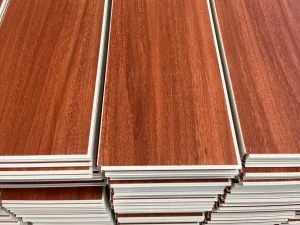
High-Quality Waterproof SPC Vinyl plastic flooring for indoor using Supplier, Exporter
View Product Details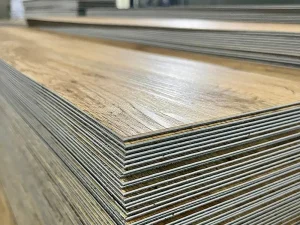
High-Quality Self-Adhesive Vinyl Tiles PVC LVT Plank Flooring Suppliers, Exporter
View Product Details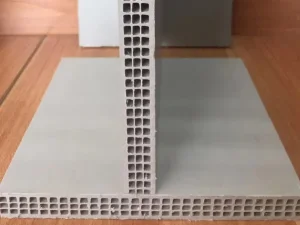
China PP Hollow plastic formwork panel 18mm for concrete Suppliers, Exporters
View Product Details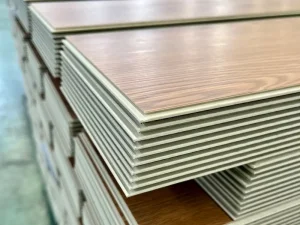
High-Quality Waterproof SPC flooring 4mm with marble and wood color Exporters, Service
View Product Details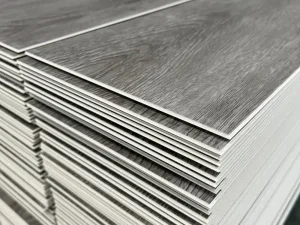
China SPC rigid vinyl plank with wood grain design for indoor flooring Supplier, Exporters
View Product Details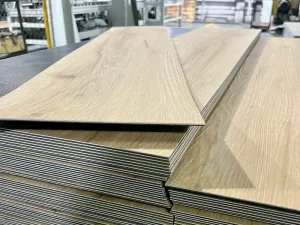
High-Quality LVT SPC Luxury Vinyl Tile Flooring for indoor using Exporter, Service
View Product Details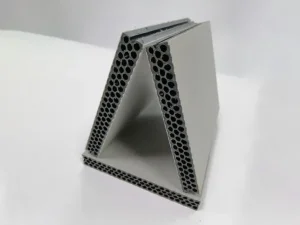
Wholesale Reusable plastic concrete shuttering formwork for construction building Supplier, Exporters
View Product Details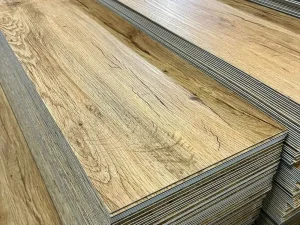
High-Quality Waterproof Plastic Vinyl LVT Glue Down Flooring Suppliers, Exporters
View Product DetailsThe Engineering Evolution of Flat PVC Boards & Structural Polymers
Flat PVC boards (Polyvinyl Chloride sheets) represent a cornerstone of modern industrial material science. Replacing conventional timber, plywood, and soft metallic substrates, flat PVC sheets engineered by leading Chinese exporters provide absolute moisture resistance, superior strength-to-weight ratios, and chemical inertia across harsh commercial environments.
Rigid Closed-Cell Architecture
Formulated through precise extrusion methods, flat PVC board matrices feature closed micro-cellular structures that prevent capillary water uptake, making them 100% waterproof and immune to fungal decay or rotting.
Thermal & Chemical Inertia
Engineered with specialized heat stabilizers and UV-resistant additives, these boards withstand acidic, alkaline, and saline exposure, maintaining physical integrity from -20°C to +65°C operating thresholds.
Flame Retardant Compliance
Classified under stringent self-extinguishing fire ratings (UL-94 V-0 and Class B1 standard), flat PVC sheets significantly mitigate fire propagation risks in high-occupancy architectural and industrial builds.
"The modern global market demands more than standard PVC sheet manufacturing. Global procurement directors require precision density tuning (0.40 g/cm³ to 0.80 g/cm³), exact surface hardness calibrations (Shore D 45 to 80), and REACH/RoHS toxicological compliance. Chinese flat PVC board exporters leveraging automated German-designed twin-screw extruders deliver the exact tolerance thresholds required for zero-defect automated CNC machining and structural civil engineering projects."
Comparative Matrix: Free Foam vs. Celuka vs. Co-Extruded PVC Boards
To select the correct PVC board variant for specific global applications, procurement specialists must understand the underlying extrusion techniques and structural trade-offs.
Free Foam PVC Board
Produced via unrestricted expansion at the die exit, free foam boards feature a uniform matte surface with consistent micro-cellular density throughout the cross-section.
- Density Range: 0.38 - 0.55 g/cm³
- Surface Finish: Soft, matte finish
- Primary Use: UV digital printing, signboards, temporary displays
- Machinability: Excellent for lightweight die-cutting
Celuka Foam PVC Board
Manufactured using the Celuka process with internal mandrels and rapid external surface cooling, producing a extremely hard, smooth outer skin with a lightweight foam core.
- Density Range: 0.45 - 0.70 g/cm³
- Surface Finish: High hardness skin (Shore D > 65)
- Primary Use: Furniture, kitchen cabinets, wall cladding
- Machinability: Holds screws, can be routed & cut cleanly
Co-Extruded PVC Board
Formed via multi-layer feedblock extrusion, combining solid rigid PVC outer skins over a recycled or low-density foam core for maximum impact resistance.
- Density Range: 0.55 - 0.80 g/cm³
- Surface Finish: Scratch-resistant mirror polish
- Primary Use: Heavy-duty concrete formwork, exterior facades
- Machinability: Superior flexural modulus & load-bearing
Comprehensive Engineering Parameters & Standard Standards
| Physical / Mechanical Property | Testing Standard | Free Foam PVC | Celuka PVC Board | Co-Extruded PVC Board |
|---|---|---|---|---|
| Density Range (g/cm³) | ASTM D792 / ISO 1183 | 0.35 - 0.50 | 0.45 - 0.65 | 0.55 - 0.80 |
| Tensile Strength (MPa) | ASTM D638 / ISO 527 | 12 - 15 MPa | 18 - 25 MPa | 28 - 35 MPa |
| Flexural Modulus (MPa) | ASTM D790 / ISO 178 | 800 - 1100 MPa | 1400 - 1800 MPa | 2200 - 2800 MPa |
| Surface Hardness (Shore D) | ASTM D2240 | 30 - 45 Shore D | 65 - 75 Shore D | 78 - 85 Shore D |
| Water Absorption (%) | ASTM D570 / ISO 62 | < 1.0 % | < 0.5 % | < 0.1 % |
| Vicat Softening Temp (°C) | ASTM D1525 / ISO 306 | 73 - 76 °C | 75 - 78 °C | 80 - 84 °C |
| Fire Retardancy Rating | UL-94 / GB/T 8624 | UL-94 V-0 / Class B1 | UL-94 V-0 / Class B1 | UL-94 V-0 / Class B1 |
Why China Dominates Global Flat PVC Board Manufacturing & Exporting
China’s structural manufacturing edge in polymer boards is not merely based on scale, but on concentrated industrial ecosystems, raw material integration, and high-efficiency logistics hub access.
Upstream Chemical Integration
Major manufacturing hubs in Jiangsu, Shandong, and Zhejiang operate adjacent to world-class PVC resin and calcium-zinc stabilizer production facilities. This immediate raw material proximity eliminates secondary transport overheads and guarantees batch-to-batch chemical purity.
High-Capacity Multi-Screw Automation
Leading exporters utilize modern conical twin-screw extruders featuring real-time wall-thickness laser sensors and computerized melt-pump dosing. This ensures thickness tolerance control within ±0.15mm across standard 1220x2440mm sheets.
Export Container Logistics Ecosystem
Positioned near major ocean gateways like Qingdao, Shanghai, and Ningbo, Chinese factories maintain specialized export packing lines. Utilizing wooden pallets, PE film wrapping, and edge protection angle boards, cargo achieves zero-damage ocean transit.
Macro Industry Solutions & Field Deployment Scenarios
From extreme outdoor sign infrastructure to humid marine cabinetry and reusable concrete formwork systems, flat PVC boards address core structural challenges across diverse global markets.
Modular Furniture & Cabinetry
High-density Celuka PVC boards (0.55-0.65 g/cm³) provide 100% waterproof cabinetry for kitchens, bathrooms, and laboratory furniture, completely eliminating swelling, wood-borer termites, and formaldehyde off-gassing.
Advertising & Digital Printing
Free foam boards (3mm to 5mm) with bright white, smooth surfaces offer optimal ink adhesion for direct UV flatbed printing, billboard substrates, exhibition displays, and three-dimensional lettering.
Civil Construction Formwork
Co-extruded and rigid PVC hollow formwork boards (15mm to 18mm) replace traditional plywood in concrete shuttering, offering 30+ reusable cycles, smooth surface release, and complete resistance to rain exposure.
Marine & Transportation Vane
Lightweight, fire-retardant PVC boards serve as interior wall lining, ceiling panels, and floor underlayments in yachts, passenger trains, buses, and cold-chain refrigerated truck bodies.
Global Buyer Specification Guide & Quality Control Benchmarks
Navigating overseas supplier selection requires rigorous verification protocols. Below is a structured inspection framework designed for commercial procurement managers.
1. Density & Weight Verification
Unscrupulous suppliers often under-fill calcium carbonate or excessive blowing agents, reducing board density. Buyers must mandate precision weight checks per standard sheet size (e.g., a 1220x2440x15mm board at 0.55 g/cm³ must weigh approximately 24.5 kg).
2. Caliper & Diagonal Tolerance
Check sheet thickness across 8 distinct perimeter points using digital micrometers. Diagonal squareness must remain within ±2.0mm across a 2.44m length to guarantee seamless alignment on automated CNC routing beds.
3. Toxicological Compliance
Ensure exported boards carry heavy-metal-free certification. Premium Chinese exporters utilize Calcium-Zinc (Ca-Zn) thermal stabilizers, replacing lead compounds to comply fully with EU REACH, RoHS 2.0, and US EPA standards.
Global Market Trends & Sustainable Polymer Innovations
The rigid and foam polymer board industry is undergoing rapid technical evolution, driven by environmental mandates and advanced composite material formulations.
100% Circular Economy Recyclability
Leading Chinese exporters are implementing closed-loop post-industrial recycling programs. Off-cuts and discarded PVC boards are re-crushed, micro-milled, and re-introduced into core layers of co-extruded boards without compromising structural strength.
WPC & Polymer Co-Polymerization
Blending wood flour additives with virgin PVC resins yields Wood-Plastic Composites (WPC) with enhanced tensile modulus and natural timber aesthetics, providing outdoor decking and architectural louvers that resist severe weathering.
Ultra-High Hardness Co-Extrusion
Next-generation extrusion dies enable acrylic (PMMA) or ASA capping layers over PVC foam cores. This co-polymerization delivers extreme scratch resistance (pencil hardness > 3H) and color anti-fading durability for 15+ year outdoor exposures.
Order Export-Grade PVC Boards & Resilient Flooring Direct
High-Quality Waterproof SPC Vinyl plastic flooring for indoor using Supplier, Exporter
Request Factory Quote
High-Quality Self-Adhesive Vinyl Tiles PVC LVT Plank Flooring Suppliers, Exporter
Request Factory Quote
China PP Hollow plastic formwork panel 18mm for concrete Suppliers, Exporters
Request Factory Quote
High-Quality Waterproof SPC flooring 4mm with marble and wood color Exporters, Service
Request Factory Quote
China SPC rigid vinyl plank with wood grain design for indoor flooring Supplier, Exporters
Request Factory Quote
High-Quality LVT SPC Luxury Vinyl Tile Flooring for indoor using Exporter, Service
Request Factory Quote
Wholesale Reusable plastic concrete shuttering formwork for construction building Supplier, Exporters
Request Factory Quote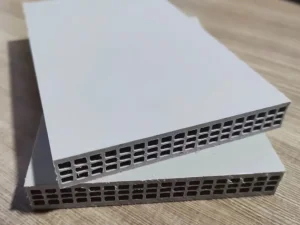
Wholesale PP Plastic Slab Concrete Hollow Formwork 18mm Exporters, Service
Request Factory QuoteFrequently Asked Questions for Commercial PVC Board Importers
Direct technical insights compiled by senior polymer engineers to answer critical sourcing and fabrication queries.
What is the key functional difference between Celuka PVC foam boards and Free Foam PVC boards?
The fundamental distinction lies in the extrusion process and resulting surface hardness. Free Foam boards expand unrestricted when leaving the die, yielding a uniform density throughout with a softer, matte surface (Shore D 30-45). Celuka boards utilize a cooled mandrel process that hardens the exterior skin instantly, producing a dense, smooth outer layer (Shore D 65-75) with a lightweight core. Celuka is preferred for cabinetry, furniture, and structural wall lining, whereas Free Foam is optimal for lightweight sign printing and display cutouts.
How do flat PVC boards perform under direct thermal stress and outdoor UV sunlight?
Unmodified PVC boards can suffer thermal expansion and yellowing under long-term UV exposure. However, export-grade PVC boards manufactured in modern Chinese facilities incorporate 3% to 5% Titanium Dioxide (TiO2) and specialized tin or calcium-zinc UV stabilizers. This formulation allows the board to maintain structural rigidity up to 65°C and resist color degradation for up to 5-10 years in exterior applications. For extreme thermal climates, ASA or Acrylic co-extruded boards are recommended.
Can standard woodworking tools be used to cut, route, and assemble PVC boards?
Yes, flat PVC boards possess excellent mechanical fabrication properties. They can be sawed, drilled, routed, and die-cut using standard carbide-tipped woodworking equipment. Furthermore, high-density Celuka boards hold conventional wood screws securely without pre-splitting and can be thermoformed or solvent-welded using PVC cement to form seamless waterproof corner joints.
What is the typical production lead time and ocean container shipping capacity?
Standard manufacturing production lead times for standard dimensions (1220x2440mm, thickness 3mm-20mm) range between 7 to 14 days for a full 40ft High Cube (HQ) container. A 40ft HQ container accommodates approximately 10 to 12 pallets (approx. 22,000 kg to 25,000 kg net weight, depending on target density). Exporters also accommodate mixed-container loadings combining PVC boards with SPC rigid core vinyl flooring or PP hollow formwork panels.
How do procurement managers detect low-grade recycled filler content in PVC board samples?
Low-grade PVC boards often substitute virgin resin with excessive, coarse calcium carbonate (CaCO3) filler and scrap plastic. To test quality on-site: (1) Perform a 180-degree flex test on thin boards; brittle boards with excessive filler will snap prematurely; (2) Inspect cross-sectional cell uniformity—coarse, uneven air pockets indicate poorly controlled foaming agents; (3) Measure precise density; if a board is abnormally heavy yet soft on the surface, it indicates low resin purity and high mineral filler loading.