China Marine PVC Board Suppliers & Exporters
High-Density Expanded PVC, Co-Extruded Celuka Sheets, and Waterproof Synthetic Lumber Engineered for Marine Environments, Naval Architecture, Offshore Facilities, and Luxury Yacht Interiors.
Featured Marine & Polymer Surface Solutions
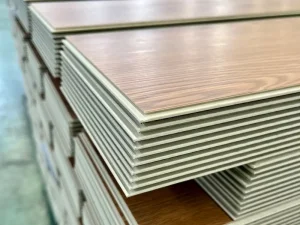
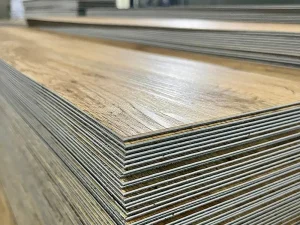
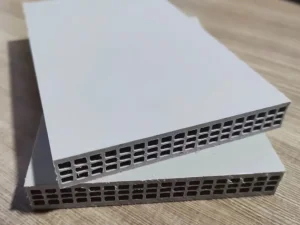
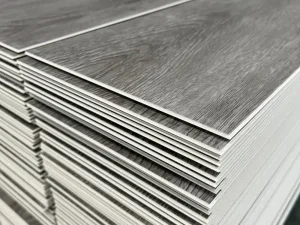
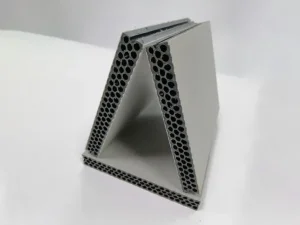
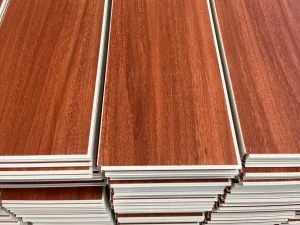
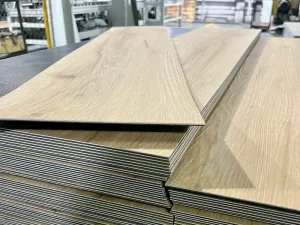
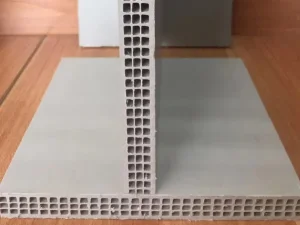
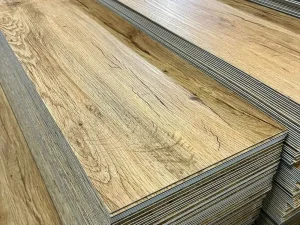
Explore our export-ready collection of high-performance rigid PVC boards, SPC rigid core planks, LVT flooring, and reusable PP structural formwork panels.
Defining Marine-Grade PVC Board Engineering
Why modern naval architects and commercial marine builders are replacing traditional Okoume plywood and marine teak with advanced co-extruded PVC polymer matrices.
In harsh offshore, coastal, and naval engineering applications, structural materials are continuously exposed to aggressive environmental stressors: hyper-saline moisture, intense ultraviolet (UV) radiation, dynamic mechanical vibration, micro-organic bio-fouling, and severe thermal cycling. Traditional marine plywood, despite historic usage, suffers from inherent flaws—delamination, rot, water absorption leading to weight escalation, and vulnerability to fungal degradation. Marine PVC Board (also recognized in the global industry as expanded PVC sheet, co-extruded Celuka foam board, or synthetic marine lumber) has emerged as the definitive material solution for the global marine industry.
Key Engineering Insight: Unlike standard commercial PVC foam sheets designed for short-term indoor signage (0.35 g/cm³–0.45 g/cm³), true Marine Grade PVC Boards are manufactured with an elevated micro-cellular core density ranging from 0.55 g/cm³ to 0.85 g/cm³. Reinforced with acrylic impact modifiers, organotin or calcium-zinc non-toxic thermal stabilizers, and specialized light-reflecting titanium dioxide pigments, these boards deliver zero water absorption (<0.01% per ASTM D570) and superior screw-holding power equal to hard timber.
Polymer Matrix Chemistry & Manufacturing Process
The manufacturing architecture of Marine PVC Board relies on specialized extrusion technologies. The two principal production routes utilized by premier Chinese factories are the Celuka Co-Extrusion Process and the Free-Foam Extrusion Process:
- Celuka Co-Extrusion Technology: Utilizes a cooled mandrel die setup that rapidly chills the outer surfaces while the core expands. This creates an extremely dense, ultra-smooth, scratch-resistant outer skin over a lightweight micro-cellular core. The resulting surface exhibits high flexural modulus, making it ideal for painted yacht cabinetry, structural bulkheads, and exposed trim.
- Free-Foam Technology: Provides uniform density distribution throughout the board profile. While lacking the solid outer skin of Celuka boards, free-foam sheets offer isotropic mechanical properties, rendering them exceptionally easy to machine, rout, thermoform, and deep-groove for CNC-milled component fabrication.
Global Commercial Dynamics & International Standards
An evaluation of global supply chains, international maritime compliance standards, and the industrial shift toward light-weighting naval fleets.
Fleet Light-Weighting Demands
Naval architects in North America and Europe are systematically replacing heavy plywood cores and aluminum composite panels with marine-grade PVC sheets. Reducing structural superstructure weight lowers center of gravity, enhances fuel efficiency by 8–14%, and increases vessel speed and payload capacity.
Fire Safety & IMO Compliance
International Maritime Organization (IMO) SOLAS standards mandate non-combustible or self-extinguishing materials inside passenger vessels. Marine PVC boards formulated with halogen-based flame retardants automatically achieve UL94 V-0 rating and self-extinguish within 5 seconds of flame removal.
Eco-Compliance (REACH & RoHS)
Strict European REACH (SVHC chemical candidate list) and RoHS directives require zero lead, phthalates, or heavy metal leaching. Leading Chinese exporters utilize 100% lead-free Ca-Zinc stabilizers to ensure full compliance for EU and North American maritime entry.
Localized Application Scenarios in Marine & Coastal Infrastructure
From luxury mega-yacht interiors to harsh saltwater docks, discover how marine PVC boards perform across demanding engineering environments.
Yacht Interior Furniture & Bulkheads
Marine PVC boards replace heavy wood particleboard in luxury yacht cabinetry, galley framework, headlining, and partition walls. Their dimensional stability ensures doors and drawers never swell or jam due to tropical ocean humidity.
Deck Sub-Flooring & Transom Core
Laminated beneath synthetic EVA teak deck coverings or fiberglass overlays, high-density marine PVC boards (0.65–0.80 g/cm³) provide superior compressive strength, dampening engine room vibration and resisting high shock loads in fast patrol boats.
Marinas, Docks & Coastal Sheet Piling
Exposed constantly to sea splash and intertidal wetting, marine PVC boards serve as long-lasting dock fascia covers, pilings trim, and sea wall capping panels that will never rot, splinter, or succumb to marine wood-boring worms.
CNC Custom Machined Components
Owing to a consistent cellular structure, marine PVC boards can be routed, drilled, thermoformed, and heat-welded like thermoplastics. Shipyards use CNC routers to rapidly produce wire raceways, instrument mounting blocks, and hatch lids.
Offshore Aquaculture Platforms
Fish farming cages and oceanographic research buoys require non-toxic, chemical-resistant materials. Marine PVC sheets withstand exposure to fish feed chemicals, marine algae cleaning agents, and high-saline salt fog without surface degradation.
High-Humidity Cleanrooms & Cold Storage
Beyond marine vessels, these boards excel in commercial coastal construction: sea-facing hotel wall cladding, fish processing plant wall linings, and cold-storage sub-floor moisture barriers where zero bacterial growth (ISO 846 compliant) is vital.
Technical Roadmap & Next-Generation Polymer Outlook
A strategic breakdown of technological advancements driving the performance limits of cellular PVC marine materials over the next decade.
Triple-Layer Co-Extrusion
Development of 3-layer co-extruded boards with a 100% recycled PVC micro-foam core sandwiched between high-density virgin resin skins, optimizing mechanical stiffness while lowering carbon footprint.
Nano-Titanium UV Armor
Integration of nano-particle Titanium Dioxide (TiO₂) and hindered amine light stabilizers (HALS) throughout the polymer matrix, preventing yellowing and chalking under 5,000+ hours of QUV accelerated weathering tests.
Acoustic & Thermal Barrier Cores
Engineering specialized micro-void structures that absorb low-frequency engine vibrations (sound transmission class STC > 28dB) while providing low thermal conductivity (λ ≤ 0.06 W/m·K) to insulate ship cabins.
Bio-Based Stabilizer Horizons
Transitioning toward 100% plant-derived bio-plasticizers and organo-metallic non-lead thermal stabilization systems, achieving zero VOC emissions for interior luxury vessel air quality certification.
China Factory Supply Chain Resilience & Export Scale
How Greenstar New Materials leverages Jiangsu’s chemical-industrial cluster to deliver world-class marine PVC sheets with speed, cost efficiency, and rigorous quality control.
Located in the heart of Eastern China’s polymer manufacturing hub—Shuyang County, Suqian City, Jiangsu Province—Greenstar New Materials Shuyang Co., Ltd. benefits from deep regional industrial integration. Raw materials including medical-grade PVC resin powders, Ca-Zn eco-stabilizers, and premium acrylic processing aids are sourced directly from upstream chemical suppliers within a 100-kilometer radius. This geographic concentration minimizes supply chain friction, stabilizes raw material costs, and guarantees uninterrupted production even during global market fluctuations.
Our facility operates 8 automated, high-speed co-extrusion production lines equipped with real-time ultrasonic wall-thickness monitoring and laser surface defect scanners. This state-of-the-art machinery ensures strict dimensional tolerances within ±0.1mm for sheet thickness and uniform core density across every batch.
Rapid Delivery Lead Times
With 8 dedicated lines operating 24/7 and strategic proximity to Shanghai Port and Lianyungang Port, standard orders are packed and dispatched within 7 to 15 days of order confirmation.
In-House Testing Laboratory
Every lot undergoes rigorous quality control checks in our 3,000㎡ R&D testing center, including Shore D hardness testing, tensile modulus evaluation, 24-hour water immersion testing, and salt spray fog chamber testing.
Container Consolidation Services
As a multi-disciplinary factory, we offer mixed-container consolidation. Importers can combine Marine PVC Boards with SPC Rigid Core Flooring, LVT Tiles, and PP Hollow Formwork in a single shipment.
Material Benchmark: Marine PVC Board vs. Traditional Options
A side-by-side technical comparison evaluated according to standard ASTM and ISO testing metrics.
| Performance Characteristic | Marine PVC Celuka Board | Marine Plywood (Okoume/Teak) | HDPE Marine Lumber | Aluminum Composite Sheet |
|---|---|---|---|---|
| Density Range | 0.55 – 0.80 g/cm³ Optimized | 0.50 – 0.65 g/cm³ | 0.94 – 0.96 g/cm³ (Heavy) | 1.20 – 1.50 g/cm³ |
| Water Absorption (ASTM D570) | < 0.01% (Zero Swell) | 15.0% – 35.0% (High Rot Risk) | < 0.05% | 0.00% |
| Screw Retention Strength | High (> 2400 N) | High (> 2600 N initially) | Moderate (Tends to strip) | Requires Rivets / Inserts |
| Flame Retardancy (UL94) | V-0 Grade (Self-Extinguishing) | Combustible (Flame Spreading) | Combustible (HB Rating) | Non-Combustible (Core Varies) |
| UV & Salt Spray Resistance | Excellent (No Oxidation) | Requires Regular Varnish | Good (Prone to expansion) | Risk of Galv/Salt Corrosion |
| Machinability & CNC Routing | Exceptional (Clean Edge) | Splinters / Delaminates | Gums Up Router Bits | Special Metal Tooling Needed |
Global Compliance & Customized Manufacturing Support
Tailored thickness, custom density, specialty surface finishes, and full export documentation for global distributors and shipyards.
Custom Dimensions & Thickness
We produce sheet thicknesses from 2mm to 30mm with standard board dimensions of 1220x2440mm (4x8 ft), 1560x3050mm, and 2050x3050mm. Custom cut-to-length orders are available to minimize scrap in shipyard assembly lines.
Surface Textures & Laminations
Choose from smooth high-gloss Celuka finish, fine matte anti-slip texture, wood-grain embossing, or pre-laminated high-pressure decorative vinyl films designed specifically for luxury cabin bulkheads.
Full Certification & Technical Datasheets
Complete export documentation package provided with every order: Mill Test Certificates (MTC), ISO 9001:2015 audit reports, UL94 fire testing reports, and REACH/RoHS chemical safety data sheets (MSDS).
Frequently Asked Questions by Marine Buyers & Engineers
Expert answers addressing raw material formulation, fabrication techniques, installation best practices, and ordering logistics.
What is the key difference between standard PVC foam board and Marine PVC board? +
Standard PVC foam board is typically engineered for indoor advertising, printing, and display signage. It features a lower core density (0.35–0.45 g/cm³), lower impact resistance, and minimal UV stabilization. In contrast, Marine PVC Board is manufactured with a higher density core (0.55–0.85 g/cm³), a hardened co-extruded Celuka outer skin, and enhanced additive formulations including acrylic impact modifiers, heat stabilizers, and UV absorbers. This allows Marine PVC board to withstand screw torque, dynamic wave shock, saltwater submersion, and outdoor sun exposure without cracking, warping, or yellowing.
Can Marine PVC boards be glued, painted, or heat-welded? +
Yes. Marine PVC boards offer outstanding fabrication flexibility. They can be bonded using solvent-based PVC cements, two-part polyurethane structural adhesives, or epoxy resins. For marine cabinetry, surfaces can be painted using marine-grade acrylic enamel or polyurethane paints (typically requiring a light scuff sanding and PVC primer). Furthermore, sheets can be hot-air welded using standard PVC welding rods to create 100% watertight seamless joints in wet rooms, sumps, or tank enclosures.
How does Marine PVC board handle thermal expansion in hot climates? +
Like all thermoplastics, PVC expands and contracts with ambient temperature changes (coefficient of thermal expansion is approximately 0.067 mm/m·°C). When installing marine PVC boards on exposed decks or exterior vessel bulkheads, engineers should allow an expansion gap of approximately 1.5mm to 2.0mm per linear meter and utilize slotted fastener holes or flexible polyurethane marine sealants (e.g., Sikaflex) to absorb thermal movements.
What tooling is required for machining and CNC routing Marine PVC sheets? +
Standard woodworking tools—carbide-tipped circular saw blades, CNC routers, band saws, and hand drills—work exceptionally well with marine PVC board. For optimal router results, use single or double-flute spiral upcut carbide bits operating at moderate feed rates and high spindle speeds (18,000–22,000 RPM) to ensure clean chip clearance and prevent localized melting along the cut edge.
How does Greenstar ensure quality control and color consistency across export orders? +
At Greenstar New Materials Shuyang Co., Ltd., we utilize automated computer-controlled gravimetric dosing systems for resin and pigment mixing. Every production batch is assigned a unique tracking number, and physical samples are tested under spectrophotometers for color consistency (ΔE < 0.5). Our in-house QC laboratory measures sheet thickness tolerance, density, screw pull-out force, and flexural strength prior to export packaging.
What is the minimum order quantity (MOQ) and sample request procedure? +
Our standard MOQ for custom-manufactured Marine PVC boards is 300 sheets per specification, or a mixed full container load (20GP / 40HQ) combined with our SPC flooring, LVT tiles, or PP formwork products. Free sample kits containing various board densities, thicknesses, and surface finishes are available upon request for qualified B2B buyers and marine engineers.
Recommended Products for Overseas Importers
Explore our full product portfolio including SPC rigid vinyl planks, self-adhesive LVT, waterproof glue-down tiles, and hollow plastic formwork.