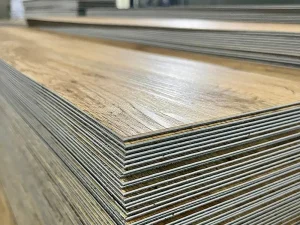
China SPC Click Exporters & Service: Engineering Excellence & Global Supply Chain Insights
A comprehensive technical evaluation of Stone Plastic Composite (SPC) click-lock flooring technology, global procurement demands, micro-structural extrusion physics, and factory-direct export economics.
High-Performance SPC Click & Engineering Products
Explore our certified rigid core SPC plank lines and industrial concrete formwork solutions engineered for high-durability global installations.
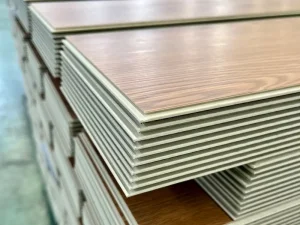
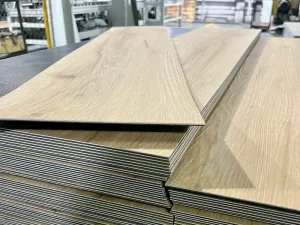
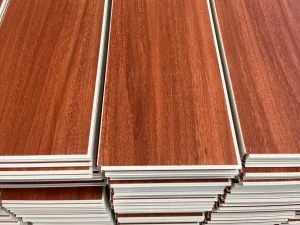
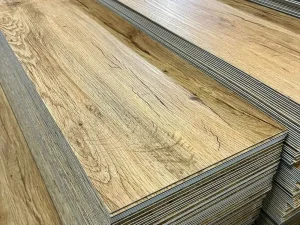
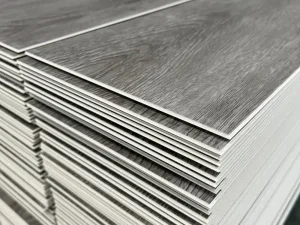
The Evolution & Material Physics of SPC Click Flooring Technology
A rigorous examination of material composition, locking joint mechanics, and thermal stability in modern resilient flooring manufacturing.
1. Strategic Macro Industry Landscape: Why SPC Click Leads Global Resilient Flooring
Over the past decade, the global floor covering market has witnessed a paradigm shift from traditional flexible Luxury Vinyl Tile (LVT) and wood-fiber Laminates toward Stone Plastic Composite (SPC) Rigid Core Click Flooring. Engineered to overcome the moisture vulnerability of wood laminate and the subfloor telegraphing flaws of flexible vinyl, SPC click flooring represents a technological breakthrough in material science. Manufactured primarily from a ultra-dense matrix of natural limestone powder (Calcium Carbonate, CaCO3), Polyvinyl Chloride (PVC) resin, and non-toxic heat stabilizers, SPC core boards exhibit an extraordinary density of approximately 1,900 to 2,100 kg/m³.
Global enterprise procurement trends indicate an escalating preference for SPC click systems across North America, Europe, the Middle East, and Asia-Pacific. Key growth drivers include zero-acclimation installation capabilities, 100% waterproof performance under standing water, high acoustic dampening when paired with integrated IXPE or EVA underlayment, and exceptional indentation resistance capable of handling static loads exceeding 2,000 PSI. As commercial developers, multi-family housing groups, and international distributors seek resilient solutions with low life-cycle costs, Chinese SPC click exporters have positioned themselves as critical global manufacturing nodes.
SEO & Engineering Insight: Unlike standard PVC flooring, SPC click rigid core does not require plasticizers to achieve flexural strength. The rigid calcium-carbonate structure minimizes expansion coefficient variations to less than 0.08% across temperature fluctuations from -10°C to +60°C, eliminating the structural cupping and buckling frequently seen in lower-grade resilient floors.
2. Technical Breakdown: Anatomy of Next-Generation SPC Click Flooring
To evaluate authentic factory quality, global procurement teams must understand the multi-layer lamination architecture of premium SPC click planks:
| Layer Component | Material Formulation | Functional Engineering Purpose |
|---|---|---|
| 1. UV Surface Coating | Double PUR/EP-cured coating with embedded micro-ceramic beads (Al2O3) | Provides scratch resistance, stain repellency, anti-yellowing UV protection, and controls gloss level (4-7% ultra-matte). |
| 2. Heavy-Duty Wear Layer | Transparent virgin PVC polymer (0.3mm / 12mil up to 0.7mm / 28mil) | Defines commercial abrasion resistance class (AC3 to AC5), protecting the print film against foot traffic wear. |
| 3. Decorative Print Film | High-definition 3D gravure printed PVC film (4K resolution natural wood/marble) | Delivers hyper-realistic visual aesthetics including EIR (Embossed-in-Register) synchronized texture alignment. |
| 4. Rigid SPC Core | 70-75% CaCO3 Limestone + 20-25% Virgin PVC Resin + Organotin Stabilizers | Forms the high-density structural core providing structural rigidity, impact strength, and click profile stability. |
| 5. Acoustic Underlayment | Cross-linked IXPE foam, High-density EVA, or Cork cushion (1.0mm - 2.0mm) | Provides Sound Transmission Class (STC) & Impact Insulation Class (IIC) ratings up to 68 dB while concealing minor subfloor imperfections. |
Critical to the performance of SPC flooring is the precision milling of its micro-click joints. Leading Chinese exporters utilize high-precision German Homag and Tenon double-end tenoners with diamond-tipped cutter heads. Popular locking systems such as Välinge 2G/5G-i Drop Lock and Unilin Click Technology are milled with tolerances under ±0.02 mm. Precision click geometries prevent joint separation under lateral tension, ensure seamless moisture sealing across plank margins, and decrease job site installation time by up to 40%.
China Factory 4.0: Modern Manufacturing & Global Sourcing Advantages
How technological integration in Jiangsu and major industrial hubs guarantees product consistency, scale cost efficiencies, and reliable international delivery.
Automated Dosing & Extrusion
State-of-the-art continuous extrusion lines feature computerized loss-in-weight gravimetric feeders. This ensures micro-precise ratios of limestone powder to PVC resin, eliminating core density variances across production batches.
Rigorous QA Laboratory Protocols
Direct factory exporters execute stringent quality testing standardizations, including ISO 10582, EN 14041, FloorScore®, and GREENGUARD Gold certifications. Internal lab tests measure castor chair resistance (25,000 cycles), shear tension, and VOC emissions.
Port Proximity & Logistics Control
Situated within strategic industrial corridors near major East China container ports (Shanghai, Lianyungang, Ningbo), exporters streamline maritime logistics with rapid 7-15 day manufacturing lead times and optimized container loading.
Dual-Sourcing Synergies: Combining SPC Flooring & Industrial PP Hollow Formwork
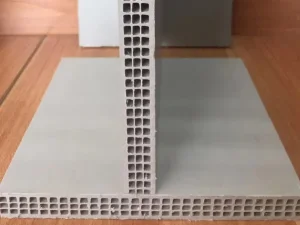
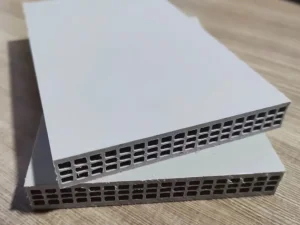
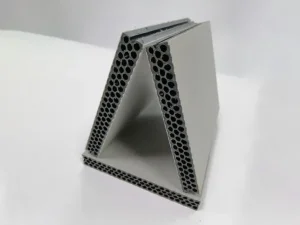
Leading Chinese export groups like Greenstar New Materials have strategically expanded manufacturing capabilities beyond internal decorative finishes to structural construction materials, such as PP Hollow Plastic Formwork Panels. This industrial synergy offers international procurement managers unique sourcing advantages:
- Polymer Processing Expertise: Cross-utilization of advanced thermoplastic formulation knowledge across polypropylene (PP) structural hollow panels and polyvinyl chloride (PVC) indoor floor systems.
- Container Space Optimization: B2B importers can consolidate high-density SPC click flooring with lightweight, rigid PP hollow shuttering boards (18mm) into unified mixed containers, maximizing ocean freight volume limits and lowering per-unit transport costs.
- Unified Enterprise QA Standard: One trusted Chinese exporter managing comprehensive production documentation, CE compliance, customs documentation, and commercial after-sales warranties.
Enterprise Procurement Criteria & Localized Use Cases
Matching technical specifications to commercial real estate, multi-family housing, and heavy-duty industrial project environments.
Multi-Family & Residential Real Estate
Recommended Spec: 4.0mm - 5.0mm SPC Core + 0.3mm (12mil) Wear Layer + 1.0mm IXPE Underlayment.
Value Proposition: Enables rapid turnover between tenant leases. Floating click installation eliminates adhesive off-gassing, while 100% waterproof protection guards against kitchen and bathroom plumbing leaks.
High-Traffic Commercial & Retail
Recommended Spec: 5.0mm - 6.0mm Heavy SPC Core + 0.55mm (22mil) or 0.7mm Wear Layer with EIR Embossing.
Value Proposition: Certified AC5 wear resistance withstands heavy foot traffic, rolling shopping carts, and commercial cleaning equipment without dulling or scratching.
Hospitality & Healthcare Environments
Recommended Spec: 5.0mm SPC with Anti-Bacterial PUR Coating + Attached 1.5mm Acoustic Cushion.
Value Proposition: Micro-ceramic coated surfaces prevent bacterial growth (Staphylococcus aureus and E. coli). High sound absorption (Delta IIC ~21 dB) maintains quiet corridor environments.
Total Cost of Ownership (TCO) Comparison Matrix
When specifying flooring materials for enterprise projects, commercial procurement officers must evaluate total lifetime costs, including initial material unit prices, subfloor preparation labor, installation speed, and long-term maintenance overhead.
| Flooring Type | Subfloor Prep Needs | Installation Speed (sqm/day/installer) | Water Resistance | 20-Year TCO Rating |
|---|---|---|---|---|
| China SPC Click Plank (5mm) | Minimal (bridges minor cracks up to 2mm) | 80 - 120 m² | 100% Waterproof Core | Lowest TCO (High Durability / Fast Labor) |
| Dry-Back Glue-Down LVT (2.5mm) | Extremely High (requires self-leveling compound) | 40 - 60 m² | Water resistant (Adhesive can fail) | Moderate TCO (High prep and glue labor) |
| Wood-Fiber Laminate (8mm) | Moderate | 60 - 80 m² | Poor (swells under standing water) | High TCO (Frequent moisture replacements) |
| Commercial Ceramic Tile | High (mortar base required) | 15 - 25 m² | 100% Waterproof | High Initial TCO (Extremely slow/costly installation) |
Frequently Asked Questions by Global B2B Buyers
In-depth technical answers regarding quality verification, import logistics, thermal expansion, and custom manufacturing OEM service.
What is the exact chemical composition difference between low-grade and high-grade SPC click core?
High-grade SPC flooring utilizes a calibrated 3.5:1 to 4:1 ratio of ultra-pure Calcium Carbonate (CaCO3) to 100% virgin PVC resin, combined with eco-friendly non-heavy-metal organotin stabilizers. Low-grade SPC often incorporates recycled PVC scrap containing phthalates and excess filler powder, resulting in brittle core joints, micro-cracking during click locking, and poor dimensional stability under heat (exceeding ISO 23999 shrinkage thresholds).
How does SPC click flooring behave over underfloor radiant heating systems?
Premium SPC click flooring exhibits exceptional thermal conductivity and stability when installed over hydronic or electric radiant heating systems. Due to its dense limestone core, SPC withstands continuous operating subfloor temperatures up to 27°C (80°F) without warping or off-gassing VOCs. Exporters recommend specifying a thermal-stable IXPE underlayment to optimize heat transfer efficiency.
What are the critical parameters to inspect during a China factory audit for SPC click exporters?
During a supplier audit, technical procurement managers should verify: 1) Automatic gravimetric raw material dosing systems, 2) Continuous online automated thickness monitoring, 3) Constant-temperature annealing cooling chambers (essential to relieve internal extrusion stresses), 4) High-precision German tenoning equipment for click profiling, and 5) On-site laboratory testing for shear tension force (ISO 24334) and boiling water stability tests.
Why is wear layer thickness (mil/mm) more critical than total plank thickness?
While total plank thickness (e.g., 4mm vs 5mm) provides flexural stiffness across uneven subfloors, the wear layer thickness (e.g., 0.3mm/12mil vs 0.55mm/22mil) directly dictates the flooring's wear life cycle. A 4.0mm SPC plank with a 0.55mm wear layer and ceramic bead UV coating will significantly outlast a 6.0mm SPC plank equipped with a thin 0.2mm residential wear layer in commercial applications.
Can Chinese SPC exporters support custom color matching and private-label packaging?
Yes. Full-service China SPC click exporters offer comprehensive OEM/ODM services. Exporters can match custom wood grains or concrete textures from physical samples or digital design files (using high-definition 4K film printing), customize plank dimensions (e.g., standard 7"x48", wide-plank 9"x60", or herringbone patterns), and supply custom-branded protective cartons with barcoding and private-label logo printing.
How does reusable PP hollow plastic formwork complement construction projects alongside SPC flooring?
Many global real estate developers and general contractors source structural PP hollow plastic formwork panels alongside interior SPC flooring from integrated manufacturers. PP hollow formwork panels replace traditional plywood in concrete slab and wall casting—offering 60+ reuse cycles, zero moisture absorption, smooth fair-faced concrete finishes, and 100% recyclability, aligning with modern green building standards (LEED / BREEAM).
Explore Factory-Direct SPC & Formwork Supply Options
Review our high-demand export product lines available for direct wholesale dispatch and customized private-label manufacturing.