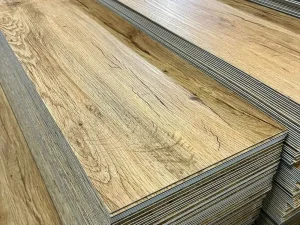
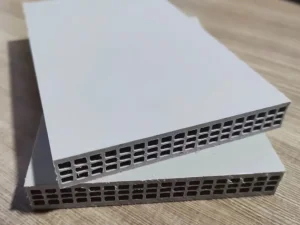
Featured Factory-Direct SPC & LVT Portfolio
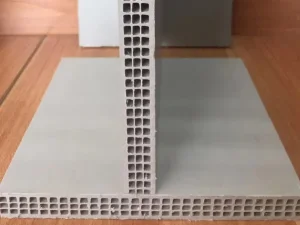
Explore our flagship stone plastic composite planks and high-density polymer formwork engineered for international project compliance.
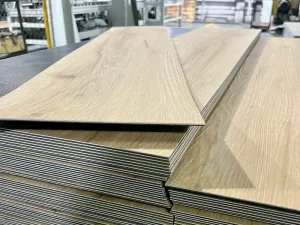
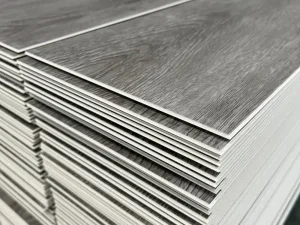
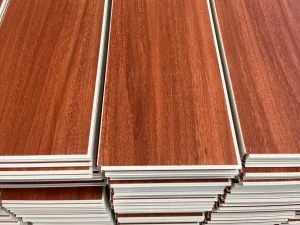
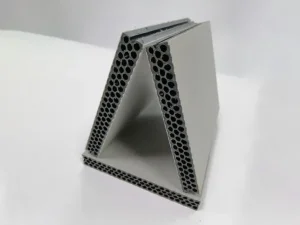
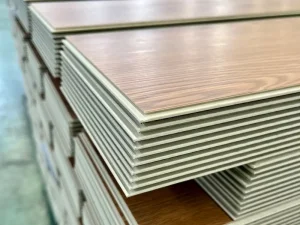
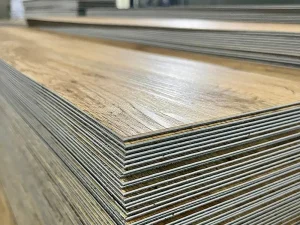
Macro Industry Landscape: China’s Role in Global SPC Supply Chains
Analyzing procurement shifts, manufacturing clusters, and supply resilience across international flooring markets.
The global interior surfacing industry has undergone a monumental paradigm shift over the past decade, driven by the rapid evolution of Stone Plastic Composite (SPC) rigid vinyl plank technology. As global demand for resilient flooring exceeds $35 billion annually, commercial developers, architectural specifiers, and wholesale distributors increasingly turn to premier Chinese manufacturing hubs for direct sourcing. China currently accounts for over 75% of global SPC production capacity, anchored by mature raw material supply chains, advanced co-extrusion machinery, and sophisticated precision milling lines in regions such as Jiangsu and Zhejiang.
Navigating the global trade dynamics requires more than simply evaluating unit pricing. Importers must examine total cost of ownership (TCO), tariff classifications (including US Section 301 and EU anti-dumping frameworks), structural compliance with regional building codes, and environmental VOC limits. Sourcing directly from verified Chinese manufacturers provides institutional buyers with immense financial and technical advantages—including bespoke OEM/ODM formulation, private-label packaging customization, and micro-engineered surface texturing that emulates natural hardwoods and marbles with zero deforestation footprint.
Chemical Architecture & Structural Layer Engineering
Understanding the molecular integrity and 5-layer composite matrix of high-performance SPC rigid core vinyl planks.
The Science of Rigid Core Extrusion
Unlike traditional Luxury Vinyl Tile (LVT), which relies on flexible plasticized PVC layers, SPC plank core board is manufactured via continuous melt-extrusion of a dense composite mixture. The exact formula balances 70% to 75% natural fine-grade Calcium Carbonate (CaCO3) limestone powder, 20% to 25% virgin Polyvinyl Chloride (PVC) resin, and 3% to 5% eco-friendly calcium-zinc (Ca-Zn) heat stabilizers.
This ultra-dense formulation eliminates the requirement for liquid plasticizers, yielding an inorganic stone-composite core with near-zero thermal expansion co-efficient and absolute resistance to liquid penetration. When subjected to extreme temperature fluctuations (-20°C to +70°C), quality China SPC planks exhibit dimensional dimensional stability within <0.05% (compliant with EN 434 and ASTM F2199 testing criteria).
- Phthalate-Free Polymer Composition: Utilizing non-toxic DOTP / DINCH plasticizers exclusively for the top wear layer.
- Zero Mercury & Lead Content: Fully compliant with EU REACH standards and US Proposition 65 mandates.
- Hydrophobic Core Core Integrity: Does not swell, warp, or delaminate under continuous submersion.
5-Layer Anatomic Composite Breakdown
Dual PUR Ceramic Bead UV Coating
Cross-linked polyurethane shield infused with microscopic ceramic particles for maximum scratch resistance and micro-bacterial suppression.
Commercial-Grade PVC Wear Layer
0.3mm (12mil) to 0.7mm (28mil) ultra-clear vinyl foil engineered to withstand high-footfall traffic and abrasive wear (ASTM F1700 Class III).
High-Definition 4K Visual Print Film
Deep embossed-in-register (EIR) film capturing hyper-realistic natural timber grains, slate textures, and concrete aesthetic variations.
Extruded Stone Plastic Composite (SPC) Core
Ultra-dense (1,900–2,100 kg/m³) limestone-polymer matrix providing high impact resistance, rigidity, and click-lock tensile strength.
Integrated Acoustic Underlayment (IXPE / EVA)
1.0mm - 2.0mm closed-cell cross-linked polyethylene foam providing acoustic sound dampening (IIC 65dB+, STC 63dB) and subfloor smoothing.
Precision Milling, Profile Machining & Patent Interlocking Systems
How state-of-the-art CNC tooling guarantees seamless installation and joint stability over heavy rolling loads.
Unilin Click Lock Mechanics
Utilizing high-precision automated milling heads, Unilin angled-angled and push-down joint profiles allow rapid floating installation without subfloor adhesives. Joint strength exceeds 3.5 kN/m pulling force.
Välinge 5G Drop-Lock System
Features a glass-fiber reinforced plastic flexible tongue on the short side edge. Enables one-action drop-and-lock installation, reducing labor costs by up to 40% on commercial project sites.
Micro-Bevel & Painted V-Groove
Laser-guided edge beveling with customized color-matched acrylic sealant creates distinct plank definition, highlighting true-to-life hardwood aesthetic separation between installed boards.
Global Regulatory Compliance & Testing Specifications
Rigorous third-party lab verification validating E-E-A-T benchmarks for architectural specifying bodies worldwide.
For B2B procurement officers and importing distributors, product reliability must be backed by documented empirical data. Reputable China SPC suppliers maintain ISO 9001 quality management and ISO 14001 environmental safety certifications, ensuring every production batch undergoes standardized testing before container loading.
| Performance Characteristic | International Standard | Test Result / Compliance Level | Engineering Benefit |
|---|---|---|---|
| Reaction to Fire | EN 13501-1 / ASTM E648 | Class Bfl-s1 / Class 1 | Self-extinguishing, low smoke emission; safe for public exit corridors. |
| Dimensional Stability | ISO 23999 / ASTM F2199 | < 0.05% (80°C for 6 hrs) | Zero warping or cupping under direct sunlight and underfloor heating. |
| Formaldehyde Emission | EN 717-1 / CARB Phase 2 | E0 Grade / Non-Detectable | Safe for indoor air quality; zero toxic off-gassing. |
| Slip Resistance | DIN 51130 / EN 13893 | R10 Grade / Class DS | Reduces slip hazards in wet commercial entrances and kitchen spaces. |
| Castor Chair Resistance | EN 425 / ISO 4918 | 25,000 Cycles (No Damage) | Resists surface scratching and delamination in office rolling desk areas. |
| Acoustic Impact Sound | ISO 10140-3 / ASTM E492 | ΔLw = 19dB to 22dB (with IXPE) | High sound insulation for multi-family apartment complexes. |
Localized Engineering Solutions & Sector Applications
Bespoke SPC flooring formulations tailored for diverse environmental, climatic, and commercial demands.
Multi-Family Residential Developments
Fast turnaround click installation allows multi-unit apartment complexes to be surfaced rapidly. Integrated acoustic underlayment minimizes floor-to-floor noise transmission while providing heavy-duty scratch resistance against pets and furniture legs.
Healthcare & Clinical Facilities
Seamless click joints prevent moisture accumulation beneath the surface. PUR antibacterial top layers withstand frequent chemical sanitization with harsh disinfectants, iodine solutions, and medical-grade cleaning agents.
High-Traffic Retail & Hospitality
0.5mm (20mil) wear layer models provide exceptional indentation resistance against heavy static loads, high heels, and retail display racks. EIR textures deliver realistic visual luxury without authentic timber maintenance overheads.
Technology Roadmap: Next-Gen Innovation in SPC Extrusion
Pioneering sustainable bio-polymers, digital direct printing, and automated AI quality inspection lines.
1. Digital Direct-to-Core Printing Technology
Eliminating the traditional PVC film layer by inkjet printing 4K ultra-high-definition wood and mineral patterns directly onto the raw primed SPC core board. This increases thermal bond strength while allowing unlimited custom design repeatability with zero pattern repetition bottlenecks.
2. Bio-Based Plasticizers & Recyclate Integration
Leading Chinese manufacturing lines are transitioning toward bio-attributed PVC resins sourced from organic agricultural waste. Furthermore, post-industrial closed-loop recycling systems reintroduce clean core trimmings back into the extrusion mix without degrading core tensile density.
Frequently Asked Questions (B2B Sourcing Guide)
Addressing essential technical inquiries from international importers, contractors, and procurement managers.
What key parameters distinguish high-grade SPC vinyl planks from low-cost options?
High-grade SPC flooring is characterized by: (1) Virgin PVC resin core matrix rather than recycled plastic waste which causes brittleness; (2) Core density above 1,950 kg/m³; (3) Wear layer thickness of at least 0.3mm for residential or 0.5mm+ for commercial; (4) Certified locking profiles (Unilin/Välinge); and (5) Phthalate-free eco-stabilizer formulations backed by FloorScore certification.
How does SPC compare to traditional LVT and WPC (Wood Plastic Composite)?
SPC features a much higher stone powder ratio, making it far more rigid, dent-resistant, and dimensionally stable than flexible LVT. Unlike WPC, which contains foaming agents and wood flour that absorb moisture, SPC is 100% waterproof and thinner (typically 4mm-6mm vs WPC's 8mm-12mm) while offering superior impact resistance.
What is the optimal total thickness and wear layer specification for commercial projects?
For heavy commercial applications (hotels, retail, offices), we recommend a total thickness of 5.0mm or 6.0mm (inclusive of a 1.0mm or 1.5mm attached IXPE pad) combined with a 0.5mm (20mil) or 0.7mm (28mil) wear layer treated with ceramic bead UV coating.
What container loading volumes and MOQ parameters apply to direct factory orders?
A standard 20-foot heavy-duty shipping container can hold approximately 2,200 to 2,600 square meters of 4mm SPC flooring (including pallets). Typical Minimum Order Quantities (MOQ) start at 500-1,000 sq.m per color decor pattern for standard stock designs, or 2,000 sq.m for custom OEM colors.
Are SPC planks suitable for installation over subfloor radiant heating systems?
Yes. Due to the high stone-powder composition, SPC exhibits excellent thermal conductivity and stability. It is certified for hydronic or electric radiant floor heating systems up to a maximum continuous subfloor surface temperature of 27°C (80°F).
What quality control procedures are conducted during the manufacturing run?
In-line quality control includes automated laser thickness measurement, 80°C hot water bath shrinkage testing every 2 hours, 45-degree tensile strength pull tests on click profiles, scratch resistance testing with diamond tip cutters, and visual color matching against master control swatches.
Complete Export Line & Commercial Direct Ordering
Browse additional product specifications and direct factory supply options for global container dispatch.