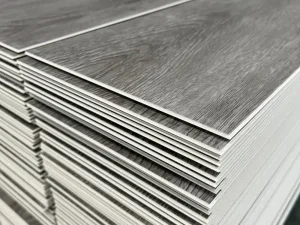
Engineering Principles of Wood Grain Vinyl Flooring: LVT vs. SPC Core Structures
In the evolving landscape of architectural surface solutions, China wood grain vinyl flooring suppliers have driven massive technological shifts. The global market has transitioned from traditional flexible polyvinyl chloride (PVC) sheets to highly engineered multi-layer rigid composite architectures. Understanding the structural dynamics of Luxury Vinyl Tile (LVT) versus Stone Plastic Composite (SPC) is essential for B2B procurement teams, architects, and international distributors searching for optimal dimensional stability, wear resistance, and life-cycle cost performance.
1. Multi-Layer Polymer Breakdown
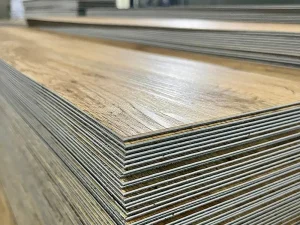
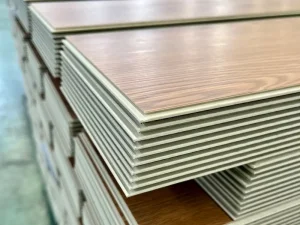
High-performance wood grain vinyl flooring relies on a precisely calibrated cross-linked polymer stack. Each layer plays a distinct role in maintaining mechanical integrity and aesthetic realism:
- UV Dual-Cured Polyurethane Topcoat: Reinforced with microscopic ceramic particles (aluminum oxide), this top layer delivers scratch resistance, stain repellency, and anti-yellowing UV stabilization. It controls surface sheen, keeping gloss levels between a natural 5% and 8%.
- Transparent Virgin PVC Wear Layer: Ranging in thickness from 0.3mm (12 mil) for residential use up to 0.7mm (28 mil) for heavy commercial use, this wear layer dictates abrasion resistance under EN 649 / ASTM F1700 standards.
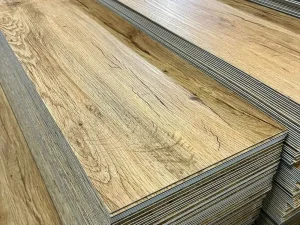
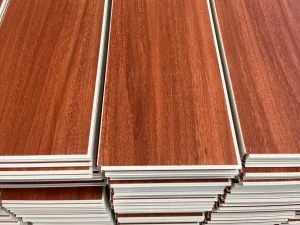
- High-Definition 3D Optical Decor Film: Printed via multi-color rotogravure or ultra-high-resolution digital inkjets, this film replicates organic timber species including European Oak, American Walnut, Japanese Ash, and Reclaimed Teak with hyper-realistic grain details.
- Extruded Core Layer (SPC vs LVT):
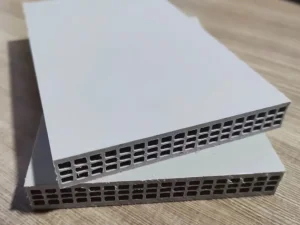
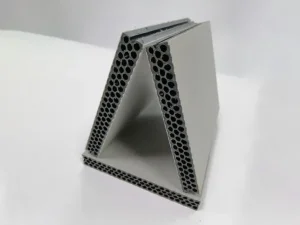
- SPC Rigid Core: Formulated from a non-toxic blend of natural limestone powder (calcium carbonate, CaCO3), virgin polyvinyl chloride resin, and non-phthalate stabilizers. The high mineral content produces a dense core (2000–2100 kg/m³) with near-zero thermal expansion (ΔL < 0.08%).
- LVT Flexible Core: Composed of plasticized PVC compounds (density ~1400–1500 kg/m³) layered with glass fiber reinforcement sheets to prevent tension warping in glue-down or standard click formats.
- Integrated Acoustic Underlayment (IXPE/EVA): Factory-pre-attached high-density cross-linked polyethylene (IXPE) or ethylene-vinyl acetate (EVA) foam dampens impact sound (IIC ratings > 70 dB) and compensates for subfloor micro-imperfections.
| Performance Metric | Luxury Vinyl Tile (LVT) | Stone Plastic Composite (SPC) | Standard Hardwood / Laminate |
|---|---|---|---|
| Core Density | 1,400 – 1,500 kg/m³ | 2,000 – 2,100 kg/m³ | 700 – 850 kg/m³ |
| Waterproof Capability | 100% Water Resistant (Surface) | 100% Waterproof (Full Immersion) | Hydrophobic surface only; core swells |
| Dimensional Stability | Moderate (Requires expansion gaps) | Superior (< 0.08% expansion under heat) | Poor (Swells/contracts with humidity) |
| Impact Resistance | High (Absorbs energy via flexure) | Extreme (Resists heavy static loads) | Low (Prone to denting & chipping) |
| Surface Texture Realism | Standard embossing / EIR | Synchronized EIR Digital Embossing | Natural grain / Brushed veneer |
| Installation Method | Glue-down, Dryback, Loose lay | Floating Click-Lock (Unilin / Valinge) | Nail-down, T&G Glue, Floating |
2. Embossing-in-Register (EIR) Surface Technology
A major competitive edge provided by top-tier China wood grain vinyl flooring suppliers is synchronized Embossing-in-Register (EIR) technology. Unlike standard mechanical embossing—which presses a random texture over the printed image—EIR uses optical sensors to align the steel pressing plate's tactile texture precisely with the underlying wood grain print. Every node, cathedral grain, and timber pore on the surface matches the visual pattern underneath, providing an authentic sensory experience identical to genuine hardwood without the high maintenance or moisture vulnerability.