
Engineered Flooring & Construction Product Series
Explore our top-tier export lines optimized for high dimensional stability, complete waterproofing, and commercial compliance.
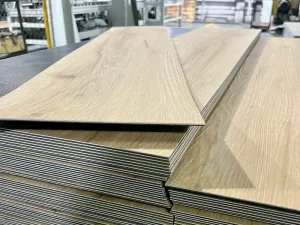
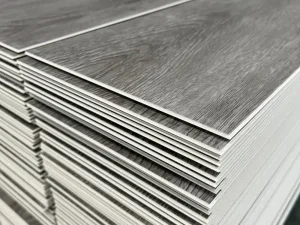
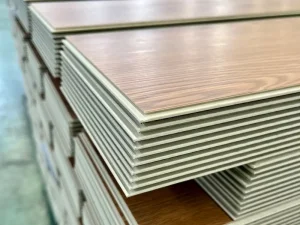
1. Macro Industry Trends: The Shift Toward Wood Vinyl Planks
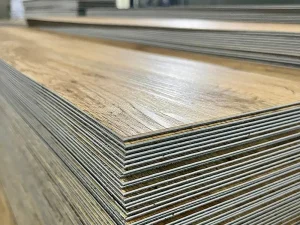
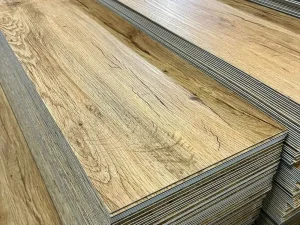
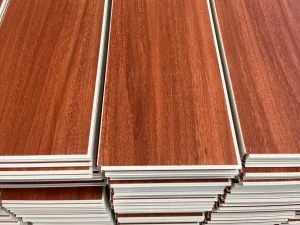
The global architectural surfacing market is undergoing a structural paradigm shift. Natural hardwood, long considered the baseline for interior aesthetics, presents operational vulnerabilities for large-scale enterprise deployments: high moisture sensitivity, volatile material costs, intensive maintenance protocols, and environmental deforestation concerns. Consequently, B2B procurement strategies across North America, Europe, the Middle East, and Asia-Pacific have aggressively transitioned to high-performance polymer composites—specifically Wood Vinyl Planks (LVT, LVP, and SPC Rigid Core Formulations).
Accelerated CAGR Growth
Global demand for luxury vinyl tile (LVT) and stone plastic composite (SPC) flooring is projected to expand at a CAGR exceeding 8.5% over the next decade. Commercial real estate developers increasingly specify rigid core synthetic wood planks to meet accelerated project deadlines and lower lifecycle operational costs.
ESG & Carbon Neutrality
International building codes (LEED v4.1, BREEAM, WELL) are driving compliance toward ultra-low VOC emissions, phthalate-free plasticizer chemistries, and 100% recyclable cores. Modern wood vinyl planks replace harvested timber with virgin limestone-PVC matrices that sequester carbon across their extended service life.
High-Definition EIR Optics
Advancements in Embossed-in-Register (EIR) micro-surfacing laser engraving now allow synthetic vinyl planks to mirror authentic solid timber visual grains, organic knotting, and tactile textures at a fraction of natural wood's volumetric weight and cost profile.
2. Material Science Architecture: Structural Breakdown of Wood Vinyl Planks
Understanding the multi-layer mechanical stack of modern vinyl planks is critical for technical procurement teams, wholesale distributors, and structural engineers evaluating product fitness for heavy commercial or residential multi-family contracts.
A. UV Double-Cured Coating & Micro-Bevel Finish
The uppermost barrier utilizes nano-ceramic polyurethane infused with aluminum oxide particles ($Al_2O_3$). This micro-thin shield delivers exceptional resistance against ultraviolet degradation, scuff marks, household chemicals, and micro-scratches caused by rolling loads (ISO 10582).
B. High-Density Embossed-in-Register (EIR) Wear Layer
Ranging from 0.3mm (12 mil) for light residential up to 0.7mm (28 mil) for heavy industrial traffic. The clear PVC wear layer protects the underlying decorative film while mechanical embossing rolls align physical texture with the printed visual grain down to sub-millimeter tolerances.
C. Rigid SPC Core vs. Flexible LVT Polymer Base
SPC (Stone Plastic Composite): Formulated with a 3:1 ratio of natural calcium carbonate ($CaCO_3$) to virgin polyvinyl chloride resin. Yields an ultra-dense, non-porous core exceeding $2000 kg/m^3$, preventing thermal expansion warping across extreme climate variances ($0^\circ C$ to $55^\circ C$).
LVT (Luxury Vinyl Tile): Utilizes plasticized calendered PVC sheets for superior foot-comfort and sound absorption, ideal for direct-glue installation profiles.
D. Acoustic Underlayment Integration (IXPE / EVA)
Factory-pre-attached cross-linked polyethylene (IXPE) or ethylene-vinyl acetate (EVA) high-density foam pads (1.0mm to 2.0mm) reduce Impact Insulation Class (IIC) and Sound Transmission Class (STC) ratings by up to 21 dB, eliminating the labor step of separate subfloor underlayment installation.
| Performance Metric | International Standard | SPC Rigid Core Benchmark | LVT Dry Back / Glue Down |
|---|---|---|---|
| Dimensional Stability | ISO 23999 / EN 434 | ≤ 0.06% (Heat exposed 80°C / 6 hrs) | ≤ 0.15% |
| Wear Resistance Class | EN 660-2 | Group T (Highest durability rating) | Group T / Group P |
| Fire Behavior | EN 13501-1 | Bfl-s1 (Flame retardant, low smoke) | Cfl-s1 |
| Residual Indentation | ISO 24343-1 | ≤ 0.03 mm | ≤ 0.08 mm |
| Slip Resistance | DIN 51130 / EN 13893 | R10 Class / DS Grade | R9 - R10 Class |
| Formaldehyde & VOCs | CDPH Standard Method v1.2 | Pass (FloorScore® / GREENGUARD Gold) | Pass (Phthalate-Free) |
3. China Factory 4.0: Supply Chain Resilience & Manufacturing Efficiency
As global supply chains face geographic disruptions, raw material volatility, and port congestion, working directly with established Tier-1 Chinese manufacturers provides international buyers with an unmatched strategic advantage in production scaling, cost efficiency, and export logistics.
Automated Extrusion Precision
Modern production campuses in Jiangsu, China utilize multi-screw continuous extrusion machinery linked with closed-loop automated gravimetric feeding systems. This guarantees micro-level consistency in raw calcium carbonate and PVC ratios, preventing batch-to-batch color drift and core density variances.
Inline Laser & Optical QC
Every square meter of output passes through high-resolution machine vision inspection lines. Automated optical sensors detect micro-surface blemishes, wear layer thickness anomalies, and click-profile milling tolerances (such as Unilin or Valinge click systems) in real-time before packaging.
Port Proximity & Container Density
Factories strategically positioned within the Yangtze River Delta manufacturing cluster enjoy direct access to Shanghai and Ningbo deep-water ports. Advanced automated packing lines optimize pallet loading density, lowering ocean freight cost per square meter by up to 14%.
Cross-Category Synergies: Flooring & Polymer Formwork Production
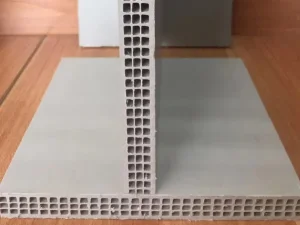
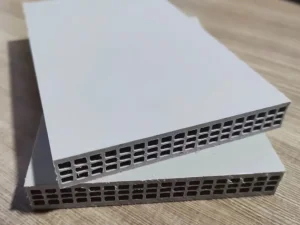
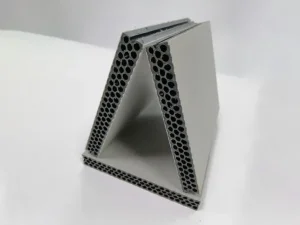
Leading Chinese manufacturing ecosystems do not operate in isolation. Advanced knowledge in raw PVC/PP polymer compounding enables multi-discipline factories to simultaneously manufacture interior surfaces (LVT/SPC wood planks) and structural building materials—such as 18mm PP Hollow Plastic Formwork Panels for concrete casting. Enterprise procurement directors leverage this cross-category manufacturing maturity to consolidate multi-commodity sea containers, streamline customs documentation, and achieve scalable volume-tier pricing.
4. Commercial & Residential Application Scenarios
Different real estate assets demand specific technical configurations. Tailoring product specifications—such as wear layer thickness, core density, backing foam, and installation mechanism—ensures maximum return on investment (ROI) across various commercial environments.
Hospitality & High-Traffic Retail
Recommended Spec: 5.0mm SPC Rigid Core + 0.55mm (22 mil) EIR Wear Layer + 1.5mm IXPE Backing.
Why: High foot traffic and rolling cart loads require dense cores resistant to static indentation. EIR textures deliver luxury visual ambiance while R10 slip resistance ensures guest and customer safety.
Multi-Family Residential Developments
Recommended Spec: 4.0mm SPC Click-Lock or 2.5mm Dry-Back LVT Plank.
Why: Rapid click installation reduces turnover time between tenant leases by over 50%. Complete waterproofing prevents subfloor rot caused by plumbing leaks in kitchens and bathrooms.
Healthcare & Senior Living Facilities
Recommended Spec: 2.0mm - 3.0mm Glue-Down LVT with Anti-Bacterial Polyurethane Coating.
Why: Direct-glue LVT eliminates hollow sound underfoot and allows smooth rollability for hospital beds and wheelchairs. Antimicrobial surface treatments inhibit pathogen growth (ISO 22196).
5. Enterprise Procurement Protocol: Factory Audit & Quality Checklist
To eliminate procurement risks when sourcing wood vinyl planks directly from China suppliers, international purchasing departments must execute rigorous factory audits based on the following five-point quality framework:
1. Raw Material Purity & Virgin PVC Certification
Ensure the supplier uses 100% virgin PVC resin for the core layer. Recycled heavy-metal-laden plastic scrap leads to core brittle-fracture, off-gassing (high TVOCs), and dimensional instability. Demand third-party RoHS and REACH compliance reports.
2. Click-Lock Milling Precision (Unilin / Valinge Patents)
Verify that the mill holds legitimate patent licensing for click profiling (such as Unilin or Valinge). Counterfeit profiling blades lead to click-lip shear failure during installation and seam gaps over seasonal thermal cycles.
3. Hot-Press Tempering & Annealing Chambers
Post-extrusion heat treatment (annealing) is non-negotiable. Planks must pass through thermal stress-relief water baths or ovens to relieve internal extrusion stresses. Skipping this step results in post-installation plank cupping or doming.
4. On-Site Lab Testing Capabilities
A certified supplier must maintain an in-house laboratory equipped with: Taber abrasion testers, thermal expansion ovens, click-joint tensile strength testers, and spectrophotometers for color consistency monitoring.
Complete Factory Export Catalog & Order Options
Select from our certified product lines available for global OEM, ODM, and private-label container dispatch.
Enterprise FAQ: Expert Insights for Global Importers
Clear, engineering-backed answers to critical purchasing, technical compliance, and logistics questions.
Q1: What fundamental structural differences distinguish SPC from traditional LVT wood planks?
SPC (Stone Plastic Composite) features a ultra-rigid core composed of approximately 75% natural limestone powder ($CaCO_3$) and 25% virgin PVC. This core creates an unyielding structure with zero thermal shrinkage or swelling under normal temperature swings ($0^\circ C$ to $50^\circ C$), making it ideal for click-lock floating installations over existing tiles or subfloors with minor imperfections. In contrast, traditional LVT uses plasticized PVC layers, making it flexible, soft, and silent underfoot, but requiring direct glue-down application over perfectly level subfloors to prevent telegraphing.
Q2: How do Chinese manufacturers guarantee zero phthalates and ultra-low VOC emissions?
Leading Chinese export factories utilize bio-based or DINCH/DOTP (non-phthalate) ester plasticizers during polymer compounding. Furthermore, hot-press calibration and thermal annealing cycles drive off residual volatile organic compounds (TVOCs). Quality manufacturers back their exports with recognized international certifications such as FloorScore®, GREENGUARD Gold, and Eurofins Indoor Air Comfort Gold (complying with CDPH Standard Method v1.2).
Q3: What are the standard ocean shipping lead times and container loading capacities?
Standard production dispatch turnaround for standard wood grain decors is typically 7 to 15 days from deposit confirmation. A standard 20-foot heavy-duty sea container (28 metric ton limit) accommodates approximately 2,200 to 2,600 square meters of 4.0mm SPC vinyl planks with IXPE pad, packed on reinforced export-grade wooden pallets with plastic shrink wrap and corner edge protectors.
Q4: Why are polymer construction materials like PP hollow formwork manufactured alongside vinyl flooring?
Both product lines rely on advanced polymer extrusion, continuous calibration, and twin-screw melt compounding technologies. Factories operating within specialized industrial zones in Jiangsu leverage shared R&D facilities for UV stabilization, thermal resistance additives, and high-impact polymer formulation. This operational synergy enables international procurement managers to bundle structural concrete shuttering panels (like 18mm PP hollow formwork) with interior finishes (SPC/LVT wood vinyl planks) in consolidated shipments.
Q5: Can customized OEM wood grain visual patterns and private-label packaging be produced?
Yes. Factory-direct partners offer full OEM/ODM capabilities. Custom decorative film printing can match specific real-wood veneer samples (Oak, Walnut, Teak, Pine, Maple). Private-label box printing, custom barcoding, custom plank lengths (e.g., 1220mm, 1500mm, or Herringbone 610mm), and specific click profiles (Unilin, Valinge 2G/5G) are regularly supported for established importers and national brand distributors.