
High-Performance Construction & Surface Solutions
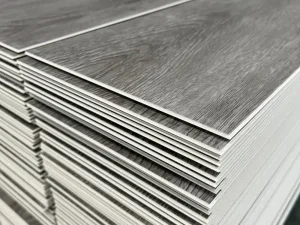
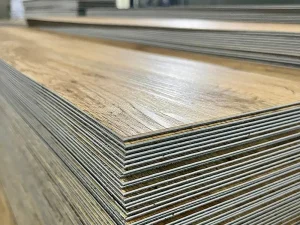
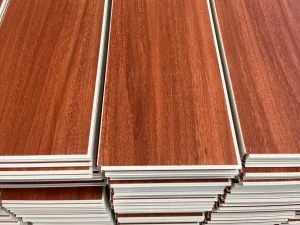
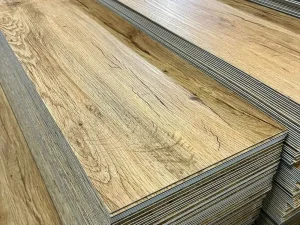
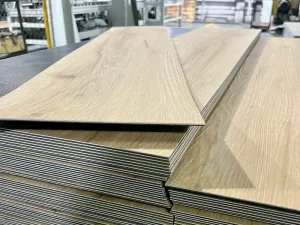
Explore our export-grade polypropylene hollow shuttering panels and advanced indoor rigid flooring systems engineered for extreme structural and architectural durability.


Plastic Shuttering Engineering Roadmap & Technical Evolution
Transitioning global structural cast-in-place operations from single-use timber plywood to advanced high-density Polypropylene (PP) composite matrices.
Phase 1: Nano-Phase Fiber Matrix Reinforcement
Modern plastic shuttering panel engineering has progressed past monolithic extrusions. By incorporating micro-glass fibers and nano-calcium carbonate ($\text{CaCO}_3$) reinforcement into an isotropic polypropylene matrix, thermal expansion coefficients are reduced by up to 42%. This mitigates mid-summer panel buckling on high-rise structural slabs while enhancing flexural modulus to withstand high-pressure hydrostatic concrete pours exceeding 60 kN/m².
Phase 2: Closed-Loop Circular Polymer Economy
The global construction sector faces stringent ESG compliance targets. Next-generation PP hollow shuttering panels utilize a closed-loop design lifecycle. Demolished or damaged formwork sheets can be 100% granulated, re-processed, and re-extruded into primary structural panels without losing structural tensile strength. This circular pathway completely eliminates construction landfill waste associated with traditional film-faced phenolic plywood.
Phase 3: Smart Co-Extrusion Surface Chemistry
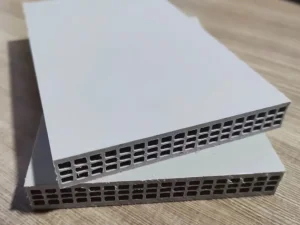
Future formwork technologies feature dual-layer co-extrusion. The core consists of high-impact hollow structural ribs designed via finite element analysis (FEA) to optimize weight-to-load ratios. The outer skin utilizes a hydrophobic, mirror-smooth fluoropolymer-modified polypropylene coating. This yields pristine fair-faced concrete (architectural concrete) surfaces directly out of the form, requiring zero mold release oil and zero secondary plastering.
Macro Industry Solutions: Engineering Civil Infrastructure
Custom formwork deployment profiles tailored to complex structural geometries, mega-scale commercial towers, and heavy municipal infrastructure projects.
High-Rise Residential & Commercial Slabs
In vertical residential construction, turnaround time per floor dictates total contractor profitability. 18mm PP hollow plastic shuttering panels weigh significantly less than steel or dense hardwood plywood. Their lightweight design speeds up manual handling, system stripping, and vertical table-form flying. Because panels do not absorb moisture from wet concrete, slab curing profiles remain thermally regulated, eliminating honeycombing and guaranteeing consistent dimensional tolerances.
Subsurface, Marine & Civil Infrastructure
Civil engineering projects such as retaining walls, bridge piers, culverts, and metro station box structures subject formwork to continuous ground dampness, aggressive soil chemistry, and marine environments. Traditional timber rots, delaminates, and swells under saturated conditions. PP plastic shuttering panels are completely impervious to water, alkaline concrete pastes, acid soil conditions, and chloride ions, maintaining structural integrity across hundreds of pours.
| Performance Metric | PP Hollow Plastic Shuttering | Film-Faced Plywood (Plywood) | Steel / Aluminum Formwork |
|---|---|---|---|
| Average Reuse Lifecycle | 50 to 100+ Times | 3 to 8 Times | 150 to 300+ Times |
| Moisture Absorption Rate | 0.00% (Impervious) | 15% – 35% (Swells/Delaminates) | 0.00% (Rust Susceptible) |
| Weight (18mm Panel Density) | Approx. 8.0 - 9.5 kg/m² | Approx. 11.5 - 13.0 kg/m² | 25.0 - 45.0 kg/m² |
| On-Site Workability | Standard Carpentry Tools (Cut/Nail/Drill) | Easy to Cut (Edges Degrade Quickly) | Requires Specialized Welders/Machinists |
| Concrete Surface Quality | Fair-Faced Smooth (No Plastering Needed) | Requires Plastering After 3rd Use | Smooth (Susceptible to Oil Stains) |
| Storage & Weatherization | 100% Weatherproof (Sun/Rain/Snow) | Must Be Kept Dry (Rots Under Storage) | Requires Anti-Corrosion Maintenance |
China Industry 4.0: Modern Manufacturing & Supply Resilience
How our Shuyang industrial manufacturing complex delivers high volume, quality control, and export continuity to over 40 countries worldwide.
Automated Co-Extrusion Production Lines
Operating 8 fully automated co-extrusion manufacturing lines, our factory facilities in Suqian City, Jiangsu Province, ensure consistent wall thickness, rib alignment, and density across every batch. Computerized melt-temperature sensors maintain identical polypropylene rheology, eliminating localized structural weak spots or internal density voids during high-pressure manufacturing.
Integrated 3,000㎡ QC & R&D Center
Quality assurance is embedded in every stage of production. Raw polypropylene pellets are tested for melt flow index (MFI), ash content, and flexural yield strength before entering production hoppers. Finished panels undergo laboratory drop-weight impact testing at negative sub-zero temperatures (-10°C) and hot water bath immersion tests to certify zero swelling or delamination.
Strategic Port Access & Logistics Efficiency
Situated in Shuyang County near major deep-water ocean ports (Shanghai and Lianyungang), our supply infrastructure provides optimized maritime logistics routes. Standard sizes are packed onto reinforced export pallets using edge-protectors and moisture-barrier film wrapping, ensuring fast container stuffing and fast dispatch within 7 to 15 days of order placement.
Global Enterprise Procurement & Value Engineering
Addressing key purchasing metrics, total cost of ownership (TCO) benchmarks, and supply risk management for global importers and main contractors.
Total Cost of Ownership (TCO) Financial Model
While initial capital expenditure per sheet for polypropylene hollow shuttering is higher than low-grade film-faced plywood, the total cost per concrete pour decreases drastically over time. When factored across 50 to 100 structural cycles, the amortized formwork material cost drops by more than 60%. Additional labor savings accrue from reduced panel weight during stripping and zero surface plastering requirements on cured concrete structures.
Commercial contractors gain a significant competitive edge during project bidding by incorporating reusable plastic shuttering into their plant and equipment capital allocation models, turning formwork consumables into long-term reusable assets.
Customization & OEM/ODM OEM Capability
Procurement specifications vary according to regional formwork standards. European and North American markets frequently require 18mm thickness sheets in $1220 \times 2440\text{ mm}$ ($4' \times 8'$) configurations, whereas Asian and Middle Eastern projects often utilize $915 \times 1830\text{ mm}$ sizes in 12mm or 15mm profiles.
Our OEM/ODM capabilities extend past basic dimensional customization. We manufacture custom internal hollow rib geometries tailored to high-density rebar arrangements, adjust UV stabilization levels for high-solar UV regions, and print custom branded edge sealing and protective foil graphics for global distributors.
Localized Support, Testing Standards & Quality Assurance
Mitigating job-site risks through rigorous laboratory testing protocols, international building code compliance, and direct factory technical support.
International Structural Testing
Our panels comply with rigorous global structural test methods, including ASTM D638 (Tensile Properties of Plastics), ASTM D790 (Flexural Properties), and EN 13377 timber beam formwork equivalents. This ensures that load-bearing capacity, deflection limits, and nail-holding pullout strengths meet structural safety factors demanded by site engineers worldwide.
Thermal Expansion Engineering
Thermoplastic materials react to ambient temperature fluctuations. Our detailed technical guidance manuals provide clear job-site expansion gap charts for concrete formwork installation. For extreme hot climates (+40°C to +50°C), our modified flame-retardant and thermal-stabilized PP lines prevent thermal buckling, providing true dimensional stability across seasonal extremes.
On-Site Carpentry & Repair Guidance
Working with plastic shuttering requires no specialized equipment purchase. Structural contractors can utilize existing timber saws, high-speed circular saws, pneumatic nail guns, and screw fasteners. Punctures or deep gouges incurred during heavy steel rebar placement can be easily hot-welded on-site using standard PP welding rods, extending panel lifecycle and maximizing material yield.
Frequently Asked Questions: Technical Engineering & Sourcing
Expert answers addressing structural design, site handling, chemical compatibility, and procurement logistics for polypropylene shuttering panels.
How does PP hollow plastic shuttering compare to traditional film-faced plywood in concrete finishing?
Polypropylene (PP) hollow shuttering features a completely non-porous surface skin. Unlike phenolic film-faced plywood, which degrades after multiple pours and transfers timber grain textures, knots, or peeling film marks onto cured concrete, PP shuttering maintains a mirror-smooth surface. Concrete cast against PP formwork achieves a smooth, dense, fair-faced (architectural) finish that completely eliminates secondary rendering, plastering, or stone-grinding labor costs, saving significant time and material on finishing work.
Are release oils required when using polypropylene plastic shuttering panels?
No, chemical release agents or mold release oils are entirely unnecessary when using PP hollow shuttering panels. Polypropylene exhibits inherently low surface energy, preventing chemical bonding with hydrating cement pastes. Once concrete reaches stripping strength, formwork panels release effortlessly from the cured surface. This non-stick characteristic eliminates oil purchasing costs, prevents chemical contamination of concrete surfaces (ensuring better paint or insulation bonding later), and keeps job sites clean.
How should site teams manage thermal expansion and contraction during panel installation?
All thermoplastic materials experience dimensional expansion and contraction in response to ambient temperature changes. To accommodate this physical property, panels should be installed with tiny expansion gaps (typically 1mm to 2mm per sheet joint, depending on ambient ambient installation temperature vs peak daytime heat). Applying standard foam tape or flexible joint sealant along perimeter joints absorbs thermal movements without slurry leakage. When panels are secured tightly within modular formwork frames, internal ribbing accommodates compressive stress without buckling.
Can PP plastic shuttering panels be cut, nailed, and drilled using standard carpentry tools?
Yes. PP hollow plastic shuttering is designed for seamless integration into traditional carpentry workflows. Site crews can cut panels using standard handheld circular saws, table saws, or jigsaws equipped with fine-tooth carbide blades. Panels readily accept standard nails, wood screws, and tie-rod sleeve drill holes. Because the internal matrix consists of hollow structural ribs, nail-holding power remains high, and edges do not split, fray, or absorb water when cut on-site.
What is the structural load capacity and flexural strength of an 18mm PP hollow panel?
An 18mm PP hollow plastic formwork panel manufactured with optimal raw material formulation typically exhibits a flexural strength ranging from 25 to 35 MPa, with a flexural modulus exceeding 1800 MPa at normal operating temperatures (23°C). Designed to support standard dynamic slab pouring loads and hydrostatic wall pressures up to 60 kN/m², panel deflection complies with international formwork safety limits (typically less than $L/360$ when supported on standard timber or aluminum joists spaced at recommended 300mm to 400mm centers).
How does Greenstar ensure quality control and dimensional consistency across mass export orders?
Greenstar operates under strict ISO 9001:2015 certified manufacturing processes. Every production line utilizes real-time ultrasonic wall-thickness monitors and laser-guided edge trimmers to maintain precise dimensional tolerances ($\pm 0.5\text{ mm}$ on length/width, $\pm 0.3\text{ mm}$ on sheet thickness). Raw material batches are sampled and tested for Melt Flow Index (MFI) and density stability before extrusion, ensuring uniform performance and reliable structural strength across every container shipped.
Accelerate Your Construction Efficiency Today
Request comprehensive technical datasheets, full laboratory test reports, and direct factory container pricing for your upcoming commercial or municipal project.
Request Technical Datasheet & QuoteEngineered Materials Catalog
Browse our full line of PP hollow concrete formwork panels and rigid indoor flooring systems available for global wholesale distribution.