Engineered Wall & Ceiling Panels & Construction Formwork
Explore our high-demand OEM/ODM export solutions specified by contractors, architectural distributors, and interior project engineers worldwide.
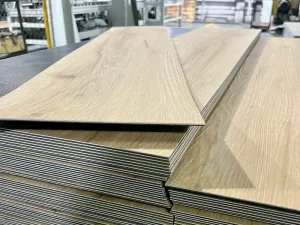
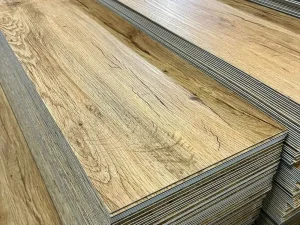
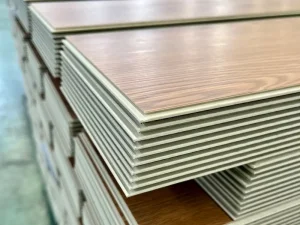
Executive Report: High-Performance PVC Ceiling & Wall Panel Engineering in Modern Architecture
In the contemporary landscape of global architectural design and commercial construction, the demand for high-durability, lightweight, and low-maintenance decorative surfaces has driven a seismic shift toward advanced polymer composites. Among these innovations, PVC ceiling and wall panels, stone plastic composite (SPC) wallboards, and high-density vinyl cladding systems represent the pinnacle of functional surface technology. Designed to resolve the core structural vulnerabilities of traditional drywall, timber paneling, and fiber-cement boards—specifically mold infestation, moisture absorption, fire propagation, and labor-intensive installation—rigid PVC panel systems provide an unassailable alternative for high-traffic and high-humidity environments.
Key Industry Takeaway: Modern micro-extrusion technology combined with calcium-zinc thermo-stabilizers allows contemporary PVC wall and ceiling systems to achieve fire retardancy ratings up to B1/Class A under DIN EN 13501-1 and ASTM E84 standardizations, while maintaining near-zero Volatile Organic Compound (VOC) emissions for interior air hygiene.
As leading Chinese exporters and global service providers, state-of-the-art facilities like Greenstar New Materials Shuyang Co., Ltd. leverage over 15 years of chemical research and multi-layer extrusion engineering. Integrating automated extrusion lines, high-definition thermal transfer printing, and UV-curable protective topcoats, top-tier manufacturers are delivering architectural-grade wall and ceiling solutions to over 40 countries. This whitepaper systematically evaluates the technical roadmap, industrial solutions, Industry 4.0 manufacturing resilience, and strategic procurement frameworks essential for global B2B buyers, EPC contractors, and building material distributors.
1. PVC Panel Technical Roadmap & Future Material Innovations
Understanding the micro-structural formulation and engineering evolution behind next-generation polyvinyl chloride (PVC) wall and ceiling surfaces.
Core Matrix Formulations
Optimal blending ratios of suspension-grade PVC resin (K-value 65-67) with ultra-fine heavy calcium carbonate (CaCO3) fillers. This ensures maximum tensile strength, flexural rigidity, and dimensional stability while mitigating heat distortion under fluctuating ambient climates.
Co-Extrusion Surface Layers
Advanced dual-channel co-extrusion technology embeds a concentrated UV-resistant polymer shield directly onto the outer wall face. This prevents discoloration, chalking, and polymer degradation when panels are exposed to indirect sunlight or high-intensity indoor artificial lighting.
Hollow-Cell Acoustic Geometry
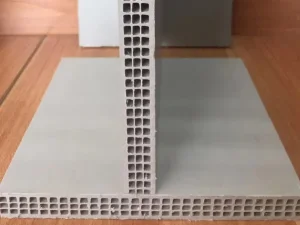
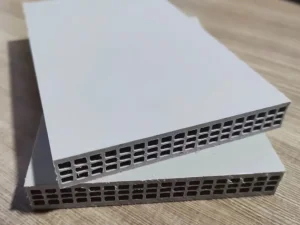
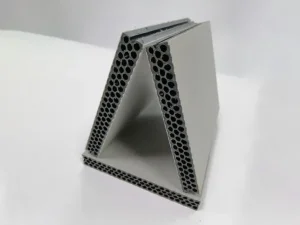
Engineered multi-channel hollow structures feature internal structural ribs that maximize strength-to-weight ratios. The trapped air cavities act as built-in thermal insulation barriers and acoustic dampeners, dramatically reducing sound reverberation within open-plan commercial spaces.
Extrusion Process Precision & Micro-Structure Tuning
The manufacturing process of high-grade PVC wall and ceiling panels relies on precise thermal control within conical twin-screw extruders. Raw PVC resin is homogenized with processing aids, impact modifiers, and eco-friendly calcium-zinc (Ca-Zn) thermal stabilizers. The elimination of lead-based stabilizers is a mandatory standard in modern high-quality manufacturing, ensuring compliance with REACH and RoHS standards.
Future technical roadmaps focus on the incorporation of bio-based PVC formulations derived from renewable plant starches and post-industrial recycled polymers. Furthermore, nano-titania (TiO2) surface doping is currently being integrated into premium ceiling panel lines to provide photocatalytic self-cleaning properties and active air purification inside closed commercial facilities.
2. Industry-Wide Applications & Project Integration
Tailored wall and ceiling panel solutions engineered to solve specific operational challenges across diverse commercial and residential sectors.
Healthcare & Sterile Environments
In medical centers and laboratories, non-porous PVC panels eliminate bacterial harborages. Seamless tongue-and-groove interlocking designs allow continuous washdowns with harsh hospital-grade disinfectants without degradation.
Hospitality & High-Traffic Retail
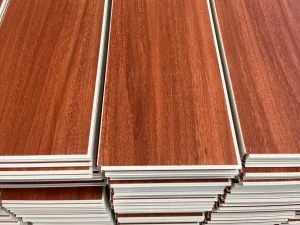
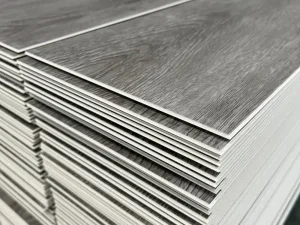
Hotel lobbies, corridors, and dining venues demand luxurious aesthetic appeal paired with heavy impact resistance. 3D textured marble and timber PVC panels provide high-end visual elegance with scratch-resistant surface films.
High-Humidity & Coastal Regions
Traditional wood and plasterboard fail rapidly in tropical or marine climates due to moisture absorption and salt spray corrosion. Waterproof PVC ceiling panels remain 100% immune to rotting, warping, and fungal growth.
3. China Factory 4.0: Supply Chain Resilience & Manufacturing Superiority
How state-of-the-art automated manufacturing in Jiangsu industrial hubs ensures uninterrupted delivery schedules, raw material consistency, and competitive scale.
Automated Dosing & Extrusion
Computerized gravimetric dosing systems eliminate human error in chemical mixing. High-output twin-screw extruders maintain micro-level wall thickness precision within ±0.05mm across 5.95-meter standard container lengths.
Integrated Online Quality Inspection
Real-time optical sensors detect surface blemishes, color spectrum variances, and tongue-and-groove alignment errors before panels reach the automatic cutting station. Defective products are instantly sorted out and recycled.
Port-Adjacent Logistics Advantage
Situated in Shuyang, Jiangsu, facilities enjoy direct connectivity to major deep-water ocean ports (Shanghai and Lianyungang). This strategic location slashes inland freight times and enables rapid container loading within 7 to 15 days of order confirmation.
4. Global Enterprise Procurement & Material Specification Matrix
A rigorous comparative analysis to guide international procurement managers, architects, and importers during product selection.
| Performance Parameter | Architectural Grade PVC Panel | SPC Wall Board System | Traditional Gypsum Drywall | Commercial Plywood / Timber |
|---|---|---|---|---|
| Water Absorption Rate | 0.00% (Fully Waterproof) | 0.00% (Fully Waterproof) | High (>15% swelling) | Moderate to High (Warping risk) |
| Fire Rating (EN 13501-1) | B1-s1, d0 (Self-Extinguishing) | B1-s1, d0 (Non-Flammable Core) | Class A (Unfinished) | Class C/D (Combustible) |
| Weight per Square Meter | 1.8 kg - 3.2 kg (Ultra Light) | 5.5 kg - 8.0 kg (Dense Rigid) | 8.5 kg - 10.5 kg (Heavy) | 4.5 kg - 6.5 kg (Medium) |
| Installation Velocity | Rapid (Click / Interlock) | Rapid (Tongue & Groove) | Slow (Taping, Mudding, Sanding) | Moderate (Framing & Nailing) |
| Formaldehyde Emission | E0 Grade / Zero Emission | E0 Grade / Zero Emission | Varies (Depends on paint) | E1 / E2 (Adhesive dependent) |
| Maintenance Profile | Wipe Clean / Chemical Resistant | Wipe Clean / Scratch Shield | Requires Repainting & Patching | Requires Polishing & Sealing |
5. Regional Compliance, Localization Support & OEM Services
Navigating global building codes requires strict adherence to international safety standards. Reliable PVC wall and ceiling exporters provide full compliance documentation tailored to destination markets:
European Union Market Compliance
Ceiling and wall panels distributed across EU member states carry CE marking, supported by comprehensive Declaration of Performance (DoP) documents. Products undergo standardized testing for reaction to fire (EN 13501-1), dangerous substance release, and flexural tensile strength. Chemical compositions are strictly vetted to ensure compliance with REACH Candidate List of Substances of Very High Concern (SVHC).
North American Standards (ASTM Compliance)
For US and Canadian commercial deployments, panels undergo ASTM E84 Surface Burning Characteristics testing to confirm Flame Spread Index (FSI) and Smoke Developed Index (SDI) suitability for commercial corridors and egress stairwells. Indoor air quality is verified via FloorScore and GREENGUARD Gold certifications, ensuring panels meet strict total VOC threshold limits.
OEM Customization & Private Label Packaging
To empower global brand owners, distributors, and big-box retailers, top-tier factories offer robust OEM/ODM capability. Services include custom profile die extrusion, bespoke color matching via spectrophotometer calibration, barcode integration, drop-tested protective edge packaging, and multi-language installation manuals.
6. Frequently Asked Questions (FAQ) for Procurement Managers
Expert answers addressing structural design, fire safety ratings, thermal expansion, and logistics execution.
What is the fire performance rating of engineered PVC ceiling and wall panels?
High-quality PVC panels formulated with calcium-zinc stabilizers and high CaCO3 content achieve a B1 Class fire rating under DIN EN 13501-1 (or Class A under ASTM E84). This means they are flame-retardant, do not support combustion, self-extinguish within seconds of flame removal, and generate negligible toxic smoke or flaming droplets.
How do PVC panels handle linear thermal expansion in extreme climates?
All thermoplastic polymers experience linear expansion and contraction with temperature fluctuations. Professional PVC panels are engineered with structural expansion coefficients of approximately 0.06 mm/m°C. Correct installation protocols require a 3mm to 5mm expansion gap along perimeter edges hidden by trim profiles to absorb thermal movement without buckling.
Can PVC wall panels be installed directly over damp sub-walls or existing tiles?
Yes. Unlike drywall or wood framing, PVC wall panels can be installed directly over existing ceramic tiles, brickwork, or slightly damp masonry walls using heavy-duty polyurethane structural adhesives or lightweight aluminum furring strips. This eliminates costly tear-out labor and wall preparation.
What are the primary differences between LVT, SPC, and hollow PVC panels?
LVT (Luxury Vinyl Tile) is a flexible vinyl surface ideal for quiet, comfortable floors. SPC (Stone Plastic Composite) features a dense limestone-polymer rigid core engineered for maximum impact resistance and zero expansion under foot traffic. Hollow PVC Panels feature internal rib geometry designed specifically to reduce weight on ceiling joists and wall frames while offering thermal insulation.
What is the standard container loading capacity and lead time for export orders?
Standard lead time ranges from 7 to 15 days post-deposit confirmation. A standard 40-foot High Cube (40HQ) container typically holds between 8,500 m² to 10,500 m² of standard ceiling panels (depending on panel thickness and length), optimized via automated pallet loading to maximize shipping volume.
Factory-Direct Resilient Surfaces & Formwork Panels
Review additional high-performance products manufactured under strict ISO 9001 quality management guidelines.