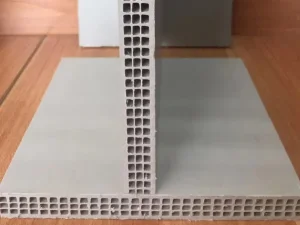
Featured Architectural Panels & Flooring Solutions
Direct factory-engineered vinyl flooring systems, acoustic wall cladding, and reusable structural hollow formwork engineered for global commercial contractors.
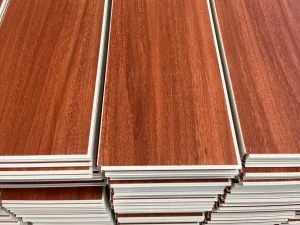
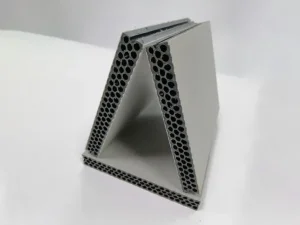
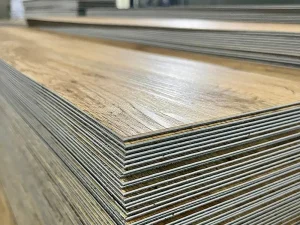
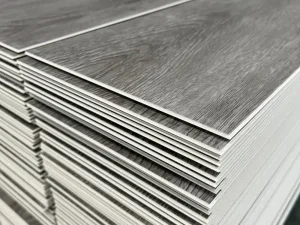
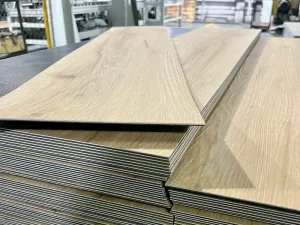
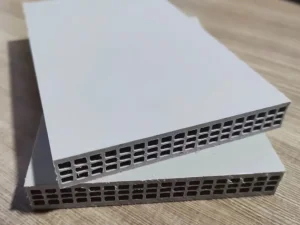
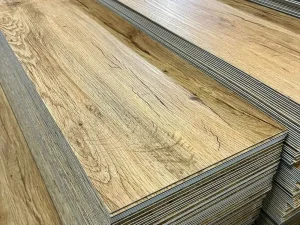
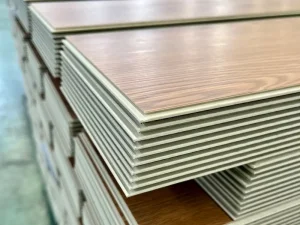
Engineering Excellence in PVC Wall Panel Board Manufacturing
In modern architectural engineering and high-performance commercial fit-outs, the request for lightweight, highly durable, fire-retardant, and acoustically optimized wall surfaces has shifted specifying behavior toward high-density Polyvinyl Chloride (PVC) composite wall panels. As leading PVC wall panel board suppliers, our manufacturing methodology integrates advanced raw material micro-engineering with precision extrusions.
A standard high-quality PVC wall panel board is built upon a rigid, closed-cell micro-foamed or solid co-extruded core consisting of suspension-grade PVC resin ($\text{SG-5}$, polymerization degree $1000-1100$) cross-linked with ultra-fine heavy calcium carbonate ($\text{CaCO}_3$, 1250-2500 mesh) at a calibrated weight ratio ranging from $1:1.5$ to $1:2.5$. This inorganic mineral reinforcement provides structural stiffness, dimensional stability under elevated temperatures, and superior impact resistance exceeding $15 \text{ kJ/m}^2$ (ISO 179 standard).
Inorganic Flame Retardancy
Formulated with non-toxic calcium-zinc ($\text{Ca/Zn}$) thermal stabilizers and antimony trioxide ($\text{Sb}_2\text{O}_3$) synergists to achieve zero halogen toxic gas emission during combustion, guaranteeing EN 13501-1 Class $B-s1, d0$ ratings.
Zero Hydro-Sorption
With an absolute zero water absorption coefficient ($<0.01\%$), our cellular and solid PVC matrices prevent swelling, mold spore colonization (ASTM G21 rated 0 growth), and delamination in humid, tropical, or washdown environments.
Nano-Crystalline Surface
Co-extruded or hot-melt lamination with a polyurethane-fluorocarbon surface coat embedded with micro-glass beads ($Al_2O_3$), yielding stain resistance, UV stabilization (Delta E $<1.5$ after 2000 hrs Xenon test), and scratch resistance.
PVC Wall Panel Board Technical Roadmap & Future Outlook
Tracing the technical evolution of wall cladding materials from basic single-wall hollow PVC sheets to multi-layer acoustic bamboo charcoal co-extrusions.
Thin-Walled Hollow Cellular PVC Profiles
Initial market offerings relied on low-density hollow PVC extrusions with thin top layers ($<0.8\text{mm}$). While waterproof, these early panels suffered from poor impact resistance, thermal warping at ambient temperatures $>45^\circ\text{C}$, and high vulnerability to mechanical puncturing in high-traffic commercial spaces.
Rigid Core Stone-Plastic & Wood-Plastic Wall Boards
Introduction of heavy stone-plastic composite (SPC) core formulations ($\text{CaCO}_3$ content $>70\%$) and Wood-Plastic Composite (WPC) core boards. These drastically increased core density to $1.8 - 2.0 \text{ g/cm}^3$, providing dimensional stability (thermal expansion rate $<0.15\%$) and allowing tongue-and-groove click system wall installations without vertical aluminum joinery visible.
Carbon-Infused Micro-Foamed Co-Extruded Wall Systems Active Innovation
Current state-of-the-art involves three-layer co-extrusion technology. The core features activated bamboo charcoal micro-foamed PVC that absorbs indoor VOCs and odorous compounds while damping high-frequency sound reflections ($NRC = 0.65 - 0.85$ when paired with acoustic felt fluting). High-pressure Pur hot-melt lamination ensures 0-delamination at temperatures from $-20^\circ\text{C}$ to $+80^\circ\text{C}$.
Bio-Based Non-Phthalate Matrices & Self-Healing Nano-Coatings
Emerging research focuses on replacing petroleum-based PVC plasticizers with 100% bio-derived non-phthalate esters (DOTP/DINCH derivatives) and integrating micro-encapsulated organic phase-change thermal storage materials (PCMs) within the panel core to optimize building energy performance and thermal inertia.
Macro-Industry Wall Cladding Solutions
Cross-sector deployment protocols tailored for demanding regulatory, mechanical, and hygienic environments.
Healthcare & Cleanroom Environments
Challenge: Strict requirements for continuous microbial inhibition, chemical washdown resistance (chlorine bleach, hydrogen peroxide vapors), and flush joint systems.
Engineered Solution: Antimicrobial silver-ion ($\text{Ag}^+$) infused PVC wall panel boards hot-welded with matching PVC vinyl rods to eliminate fungal harbor zones. Class 1 Cleanroom compliant according to ISO 14644-1 parameters.
Hospitality & High-Traffic Commercial
Challenge: Rapid interior installation schedules without wet plastering delays, required Class A fire ratings, and high scratch resistance against luggage cart impacts.
Engineered Solution: High-density SPC slate and wood-textured wall panels featuring patented aluminum click/interlock profiles. Allows 3x faster retrofits directly over existing tiles without structural wall reinforcement.
Marine, Offshore & High-Humidity Infrastructure
Challenge: Severe atmospheric salt-spray corrosion, continuous relative humidity $>95\%$, and IMO FTP Code marine fire safety compliance.
Engineered Solution: Co-extruded 100% synthetic polymer wall boards with zero metallic fillers. Resistant to salt-fog degradation (ASTM B117 tested 3000 hrs without blistering) and certified for interior bulkheads.
Global Compliance & Quality Safeguards Matrix
Complete physical, thermal, fire, and toxicological validation matrices required by global engineering consultancies and municipal building authorities.
| Performance Metric | Test Methodology Standard | Technical Threshold / Benchmark | Compliance Certification Level |
|---|---|---|---|
| Surface Flammability | ASTM E84 / EN 13501-1 | Flame Spread Index (FSI) $< 25$, Smoke Developed Index (SDI) $< 450$ | Class A / B-s1, d0 Fire Certified |
| Formaldehyde Emission | EN 717-1 / ISO 16000 | Emitted Formaldehyde $< 0.005 \text{ mg/m}^3$ (Below detection limits) | Greenguard Gold / E0 Standard |
| Dimensional Thermal Stability | EN 434 / ASTM D1204 | Dimensional change $< 0.08\%$ after 6 hrs exposure at $80^\circ\text{C}$ | Pass / Zero Buckling Warranty |
| Impact Resistance | ISO 179 / Charpy Pendulum | Unnotched impact toughness $> 18 \text{ kJ/m}^2$ | Heavy Commercial Duty Grade |
| Acoustic Isolation (NRC) | ISO 354 / ASTM C423 | Noise Reduction Coefficient up to $0.85$ (Acoustic Fluted Format) | Acoustic Absorptive Cladding |
| Heavy Metals & SVHCs | EU REACH Directive / RoHS | Zero Lead ($\text{Pb}$), Cadmium ($\text{Cd}$), Mercury ($\text{Hg}$), Phthalates | 100% Non-Toxic Chemical Audit |
Localized Field Technical Support & Engineering Consultations
Procuring from qualified PVC wall panel board suppliers involves comprehensive support long after the shipping container leaves the port. Our localized engineering support framework includes:
- CAD/BIM Object Library: Standardized Revit family files, DWG profiles, and expansion joint detailing for seamless integration into architectural blueprints.
- On-Site Installation Training: Field-trained installation advisors capable of conducting remote video audits or on-site crew briefings for large commercial developments.
- Custom Color Matching (Delta E < 0.5): Precision spectrophotometer color matching for corporate brand re-imaging projects and interior chain rollouts.
China Industry 4.0: Supply Chain Resilience & Cost Efficiency
Leveraging automated compounding, multi-axis co-extrusion technology, and port-adjacent supply chain integration.
Gravimetric Batching Automation
Microprocessor-controlled loss-in-weight compounding systems ensure batch-to-batch resin variance remains within a strict $\pm0.1\%$ margin, eliminating color shade deviations and core density fluctuation across large volume shipments.
Online Laser Caliper Gauge
100% non-contact laser optical thickness scanners continuously inspect wall panel wall-thickness and tongue profile tolerances down to $\pm0.02\text{mm}$, triggering automatic die adjustments in real-time during extrusion.
Deep Maritime Logistics Advantage
Situated strategically near major international container hubs (Lianyungang, Ningbo, and Shanghai ports), our factory enables rapid freight consolidation, container stuffing optimization, and expedited 7-15 day manufacturing dispatch windows.
Global Procurement Matrix: Selecting the Right Panel Grade
A comparative engineering evaluation framework to assist EPC procurement officers, wholesalers, and interior specifiers in aligning project budgets with optimal material performance.
| Panel System Grade | Core Composition & Density | Primary Technical Characteristics | Recommended Application Scenarios | Cost vs. TCO Rating |
|---|---|---|---|---|
| Hollow Cellular PVC Board | Foamed PVC Resin ($0.45 - 0.60 \text{ g/cm}^3$) | Ultra-lightweight, easy cutting, highly economical surface lining | Residential ceiling lining, low-traffic temporary wall partitions | Lowest initial CAPEX / Standard durability |
| Solid WPC Wall Board | Wood Powder + PVC Compound ($0.90 - 1.20 \text{ g/cm}^3$) | Warm acoustic dampening, natural wood touch, high flexural strength | Hotel guestrooms, residential living rooms, executive offices | Mid-Tier CAPEX / Long-term aesthetic value |
| Solid Rigid SPC Wall Board | $\text{CaCO}_3$ + PVC Core ($1.80 - 2.00 \text{ g/cm}^3$) | Extreme impact resistance, zero water absorption, rigid click profiling | Commercial corridors, healthcare lobbies, wet rooms, retail chains | Optimal TCO / Superior wear longevity |
| Bamboo Charcoal Co-Extrusion | Acoustic Carbon Micro-Foam ($0.70 - 0.85 \text{ g/cm}^3$) | VOC absorption, high NRC sound absorption, PUR seamless lamination | Auditoriums, high-end hospitality, cleanroom acoustics, VIP lounges | Premium Grade / Maximum acoustic feature |
Manufacturer Heritage: Greenstar New Materials Shuyang Co., Ltd.
Integrating technical research & development, aesthetic design, extrusion manufacturing, and direct export sales under one roof, Greenstar New Materials Shuyang Co., Ltd. (located in Sangxu Town, Shuyang County, Jiangsu Province) operates an advanced 3,000㎡ R&D center. With over 15 years of continuous polymer innovation and over 100 formulation variations perfected, Greenstar serves buyers across 40+ countries with an industry-leading repeat order rate exceeding 85%.
Frequently Asked Questions (FAQ) for Specifiers & Buyers
Whitepaper-grade answers to common technical queries regarding installation, performance parameters, and OEM customization.
What is the coefficient of thermal expansion for high-density PVC wall panel boards, and how are expansion joints designed?
Our solid SPC and co-extruded PVC wall panel boards demonstrate an average linear thermal expansion coefficient ($\text{CLTE}$) of approximately $4.5 \times 10^{-5} \text{ K}^{-1}$ to $6.0 \times 10^{-5} \text{ K}^{-1}$. For standard indoor installations with temperature differentials ($\Delta T$) of $20^\circ\text{C}$, we recommend incorporating a continuous $2 - 3\text{mm}$ perimeter expansion gap concealed behind aluminum trims or skirting boards every 6 to 8 linear meters of continuous wall length.
How do PVC wall panel boards perform under continuous exposure to high humidity or direct water contact?
Because Polyvinyl Chloride and Calcium Carbonate are completely non-hygroscopic compounds, the panels exhibit a water absorption rate of $<0.01\%$ according to ASTM D570. Unlike timber or MDF substrates, PVC wall panel boards will never rot, swell, warp, or delaminate when submerged or exposed to continuous relative humidity ($100\% \text{ RH}$), making them ideal for commercial shower units, cleanrooms, and coastal marine applications.
What fire safety certifications do your PVC wall panel boards hold for international building codes?
Our wall panel boards are formulated with non-halogen inorganic fire retardants. They achieve ASTM E84 Class A ratings (Flame Spread Index $\le 25$, Smoke Developed Index $\le 450$) and European EN 13501-1 Class $B-s1, d0$. This ensures minimal smoke density and zero flaming droplets or particles during thermal exposure, meeting strict municipal building codes for public assembly spaces.
What surface decoration technologies are available for custom architectural specifications?
We provide three primary surface finishing processes: 1) Thermal Transfer Foil Printing: Delivers ultra-high-definition metallic or marble veins directly sealed into the top layer; 2) PUR Hot-Melt Film Lamination: Uses German Kleiberit polyurethane adhesives to laminate tactile heavy-duty PVC films, tactile synchronized embossed (EIR) wood textures, and metallic foils; 3) UV Fluorocarbon Coating: Provides high-gloss or super-matte anti-fingerprint surface protection with superior scratch resistance.
How do you verify batch quality and core density consistency prior to overseas shipment?
Every production run undergoes strict quality control checks in our internal laboratory: 1) Density verification via hydrostatic balance (ISO 1183); 2) Surface wear resistance via Taber Abraser (EN 438-2); 3) Color consistency via spectrophotometric analysis ($\Delta E < 0.5$); 4) Boiling test ($100^\circ\text{C}$ immersion for 2 hours) to ensure zero film delamination.
Can PVC wall panels be installed directly over existing ceramic tiles or uneven wall surfaces?
Yes. If the underlying substrate deviation is less than $3\text{mm}$ over a 2-meter straightedge, high-strength structural polyurethane sealant or neutral silicone adhesive can be used for direct glue-down installation over existing ceramic tiles. For severely uneven or crumbling masonry walls, a lightweight aluminum or galvanized steel batten system ($400\text{mm}$ centers) is recommended to mechanically fix the panels using hidden stainless steel starter clips.
Explore Full Range of Flooring & Formwork Solutions
Factory-direct supply lines designed for global distributors, building material importers, and large-scale engineering projects.