
Featured Rigid Core Flooring & Construction Systems
High-yield manufacturing specifications engineered for global distributors, commercial project managers, and building material contractors.
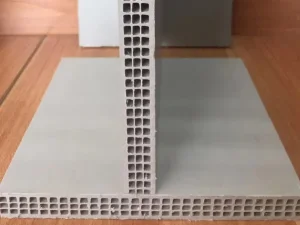
China PP Hollow plastic formwork panel 18mm for concrete Suppliers, Exporters
View Product Details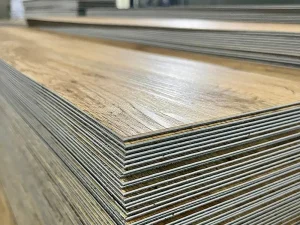
High-Quality Self-Adhesive Vinyl Tiles PVC LVT Plank Flooring Suppliers, Exporter
View Product Details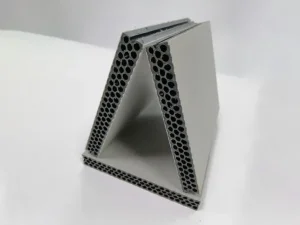
Wholesale Reusable plastic concrete shuttering formwork for construction building Supplier, Exporters
View Product Details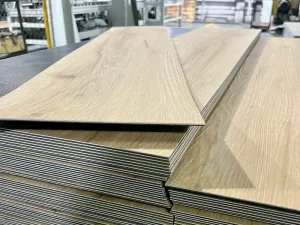
High-Quality LVT SPC Luxury Vinyl Tile Flooring for indoor using Exporter, Service
View Product Details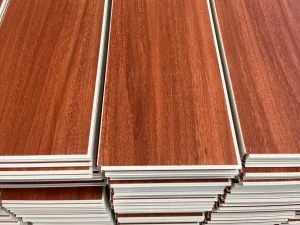
High-Quality Waterproof SPC Vinyl plastic flooring for indoor using Supplier, Exporter
View Product Details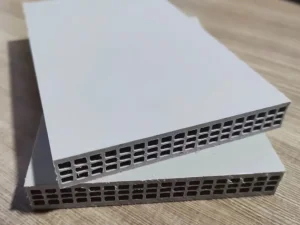
Wholesale PP Plastic Slab Concrete Hollow Formwork 18mm Exporters, Service
View Product Details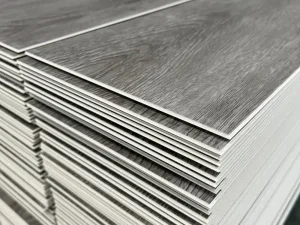
China SPC rigid vinyl plank with wood grain design for indoor flooring Supplier, Exporters
View Product Details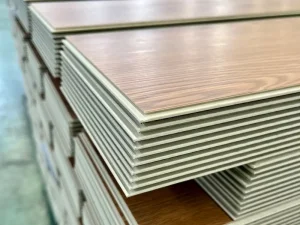
High-Quality Waterproof SPC flooring 4mm with marble and wood color Exporters, Service
View Product DetailsThe Global Evolution of Rigid Core LVT Flooring Sourcing
Analyzing supply chain transitions, market adoption metrics, and the technical migration from traditional laminates to engineered Stone-Polymer Composites.
Global Market Migration
The global resilient flooring market has undergone a structural paradigm shift over the past decade. Traditional flexible LVT (Glue-Down) and wood-plastic composites (WPC) are increasingly yielding market share to Rigid Core Stone-Polymer Composite (SPC) flooring. Commercial and residential buyers now demand extreme dimensional stability, 100% waterproof guarantees, and rapid drop-lock installation protocols to mitigate rising site labor costs.
Supply Chain Resilience
Modern procurement requires total transparency across manufacturing, batch formulation, and environmental compliance. Enterprise buyers in Europe and North America face strict regulatory enforcement regarding phthalate-free plasticizers, indoor air quality (TVOC emission thresholds), and flame retardancy. Strategic sourcing from verified manufacturing ecosystems eliminates risk and guarantees consistent batch-to-batch color match.
Information Gain & Value Engineering
True competitive advantage lies in technical specification optimization. By controlling the microscopic calcium carbonate ($\text{CaCO}_3$) to virgin PVC matrix ratios, optimizing wear layer thickness (0.3mm to 0.7mm), and integrating high-density IXPE acoustic underlayment directly during production, OEM/ODM partners can achieve superior price-to-performance metrics without sacrificing durability.
Anatomy of Next-Generation Rigid Core LVT Flooring
Exposing the exact layered physics and formulation metrics that deliver 0.05% dimensional stability and commercial grade indentation resistance.
Multi-Layer Rigid Core Architecture Specification
Cross-sectional engineering matrix of Greenstar high-density rigid core LVT/SPC planks:
Technical Comparison: Flooring Substrate Dynamics
| Performance Standard | Rigid Core SPC Flooring | Traditional Flexible LVT | Wood-Plastic Composite (WPC) | Laminate Flooring |
|---|---|---|---|---|
| Core Density ($\text{kg/m}^3$) | 1,900 - 2,100 | 1,300 - 1,400 | 950 - 1,050 | 800 - 900 (HDF) |
| Waterproof Capability | 100% Impervious | Water Resistant Surface | 100% Impervious | Swells on Exposure |
| Dimensional Stability (80°C / 6 hrs) | ≤ 0.06% | ≤ 0.15% | ≤ 0.10% | High Swell Factor |
| Indentation Resistance | High (Limestone Dense) | Moderate (Soft PVC) | Moderate (Air Cavities) | Low (HDF Crush Risk) |
| Click Lock Shear Strength | > 4.5 kN/m (Unilin/Valinge) | N/A (Mostly Glue-down) | > 3.0 kN/m | > 3.5 kN/m |
Enterprise Application Matrix & Localized Scenarios
From healthcare cleanrooms to high-traffic retail centers, discover how specific wear layers and rigid cores solve complex architectural requirements.
Commercial Retail & Malls
High pedestrian volumes and heavy rolling loads (display carts, cleaning equipment) demand a 0.55mm (22mil) or 0.7mm (30mil) wear layer backed by ceramic bead UV treatment. Rigid core LVT prevents point-load indentation and maintains seam integrity without telegraphing subfloor slab cracks.
Healthcare & Medical Suites
Sanitation requirements demand seamless surface non-porosity to block bacterial proliferation. Our anti-microbial surface treatments paired with glue-down or high-compression rigid LVT allow aggressive cleaning with hospital-grade disinfectants without surface degradation or seam lifting.
Multi-Family Housing & Hospitality
Acoustic isolation between floors is critical for tenant satisfaction. Pre-attached 1.5mm high-density IXPE foam backings combined with click-lock SPC planks achieve elevated Delta Lw and STC sound reduction values, streamlining fast unit turnarounds without floating underlayment prep.
Integrated Manufacturing: Flooring & Concrete Formwork
How Greenstar New Materials leverages polymers to serve both structural building formwork and high-end interior surfaces.
Precision Subfloor Foundation Creation
As a manufacturer of both 18mm PP Hollow Plastic Formwork Panels and Rigid Core LVT Flooring, Greenstar understands structural building geometry from the poured concrete slab to the finished indoor surface. Smooth concrete finishes cast with reusable PP formwork panels minimize subfloor grinding and leveling compounds, directly lowering overall indoor flooring installation costs for major developers.
8 Production Lines & Strategic Port Logistics
Operating out of Shuyang, Jiangsu Province, Greenstar New Materials operates a 3,000㎡ R&D innovation hub alongside 8 automated continuous extrusion lines. Our proximity to major shipping ports enables mixed-container loading (combining flooring and construction shuttering boards) and rapid dispatch within 7–15 days for urgent project schedules.
International Certification & Regional Standards
Meeting rigorous global market entry protocols for environmental safety, fire safety, and indoor air cleanliness.
FloorScore® Certified
Independently tested for volatile organic compound (VOC) emissions, guaranteeing compliance with California CDPH Standard Method V1.2 and LEED v4 credit requirements.
CE & EN 14041
Full European Union compliance covering reaction to fire (Bfl-s1), slip resistance (R9/R10 classes), thermal conductivity, and structural formaldehyde elimination.
ISO 9001 / 14001
Systemic factory quality management and environmental management systems ensuring lot-to-lot consistency from raw resin dosing to final carton packaging.
REACH & Phthalate Free
Strict raw material auditing ensuring total elimination of heavy metals (Lead, Cadmium, Mercury) and harmful DOTP/DEHP orthophthalate plasticizers.
Rigid Core Tech Roadmap: Next-Gen Manufacturing Trends
Investigating upcoming breakthroughs in digital direct-to-core embossing, circular recycling, and smart bio-polymer formulations.
Digital Direct Printing (DDP)
Eliminating decor film layers by printing high-resolution UV inks directly onto the rigid stone-polymer core matrix. This technology reduces material boundaries, increases thermal stability, and allows unlimited pattern repeat options for bespoke architectural designs.
Bio-Based Polymer Core Systems
Integrating bio-attributed PVC derived from organic waste streams and agricultural byproducts alongside natural calcium carbonates. Reduces product carbon footprint (PCF) by up to 45% while keeping physical core density and water-resistance metrics intact.
Super-Hydrophobic Ultra-Matte Coatings
Next-generation UV-cured coatings utilizing excimer laser technology to create microscopic surface roughness that scatters light completely. Results in hyper-realistic, ultra-matte finishes (gloss levels < 2 GU) with zero fingerprint tracking and self-healing micro-scratches.
Frequently Asked Questions for Technical Procurement
Detailed technical answers to help sourcing directors, distributors, and contractors make informed product decisions.
What fundamentally distinguishes Rigid Core SPC flooring from traditional flexible LVT?
The primary distinction lies in core composition and structural physics. Flexible LVT (Luxury Vinyl Tile) consists mainly of PVC resin and plasticizers, making it flexible and dependent on glue-down installation over perfectly smooth subfloors. Rigid Core SPC (Stone Plastic Composite) features a high-density core engineered with calcium carbonate limestone powder ($\text{CaCO}_3$) combined with PVC resin at ratios of approximately 3.5:1 to 4:1. This creates a rigid core that bridges minor subfloor imperfections, offers superior thermal expansion resistance (0.05% stability), provides 100% waterproof performance, and enables floating click-lock installation.
How do I choose the correct wear layer thickness for different project types?
Wear layer selection must match anticipated traffic intensity:
- 0.3mm (12mil): Suitable for residential light-to-medium traffic, multi-family bedroom areas, and low-wear housing projects.
- 0.5mm (20mil): Recommended for commercial spaces, retail boutiques, hotel corridors, multi-family common areas, and high-foot-fall residential settings.
- 0.7mm (30mil): Engineered for high-intensity commercial environments including healthcare facilities, department stores, educational institutions, and heavy rolling-load zones.
Why is a pre-attached IXPE acoustic underlayment preferred over loose underlayments?
Pre-attached high-density IXPE (Irradiated Cross-linked Polyethylene) foam offers multiple advantages. First, it simplifies job-site labor by eliminating the need to roll out separate underlayment films. Second, factory-applied hot-melt lamination ensures total alignment and prevents underlayment shift or bunching beneath click joints. Third, closed-cell IXPE provides consistent sound absorption (up to 72 dB IIC) while acting as a vapor-impermeable barrier against subfloor moisture.
How does Greenstar ensure lot-to-lot color matching and pattern consistency?
We enforce strict raw material quality assurance (QA) protocols. Decorative films are sourced from master gravure printing labs using digital spectro-photometer color matching under D65 standard illuminants. Production runs utilize synchronized roll tension and temperature control systems to prevent film stretching during hot lamination. Every production lot undergoes automated optical inspection alongside manual master-sample comparisons before batch release.
What are the key parameters for evaluating PP Hollow Plastic Formwork quality?
When procuring PP hollow plastic formwork panels for concrete construction, evaluate three crucial metrics: sheet mass weight (determines wall thickness and structural density), thermal stability under high solar load (prevents wave deformation during concrete pours), and impact strength at low ambient temperatures (prevents corner cracking during stripping). Quality panels maintain flat tolerances and allow 50+ reuse cycles under standard handling.
What lead times can overseas importers expect for custom packaging and private label orders?
With 8 active extrusion lines located in Shuyang, Jiangsu near major ocean ports, standard production lead time is 7 to 15 days from deposit confirmation and packaging artwork approval. Private label color cartons, custom stamp branding on panel backs, and customized pallet packaging are fully supported within this timeframe.
Rigid Core Flooring & Formwork Solutions
Select a product model to access technical datasheets, container packing specifications, and wholesale tier pricing.
High-Quality LVT SPC Luxury Vinyl Tile Flooring for indoor using Exporter, Service
Request Factory Quote
High-Quality Waterproof SPC Vinyl plastic flooring for indoor using Supplier, Exporter
Request Factory Quote
China SPC rigid vinyl plank with wood grain design for indoor flooring Supplier, Exporters
Request Factory Quote
High-Quality Waterproof SPC flooring 4mm with marble and wood color Exporters, Service
Request Factory Quote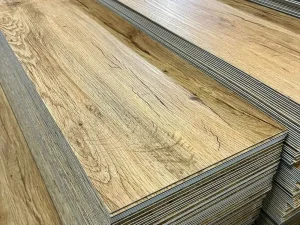
High-Quality Waterproof Plastic Vinyl LVT Glue Down Flooring Suppliers, Exporters
Request Factory Quote
High-Quality Self-Adhesive Vinyl Tiles PVC LVT Plank Flooring Suppliers, Exporter
Request Factory Quote
China PP Hollow plastic formwork panel 18mm for concrete Suppliers, Exporters
Request Factory Quote