
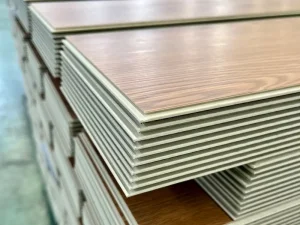
Primary Industrial & Architectural Product Portfolio
Featured resilient surface collections engineered for international distributors, general contractors, and global architectural procurement networks.
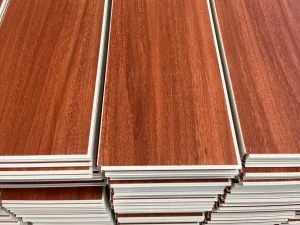
High-Quality Waterproof SPC Vinyl plastic flooring for indoor using Supplier, Exporter
View Product Specs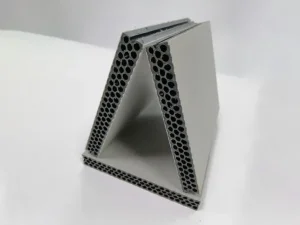
Wholesale Reusable plastic concrete shuttering formwork for construction building Supplier, Exporters
View Product Specs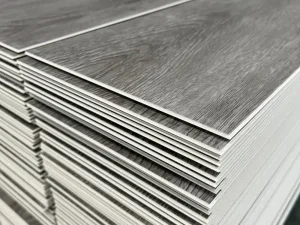
China SPC rigid vinyl plank with wood grain design for indoor flooring Supplier, Exporters
View Product Specs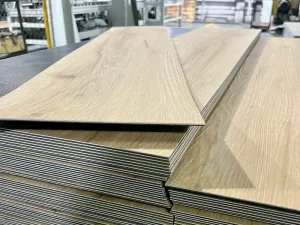
High-Quality LVT SPC Luxury Vinyl Tile Flooring for indoor using Exporter, Service
View Product Specs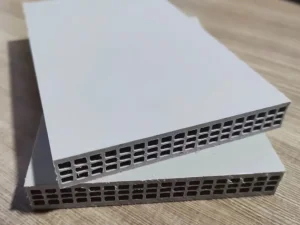
Wholesale PP Plastic Slab Concrete Hollow Formwork 18mm Exporters, Service
View Product Specs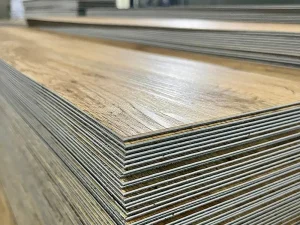
High-Quality Self-Adhesive Vinyl Tiles PVC LVT Plank Flooring Suppliers, Exporter
View Product Specs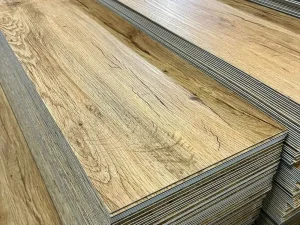
High-Quality Waterproof Plastic Vinyl LVT Glue Down Flooring Suppliers, Exporters
View Product Specs1. Executive Summary & Macro-Industry Solutions Architecture
In the rapidly evolving landscape of global commercial construction and residential architecture, material selection is no longer dictated solely by initial material expenditure. Procurement directors, structural engineers, and architectural specifiers face mounting pressures surrounding life-cycle cost analysis (LCCA), environmental compliance (LEED v4.1 certification), acoustic control, and extreme thermal resilience. As a premier Wood Plastic Composite Flooring Supplier & Exporters, Greenstar New Materials addresses these global engineering bottlenecks through advanced bio-polymer composite formulations and co-extrusion technology.
Wood Plastic Composite (WPC) flooring represents a critical technological convergence between solid timber's natural tactile aesthetic and high-density thermoplastics' non-hygroscopic durability. By encapsulating refined micro-wood fibers within a plasticized Polyvinyl Chloride (PVC) matrix, WPC core chemistry achieves structural strain relief, overcoming the classic vulnerabilities of traditional hardwood—such as warping, cupping, fungal rot, and hygroscopic expansion under fluctuating relative humidity (RH) conditions.
Technical Distinction Note: Unlike pure Stone Plastic Composite (SPC) flooring—which utilizes a dense limestone powder core—WPC flooring incorporates an internal foamed agent structure during multi-screw extrusion. This micro-cellular structure significantly lowers core density while dramatically enhancing sound absorption (Impact Insulation Class IIC ratings) and underfoot kinetic comfort without sacrificing structural tensile strength.
Subfloor Telegraphing Mitigation
The thick, foamed WPC core bridges minor subfloor imperfections up to 3mm over a 2-meter radius, eliminating labor-intensive self-leveling compound applications in commercial retrofits.
Acoustic Decibel Attenuation
Integrated closed-cell foamed polymer matrix combined with factory-laminated IXPE backings achieves STC 62dB and IIC 65dB acoustic isolation performance across standard concrete slab assemblies.
Dimensional Strain Equilibrium
Co-extruded structural equilibrium yields dimensional expansion coefficients below 0.08% under extreme ambient thermal shifts ranging from -20°C to +65°C testing protocols.
2. Global Commercial & Industrial Market Realities
The global resilient flooring market has undergone a structural shift away from traditional glue-down sheet vinyl and high-maintenance hardwood toward click-lock rigid and engineered composite core plank systems. Market intelligence indicates a compound annual growth rate (CAGR) exceeding 8.4% for Wood Plastic Composites in the B2B sector through 2030, driven predominantly by regional infrastructure dynamics:
Regional Market Specifics & Demand Drivers
North America (US & Canada): Focuses heavily on multi-family residential turnarounds, hospitality developments, and senior living facilities. The imperative here centers around acoustic compliance (IIC ratings meeting strict municipal building codes), quick click-system installation to reduce high domestic labor costs, and thick wearer layers (20mil / 0.55mm to 28mil / 0.7mm polyurethane coatings with ceramic bead additives).
European Union: Strictly governed by REACH chemical regulations, AgBB low-VOC emissions criteria, and CE European Conformity (EN 14041). European architectural firms demand 100% phthalate-free, non-recycled virgin vinyl top layers combined with certified sustainable wood flour sourcing (FSC compliance) to ensure complete environmental transparency.
Middle East & Tropical Regions: Projects in GCC countries and Southeast Asia require composite cores capable of enduring intense solar radiant heat, sub-floor thermal transfer, and high relative humidity without undergoing dynamic cupping or plasticizer migration. WPC's superior thermal insulation properties serve as a key barrier against sub-slab moisture vapor transmission.
3. Technical Material Science & Engineering Comparison Matrix
Understanding the mechanical variances between different resilient flooring classes is fundamental for architectural specification accuracy. Greenstar New Materials manufactures all resilient core variants under controlled thermal profile conditions:
| Performance Metric / Engineering Attribute | WPC Flooring (Foamed Composite) | SPC Flooring (Stone Rigid Core) | Traditional LVT (Flexible Vinyl) | Natural Hardwood Flooring |
|---|---|---|---|---|
| Core Material Structure | PVC + Wood Flour + Foaming Agent | Limestone Powder (CaCO3) + PVC | Plasticized PVC Polymeric Layers | Solid / Engineered Organic Timber |
| Average Core Density | 0.95 – 1.05 g/cm³ | 1.90 – 2.10 g/cm³ | 1.35 – 1.45 g/cm³ | 0.60 – 0.85 g/cm³ |
| Impact Resistance (ASTM F1265) | Very High (Cushioning foamed core) | Extreme (Brittle under localized point load) | Moderate (Conforms to subfloor) | Low (Dents under impact) |
| Acoustic Insulation (IIC Rating) | Superior (IIC 62 - 68 dB) | Moderate (IIC 50 - 55 dB without underlay) | Low (Requires specialized glue) | Moderate (Transmits hollow step sound) |
| Thermal Comfort & Insulation | High (Low thermal conductivity) | Low (Cold to the touch) | Moderate | High (Natural insulator) |
| 100% Waterproof Core Guarantee | Yes (Zero cellular absorption) | Yes (Zero cellular absorption) | Yes (Waterproof surface) | No (Swells & warps) |
| Subfloor Preparation Tolerance | High (Hides minor unevenness) | Moderate (Rigid click requires smooth floor) | Low (Telegraphs all bumps) | Low (Requires structural joists/subfloor) |
4. Localized High-Impact Commercial Application Scenarios
WPC flooring's specialized physical properties render it uniquely qualified for demanding high-traffic and environment-sensitive commercial interior installations:
Hospitality & Boutique Hotel Suites
Provides guestroom quietness through sound reduction while presenting hyper-realistic embossed-in-register (EIR) timber finishes that rival premium hardwood oak and walnut.
Multi-Family Living & Real Estate Retrofits
Rapid click-lock deployment accelerates tenant turnaround times. The foamed core buffers sound transmission between floor levels in multi-story apartment developments.
Healthcare & Senior Care Facilities
The ergonomic sub-layer cushions accidental falls for elderly residents, while anti-microbial UV polyurethane surface shields prevent bacterial growth and chemical stain penetration.
5. Localized Compliance Benchmarks & International Regulatory Standards
To enable frictionless global distribution and project specification, Greenstar New Materials subjects all WPC, SPC, and LVT production batches to rigorous Third-Party ISO/ASTM testing regimes:
- ASTM E648 / NFPA 253 (Critical Radiant Flux): Class 1 Fire Rating (>0.45 watts/cm²), mandatory for emergency egress pathways in North American commercial buildings.
- EN 13501-1 (European Fire Classification): Bfl-s1 rating certifying extremely limited contribution to fire and minimal smoke release density.
- ASTM F970 (Static Load Limit): Tested up to 1,500 PSI residual indentation limit, ensuring immunity to static heavy furniture or hospital bed wheel pressure.
- FloorScore® Certification: Rigorous VOC chamber testing verifying compliance with California Specification 01350 for healthy indoor air quality.
- ISO 23999 (Dimensional Stability & Curling under Heat): Exposed to 80°C thermal stress for 6 hours with total dimensional variance strictly contained under 0.05%.
6. Technical Innovation Roadmap & Next-Generation Horizons (2025–2030)
As an industry-leading manufacturer, Greenstar New Materials invests 5% of annual revenue into polymer engineering and multi-screw extrusion advancements inside our 3,000㎡ R&D center:
Phase 1: 2025
Bio-Based Polymeric Coupling
Replacing traditional synthetic plasticizers with bio-derived soy oil polymers and 100% closed-loop post-industrial recycled wood flour matrix solutions.
Phase 2: 2026 - 2027
Haptic 3D Digital Texture Direct-Print
Phasing out physical decor films in favor of direct ultra-high-definition UV digital ink printing paired with synchronized optical laser embossing for zero grain repetition.
Phase 3: 2028 - 2030
Self-Healing Smart Nanocoatings
Integrating micro-encapsulated nano-silica polyurethane shields capable of thermally reflowing under daylight exposure to self-repair surface micro-scratches.
Comprehensive Technical Q&A (FAQ) for Importers & Specifiers
In-depth answers from our engineering team regarding formulation, manufacturing tolerances, logistics, and on-site performance verification.
What fundamentally distinguishes WPC flooring from SPC rigid core flooring during manufacturing?
WPC (Wood Plastic Composite) utilizes a combination of virgin PVC, plasticizers, micro-encapsulated bio-wood flour, and chemical foaming agents extruded under pressure. This creates a cellular foamed core that is lighter, warmer, and acoustically quieter. In contrast, SPC (Stone Plastic Composite) uses non-foamed calcium carbonate (limestone) powder combined with PVC resin, resulting in a much denser, rigid core that exhibits high resistance to point-load impact but feels harder underfoot.
How does Greenstar ensure zero lot-to-lot color variation and pattern repetition across large commercial orders?
We source architectural decor films from master print houses utilizing high-resolution gravure cylinders and spectro-photometric inline color monitoring. For orders exceeding 10,000 square meters, production runs on dedicated extrusion lines with automated gravimetric raw material dosing, maintaining strict Color Delta E < 0.5 tolerances across all production batches.
What is the recommended click-lock profile for high-traffic commercial installations?
We utilize precision-milled patented click lock profiles (Unilin / Valinge 2G/5H drop-lock mechanics) cut with diamond-tipped CNC tooling. Drop-lock systems on the short end drastically speed up installation times while providing tensile joint strength exceeding 2.5 kN/m, preventing seam separation under rolling load stress.
Can WPC flooring be safely installed over radiant subfloor heating systems?
Yes. WPC flooring exhibits excellent dimensional stability under radiant hydronic or electric heat systems. Subfloor temperature should not exceed 27°C (80°F), and heating must be increased gradually at 2°C increments per 24 hours during initial startup to prevent thermal shock strain on the composite core.
What is your typical export production lead time and container packing efficiency?
Operating 8 automated continuous extrusion lines, standard full-container load (FCL) orders ship within 7 to 15 days from order confirmation. Palletized packaging is optimized for standard 20ft heavy-duty containers, fitted with moisture barrier shrink-wrap and corner protectors to ensure zero transit vibration damage.
Complete Resilient & Construction Material Lineup
Explore our full factory direct catalog including rigid core SPC planks, luxury vinyl tiles, and PP hollow concrete formwork systems.
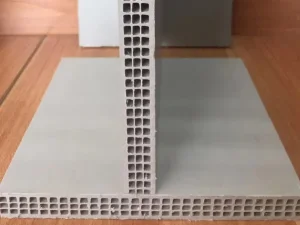
China PP Hollow plastic formwork panel 18mm for concrete Suppliers, Exporters
View Product Specs
High-Quality Waterproof Plastic Vinyl LVT Glue Down Flooring Suppliers, Exporters
View Product Specs
High-Quality Self-Adhesive Vinyl Tiles PVC LVT Plank Flooring Suppliers, Exporter
View Product Specs
Wholesale PP Plastic Slab Concrete Hollow Formwork 18mm Exporters, Service
View Product Specs
High-Quality LVT SPC Luxury Vinyl Tile Flooring for indoor using Exporter, Service
View Product Specs
China SPC rigid vinyl plank with wood grain design for indoor flooring Supplier, Exporters
View Product Specs
Wholesale Reusable plastic concrete shuttering formwork for construction building Supplier, Exporters
View Product Specs