
Flagship Polymer Boards & Architectural Flooring Systems
Explore our export-ready, high-density PVC/WPC boards, SPC click planks, luxury vinyl tiles, and 18mm PP structural formwork panels engineered for global B2B procurement.
Global Macro-Dynamics of WPC, PVC & Polymer Board Manufacturing
Analyzing the paradigm shift from traditional timber and plywood toward engineered polymer matrices across construction, interior architecture, and industrial shuttering.
The global construction and building materials landscape is undergoing a structural transition. Architectural specifications are increasingly favoring engineered composite materials over traditional plywood, MDF, and natural timber. At the epicenter of this technological shift are Wood-Plastic Composites (WPC), Polyvinyl Chloride (PVC) board systems, Stone-Plastic Composite (SPC) rigid cores, and Polypropylene (PP) hollow structural formwork. Driven by stringent environmental regulations, labor shortages, and demand for zero-maintenance performance in humid environments, high-performance polymer extrusion products have evolved from niche alternatives to mandatory industry standards.
Technical Information Gain Note: Modern PVC and WPC foam board manufacturing relies on precise closed-cell extrusion chemistry. By controlling the bulk density between 0.45 g/cm³ and 0.85 g/cm³ via microcellular foaming agents (azodicarbonamide) and acrylic processing aids, polymer manufacturers achieve flexural modulus values matching natural pine wood, while completely eliminating water absorption, fungal rot, and termite vulnerability.
Demand patterns for WPC and PVC board products vary sharply across international trade sectors, demanding specialized product configurations from Tier-1 China suppliers:
North America & EU Multi-Family
High demand for acoustic-rated SPC click flooring (IXPE backings) and low-VOC LVT tiles for multi-family residential housing, driven by fast installation protocols and strict fire safety standard compliance (EN 13501-1 Class Bfl-s1).
Middle East & GCC Infrastructure
Heavy reliance on 18mm PP hollow plastic formwork panels to withstand extreme ambient temperatures (>45°C) during concrete pour cycles, eliminating timber warping and delivering over 60 reutilizations per sheet.
Southeast Asia & LatAm Commercial
Rapid adoption of waterproof PVC celuka foam boards for modular cabinetry, bathroom vanities, and commercial signage due to high screw-holding power and immunity to monsoon season humidity.
The Shuyang Industrial Advantage: Factory Efficiency & Supply Chain Integration
How Greenstar New Materials Shuyang Co., Ltd. leverages regional raw material clusters, automated extrusion technology, and port logistics to lower total cost of ownership for importers.
Located in Shuyang County, Suqian City, Jiangsu Province—one of China's most advanced polymer and timber processing hubs—Greenstar New Materials represents the peak of Chinese factory efficiency. Sourcing directly from an integrated manufacturer eliminates broker markups while ensuring total oversight of polymer compounding, melt temperature stabilization, and dimensional tolerance checks.
Twin-Screw Extrusion Automation
Our facility houses 8 high-output conical twin-screw extruders operating with automated gravimetric dosing. This guarantees consistent PVC resin viscosity, uniform stone powder dispersion in SPC cores, and zero void formation inside PP hollow ribs.
Eco-Stabilized Formulations
We eliminate harmful lead-based stabilizers across all product lines, utilizing non-toxic Calcium-Zinc (Ca-Zn) thermal stabilizers. Products comply strictly with EU REACH standards, California Proposition 65, and zero-formaldehyde air quality mandates.
7–15 Day Rapid Freight Dispatch
Proximity to Lianyungang and Shanghai ports allows us to maintain tight production-to-vessel turnarounds. Standard order FCL containers leave our loading docks within 7 to 15 days of order confirmation.
Comprehensive Material Architecture & Technical Comparison
Understanding the micro-structural differences between LVT, SPC, PVC WPC foam boards, and PP structural formwork to match specific project requirements.
Choosing the correct polymer substrate is critical to preventing field failures such as floor telegraphing, click-lock fracture, structural thermal expansion, or early formwork delamination. Below is an engineering analysis of Greenstar's four core material categories:
| Product Line | Primary Composition Matrix | Key Physical Attributes | Best Application Use Case | Quality Verification Metric |
|---|---|---|---|---|
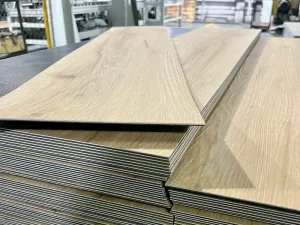
| LVT Luxury Vinyl Tile | Polyvinyl Chloride Resin + Plasticizers + Quartz Powder | Flexible, quiet walking acoustics, 0.07-0.55mm wear layer | Hospitality, healthcare, residential interior retrofits | ASTM F1700 Compliant |
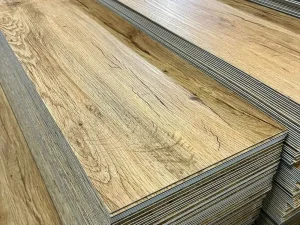
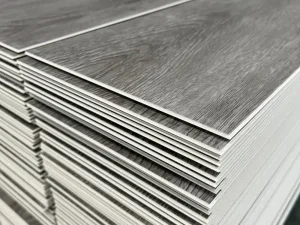
| SPC Rigid Core Flooring | ~70% Natural Limestone (CaCO3) + 30% PVC Composite | 100% Waterproof, rigid stability, Unilin/Valinge click system | High-traffic commercial, kitchens, basements, retail hubs | ISO 10582 Class 34 |
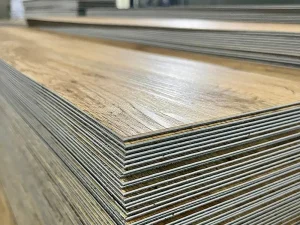
| WPC / PVC Celuka Board | Foamed PVC + Wood Powder (optional) + Ca-Zn Stabilizer | Rot-proof, high screw retention, easy sawing/routing | Cabinetry, marine furniture, exterior wall cladding | DIN 53452 Flexural |
| 18mm PP Hollow Formwork | Modified High-Impact Polypropylene (Hollow Rib Structural) | Zero water absorption, >60 reuses, clean concrete strip finish | Slab, wall, column, and beam concrete shuttering | EN 13377 Shuttering |
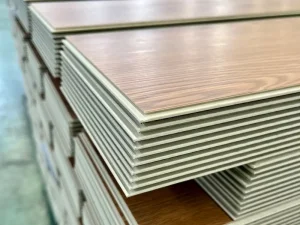
1. SPC Rigid Core Planks: Combining ultra-pure calcium carbonate with virgin PVC resin creates a core with a density exceeding 2,000 kg/m³. Unlike traditional laminate or flexible LVT, Greenstar SPC flooring does not cup or telegraph minor subfloor imperfections. Paired with double UV surface coating containing micro-ceramic beads, our SPC planks achieve scratch resistance ratings up to 4,000 revolutions under standard Taber abrasion testing.
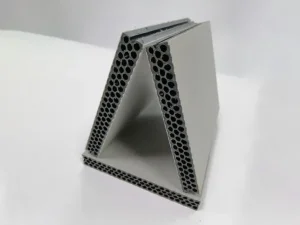
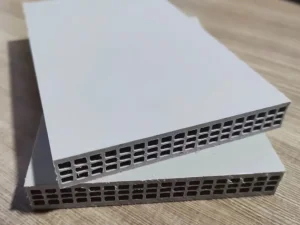
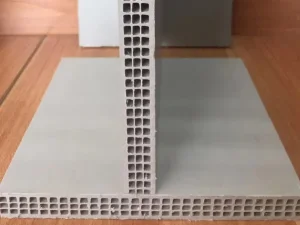
2. 18mm Polypropylene (PP) Hollow Formwork Panels: Engineered specifically as a sustainable replacement for costly marine plywood (Film Faced Plywood). The diagonal internal web-ribbing geometry provides high load capacity during wet concrete placement. Polypropylene's non-polar molecular structure ensures that wet concrete cannot adhere to the panel, eliminating the need for toxic chemical release oils and allowing effortless demolding.
Proven Applications Across Global Commercial & Industrial Projects
From high-rise concrete construction sites to luxury interior suites, explore how our material engineering translates into real-world efficiency.
High-Rise Concrete Shuttering
Using 18mm PP hollow formwork panels in poured-in-place concrete slabs and shear walls. Contractors achieve up to 80 repeated uses per panel, reducing overall shuttering costs by more than 40% compared to traditional timber plywood.
Hospitality & Boutique Hotels
Glue-down LVT and SPC rigid plank installations in hotel guest rooms and high-traffic corridors. Provides 100% waterproof protection against spillages, integrated sound deadening, and authentic visual reproduction of natural European oak and Italian marble.
Commercial Retail & Cleanroom Interiors
WPC foam boards and SPC flooring specified in medical clinics, supermarkets, and educational campuses due to antibacterial surface coatings, zero phthalate emissions, and easy maintenance under heavy daily foot traffic.
B2B Procurement Protocols & On-Site Quality Assurance
How procurement managers and structural engineers can inspect and verify high-quality polymer boards prior to container shipment.
Sourcing building materials at scale requires robust quality control protocols to protect project timelines and capital investments. As a transparent manufacturer, Greenstar encourages clients to execute or request the following four critical laboratory and jobsite test benchmarks:
1. Heat Warpage & Dimensional Stability Test (ISO 23999 / EN 434): Polymer boards and click flooring samples are exposed to an 80°C (176°F) oven environment for 6 hours, followed by 24 hours of room-temperature conditioning. High-grade SPC and WPC boards must exhibit dimensional variation under 0.15% and curling under 0.2mm to prevent buckling in sunlit commercial installations.
2. PP Formwork Sheet Density & Rib Weight Check: For 18mm PP hollow plastic formwork, sheet weight correlates directly with structural load resistance. Premium 18mm formwork panels must weigh at least 13.5 kg to 14.5 kg per standard sheet (1220x2440mm). Inferior manufacturers reduce weight by thinning internal vertical ribs, causing wave-like wall deformation under wet concrete pressure.
3. Click Locking Strength (ISO 24334): SPC click profile joint integrity is tested for tensile force resistance. Greenstar's patented Unilin/Valinge locking geometry resists up to 4.5 kN/m pull-apart tension, preventing joint separation under heavy rolling load equipment.
4. Formaldehyde & Volatile Organic Compound Emission (EN 717-1): Utilizing gas chromatography testing, our products achieve zero-detectable formaldehyde emissions (E0 Grade / FloorScore Certified), protecting indoor environmental quality (IEQ) for LEED-certified projects.
Circular Economy & Green Manufacturing Innovation
Driving carbon neutrality through recycled polymer integration, zero-waste extrusion loops, and long-life reusable construction formwork systems.
Environmental accountability is no longer optional in global construction procurement; it is a primary contracting specification. The composite polymer industry is advancing rapidly toward closed-loop manufacturing frameworks:
100% Recyclable PP Formwork Loop
At the end of its 60+ job-site service life, damaged or worn PP hollow formwork boards are collected, reground, and re-extruded into fresh structural panels without degrading polymer strength, preventing tons of timber waste from entering landfills.
Bio-Based Plasticizers & Zero Lead
Our ongoing R&D focuses on incorporating plant-derived bio-plasticizers into LVT formulations and 100% Ca-Zn non-toxic stabilization in WPC boards, satisfying strict EU RoHS and REACH environmental guidelines.
Energy-Efficient Extrusion Lines
By upgrading our Shuyang factory line heaters to electromagnetic induction systems, Greenstar has lowered manufacturing energy consumption by 22% per output ton, effectively reducing the embedded carbon footprint of our exported materials.
Frequently Asked Questions by Global Procurement Buyers
Expert insights compiled by Greenstar's senior polymer engineers and export logistics directors to answer your technical and purchasing inquiries.
Explore Featured Products & Wholesale Formwork Solutions
Review our core export solutions ready for container consolidation and immediate international delivery.
Partner with China's Premier Polymer Board Manufacturer
Gain a competitive edge in your market with factory-direct pricing, custom engineering support, rapid 7-15 day container dispatch, and proven product reliability trusted across 40+ countries.