
High-Performance Surfacing & Formwork Portfolio
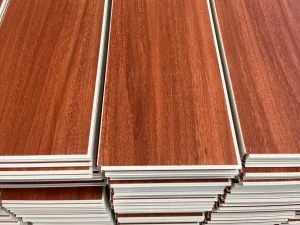
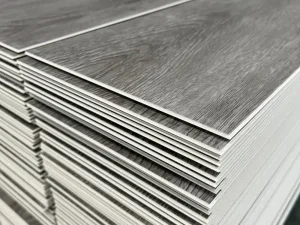
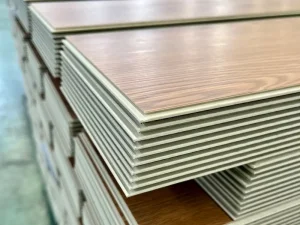
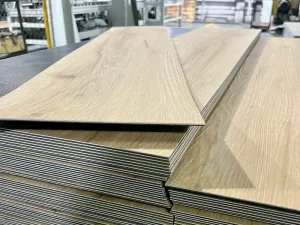
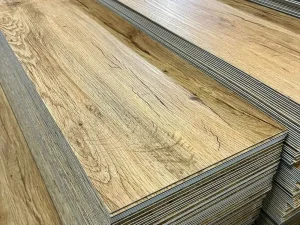
Direct factory supply featuring certified SPC rigid cores, LVT flexible systems, and high-durability PP concrete formwork solutions engineered for worldwide commercial deployment.
Executive Industry Analysis: The Global Shift Toward Polymer Surfacing
The global commercial interior architectural surface sector is undergoing a profound structural transition. Driven by the stringent evolution of building codes, accelerated commercial renovation cycles, and an intense industrial focus on life-cycle sustainability, traditional interior wall lining materials—such as solid wood paneling, natural stone cladding, and paper-faced gypsum boards—are rapidly losing market share to advanced polymer composite systems. Among these, **PVC decorative wall panels** have emerged as the dominant surfacing technology across commercial, hospitality, institutional, and high-density residential developments globally.
Projections indicate the global market for synthetic decorative wall cladding will exceed USD 11.8 Billion by 2030, expanding at a Compound Annual Growth Rate (CAGR) of over 7.2%. This growth trajectory is heavily propelled by urban infrastructure expansion in North America, Western Europe, and the Asia-Pacific region, alongside an increasing demand for pre-finished, low-VOC, moisture-impermeable, and fire-retardant interior wall envelopes.
Key Market Drivers Accelerating Global Adoption
Total Lifecycle Labor Savings
Scarcity of skilled masonry and carpentry labor globally has elevated dry-wall installation efficiency into a critical key performance indicator (KPI). PVC panels eliminate the necessity for multi-coat plastering, sanding, priming, and painting.
Hydrophobic Impermeability
Unlike MDF or traditional drywall, virgin PVC and polymer-bound mineral cores possess a closed-cell physical matrix that exhibits absolute zero water absorption, permanently preventing micro-biological mold growth, warp, and rot in high-humidity zones.
High-Definition Architectural Finishes
Innovations in gravure digital printing, multi-pass UV lacquer curing, and 3D register embossing allow polymer surfaces to flawlessly replicate rare exotic marbles, linear slate, brushing metallic veneers, and natural timber grains with ultra-realistic tactile fidelity.
Material Science: Classification and Chemical Formulations
A granular analysis of polymer formulations, core densities, and structural classifications defining contemporary architectural wall panels.
The technical term "PVC Wall Panel" encompasses four distinct engineered sub-categories, each engineered with specific physical properties, core densities, and chemical additives tailored to unique structural demands:
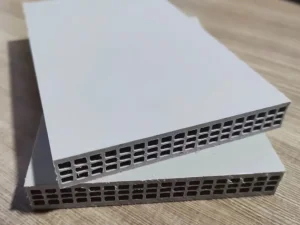
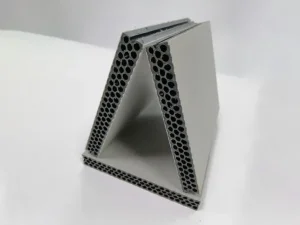
- 1. Hollow-Core PVC Panels (Cellular PVC): Manufactured via continuous extrusion of high-purity PVC resin combined with calcium carbonate ($CaCO_3$) and foaming agents. Characterized by an internal honeycomb or rib-reinforced hollow chamber, these panels provide extreme lightweight characteristics (typically $1.8 \text{ to } 2.8 \text{ kg/m}^2$), superior thermal insulation, and exceptional acoustic dampening properties.
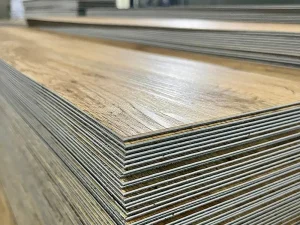
- 2. Stone Plastic Composite (SPC) Architectural Sheets: Formulated using a ultra-dense, rigid stone-polymer blend comprising approximately **70% micro-ground natural limestone powder** and **30% virgin Polyvinyl Chloride resin**, stabilized with non-toxic heat stabilizers. SPC sheets offer superior structural rigidity, high impact resistance, dimensional stability under severe thermal shifts, and a certified EN 13501-1 Class B-s1,d0 fire retardancy rating.
- 3. Wood Plastic Composite (WPC) Louvers & Fluted Wall Panels: Produced by co-extruding refined timber fibers (typically pine or bamboo flour) mixed with recycled or virgin thermoplastic PVC resins, coupling agents, and UV absorbers. WPC wall panels deliver authentic wooden aesthetic warmth combined with high weather resistance, anti-termite immunity, and high flexural strength.
- 4. Micro-Acoustic Felt Backed Slatted Panels: A hybrid technological assembly consisting of precision-slatted WPC or MDF/PVC core strips mounted onto a high-density, sound-absorbing polyethylene terephthalate (PET) acoustic felt substrate, engineered to reduce reverberation times in corporate environments.
Technical Performance Matrix: Material Comparison
| Performance Metrics | Hollow Cellular PVC | Rigid SPC Sheet | WPC Fluted Louver | Acoustic Slatted PET |
|---|---|---|---|---|
| Core Density ($\text{g/cm}^3$) | 0.55 – 0.75 | 1.90 – 2.10 | 0.95 – 1.15 | 0.35 – 0.50 (felt base) |
| Fire Classification (EN 13501-1) | Class B-s2, d0 | Class B-s1, d0 | Class C-s2, d0 | Class B-s2, d0 |
| Water Absorption (24 hr Immersion) | < 0.1% (Hydrophobic) | 0.00% (Absolute Zero) | < 0.5% | < 1.2% |
| Thermal Conductivity ($\text{W/m}\cdot\text{K}$) | 0.06 – 0.08 (Insulative) | 0.15 – 0.18 | 0.10 – 0.12 | 0.04 – 0.05 (High Insulation) |
| Formaldehyde Emission | E0 Grade / ND | E0 Grade / ND | E0 Grade / ND | E0 Grade / ND |
| Acoustic Reduction Rating (NRC) | NRC 0.15 | NRC 0.10 | NRC 0.25 | NRC 0.75 – 0.85 |
The China Factory Advantage: Scale, Tech & Supply Efficiency
Unpacking the industrial clustering, automated extrusion infrastructure, and cost efficiencies that make Chinese suppliers the premier choice for global procurement leaders.
China’s dominant position in the manufacturing and global export of PVC decorative wall panels, SPC flooring, and construction formwork rests upon an unparalleled industrial supply ecosystem. Key manufacturing hubs located in Shuyang (Jiangsu Province), Zhejiang, and Shandong bring together raw polymer chemical refining, precision hot-melt lamination, multi-axis profile slotting, and port logistics within tight operational radii.
Modern Chinese production facilities have evolved far beyond manual assembly. Leading OEM enterprise facilities deploy fully automated **German Homag slotting lines**, KraussMaffei co-extrusion technology, and Barberan high-speed PUR wrap hot-melt laminators. This automation yields crucial competitive advantages for overseas procurement directors:
Quality Assurance Protocols in Advanced OEM Facilities
Tier-1 Chinese factories enforce rigorous in-line quality assurance frameworks certified under ISO 9001 and ISO 14001 international standards. Every export batch undergoes standardized destructive and non-destructive testing before container sealing:
- Thermal Aging & Shrinkage Chamber Test: Samples are subjected to $80^\circ\text{C}$ environmental chamber cycles for 6 hours to verify dimensional movement remains strict under $\le 0.12\%$, eliminating field buckling.
- PUR Bond Delamination Resistance Test: Accelerated boiling water immersion for 48 hours ensures zero film peeling or adhesive degradation between the decorative wear layer and the structural substrate.
- Micro-Scratch & UV Light Stability Aging: QUV accelerated weathering equipment tests colorfastness, guaranteeing surface anti-yellowing performance under Grade 7-8 Xenon arc standards.
Localized Architectural & Sector-Specific Applications
From luxury hospitality fit-outs to sterile medical environments, explore how specific polymer wall systems solve complex functional requirements.
Hospitality & Commercial Retail Feature Walls
In high-traffic boutique hotel lobbies and luxury retail outlets, high-gloss SPC UV marble sheets deliver the magnificent visual elegance of continuous Italian Calacatta or Nero Marquina marble at approximately 15% of installed material costs. Their non-porous surface protects against heavy impact, baggage scraping, and stain penetration while facilitating rapid night-shift wipe-downs.
Healthcare, Cleanrooms & Sterile Environments
Hospitals, pharmaceutical facilities, and laboratory environments demand absolute hygienic compliance. Seamlessly installed tongue-and-groove PVC wall cladding eliminates open grout lines that harbor dangerous bacteria, fungi, and pathogens. These panels resist chemical corrosion from aggressive medical disinfectants (such as isopropyl alcohol and sodium hypochlorite solution).
Wet Areas, Bathrooms & Sub-Grade Basements
Conventional painted drywall in residential shower enclosures and damp sub-grade basements frequently fails due to vapor migration, leading to blistering paint and toxic black mold. Hydrophobic SPC and Cellular PVC wall linings create an impenetrable vapor barrier that maintains structural integrity across relative humidity levels fluctuating from 10% to 100%.
Corporate Workspaces & Open Offices
In contemporary corporate fit-outs, controlling sound reflection is vital for workplace productivity. Micro-acoustic PET-backed slatted WPC wall panels absorb low and mid-frequency ambient chatter, lowering sound reverberation (RT60) while serving as modern minimalist wood accent features.
Global Procurement Strategy & TCO Optimization
How procurement directors mitigate international supply chain risks, optimize container logistics, and achieve maximum cost effectiveness.
A rigorous Total Cost of Ownership (TCO) calculation extends far beyond initial FOB (Free on Board) factory gate unit prices. International procurement officers must evaluate shipping cube efficiency, site wastage rates, installation speeds, and long-term maintenance costs.
Essential Checklist for Overseas Importers & Wholesalers
- Verify Core Resin Composition: Ensure suppliers guarantee **100% virgin PVC resin** for structural wall linings. Reclaimed or recycled low-tier plastics contain heavy metal residues (such as lead or cadmium) and volatile phthalates that trigger toxic off-gassing and cause premature panel brittleness.
- Analyze Film Thickness & UV Coating Layers: Demand a minimum wear film thickness of 0.3mm for commercial installations, fortified with a double-pass acrylic UV lacquer coating containing ceramic bead additives to prevent surface micro-scratching.
- Container Payload Optimization: Work with the manufacturer's packaging engineers to maximize payload weight and volume in 40ft High Cube (40HQ) containers. Nesting acoustic fluted panels or bundling flat SPC sheets on reinforced fumigated plywood pallets guarantees safe transport while minimizing freight per unit.
- Regulatory Certification Alignment: Ensure compliance with destination market standards: CE marking for European markets, ASTM E84 Class A flame spread testing for North America, and ISO 14021 environmental declarations.
Future Industry Trends & Technological Innovations
The next generation of polymer wall systems: Circular economy formulations, tactile textures, and smart modularity.
Bio-Based Polymers & Closed-Loop Recycling
Next-generation raw material formulations replace petroleum-derived vinyl polymers with bio-attributed PVC produced from pine wood waste processing byproducts. Integrated recycling initiatives allow job-site trim scrap to be re-ground directly back into structural core extrusion lines.
Synchronized 3D Tactile Digital Printing
Advanced multi-channel inkjet printing systems align high-resolution decorative grain imagery directly with micro-embossing rollers. The resulting surface finish exhibits tactile depth that faithfully replicates natural timber pores, stone fissures, and brushed metal textures.
Integrated Smart Wall Panels
Innovations incorporate conductive copper trace tracks directly into panel locking systems, enabling seamless integration of low-voltage ambient LED backlight ribbons, sensor arrays, and magnetic wall fixture systems without visible external wiring.
Frequently Asked Questions for Global Procurement
Expert responses addressing technical specifications, installation guidelines, quality control, and international shipping logistics.
What is the key technical difference between SPC wall panels and Hollow Cellular PVC wall panels?
SPC (Stone Plastic Composite) wall panels are solid, ultra-dense sheets ($1.9\text{--}2.1\text{ g/cm}^3$) composed of limestone powder and PVC resin, engineered for extreme impact resistance, high rigidity, and superior fire retardancy (EN 13501-1 B-s1,d0). Cellular Hollow PVC panels feature an internal rib structure with lower density ($0.55\text{--}0.75\text{ g/cm}^3$), making them lightweight, easier to install overhead, and cost-effective for large-scale ceiling and standard wall applications.
How do PVC wall panels perform under extreme thermal variations and sunlight exposure?
High-quality PVC wall panels formulated with virgin polymers and heat stabilizers exhibit dimensional stability across temperatures ranging from $-15^\circ\text{C}$ to $+65^\circ\text{C}$. For environments with direct solar heat loading, multi-layer UV lacquer coatings prevent thermal yellowing and film degradation. For high-temperature exterior applications, specialized co-extruded WPC formulations with added anti-UV chemical packages are recommended.
Are PVC decorative wall panels compliant with strict indoor air quality (VOC) standards?
Yes. Premium wall panels manufactured with 100% virgin PVC and lead-free calcium-zinc stabilizers emit virtually non-detectable Volatile Organic Compounds (VOCs) and zero formaldehyde. They comfortably achieve FloorScore, Greenguard Gold, and European E0 environmental safety ratings, making them safe for installation in residential spaces, schools, and medical facilities.
What installation methods are utilized for mounting PVC and WPC wall panels?
Panels can be directly installed over flat, dry substrates (such as gypsum board, existing tile, or smooth plaster) using high-grab polyurethane structural adhesive or high-strength MS polymers. For uneven or damp masonry walls, a lightweight aluminum or galvanized steel stud frame system is recommended, securing panels via concealed stainless-steel mounting clips along the tongue-and-groove joint profile.
What is the typical lead time and MOQ for custom OEM color matching and private labeling?
Standard factory minimum order quantities (MOQs) for custom decorative film matching or private-label box packaging are typically 500 to 1,000 square meters per decor option. Following laboratory color matching approval (which takes 3 to 5 business days), mass manufacturing and export container loading are completed within 10 to 15 operational days.
How does reusability work for PP hollow plastic concrete formwork compared to traditional marine plywood?
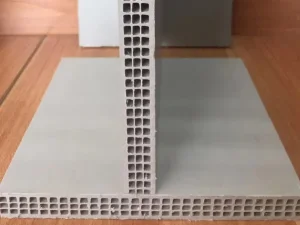
PP (Polypropylene) hollow plastic formwork panels are engineered to endure **60 to 100 concrete pour reuses**, compared to only 5 to 10 reuses for traditional plywood shuttering. PP formwork is 100% waterproof, does not swell, rot, or delaminate under wet curing, requires no chemical release agent oiling, and produces a smooth face finish that eliminates the need for plastering.
Explore Export-Ready Flooring & Formwork Solutions
Select from our certified range of resilient vinyl tiles, waterproof rigid SPC boards, and high-reuse construction formwork systems.
Partner with China's Premier Polymer Surfacing Factory
Accelerate your procurement pipeline with certified engineering specifications, fast sample dispatch, and direct OEM/ODM wholesale manufacturing support.
Request Factory Quote & Architectural Samples