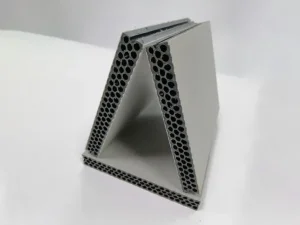
High-Performance Architectural Panels & Systems
Factory-direct structural formwork and interior decorative cladding engineered for high durability, acoustic attenuation, and total moisture resistance.
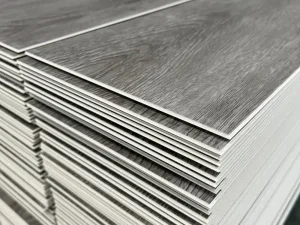
Macro Economic Shifts in Global Polymer Wall Cladding
Analyzing the transition from organic masonry and timber substrates to high-density polymer matrix composite wall panels across commercial and residential sectors.
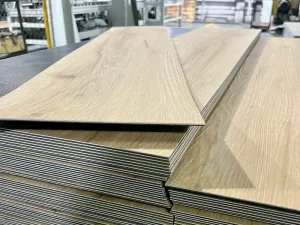
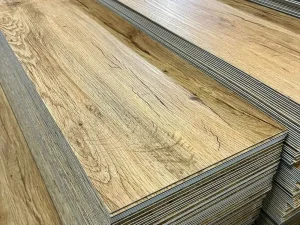
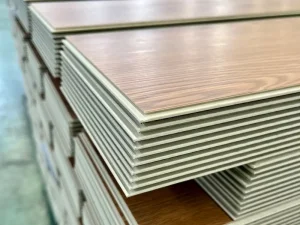
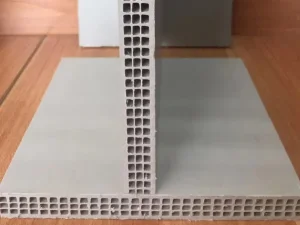
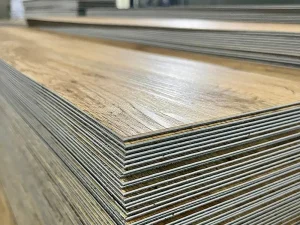
The global construction and architectural surfacing market is experiencing a structural migration toward advanced synthetic polymer materials. As wholesale wall PVC panel sheet exporters scale production to meet worldwide demand, Polyvinyl Chloride (PVC) wall sheets, Stone Plastic Composite (SPC) wall boards, and hollow-core extruded panels are displacing traditional wall materials such as gypsum drywall, ceramic tiles, natural marble slabs, and timber paneling. Driven by tightening labor markets, aggressive modern sustainability mandates, and the imperative for accelerated site assembly, high-density PVC panels offer an unassailable value proposition for real estate developers, contractors, and commercial facility managers.
Key Takeaway for B2B Procurement Officers
Modern extrusion technology allows PVC wall panels to achieve Class A fire ratings (ASTM E84 / EN 13501-1), 100% moisture immunity, and high acoustic attenuation (STC ratings up to 45 dB with acoustic backings), all while reducing installation timelines by up to 65% compared to wet-trade tile setting or stone masonry.
Global Market Growth Drivers & Consumption Trends
Market analytical data projects the global polymer building panel market to expand at a CAGR exceeding 7.2% through 2032. This growth trajectory is fueled by four critical macroeconomic imperatives:
- Rapid Modern off-site & Dry Construction: Contractors are abandoning traditional plastering and tile setting due to high labor costs and protracted drying times. Lightweight PVC wall sheets utilize tongue-and-groove or click-lock interlocking systems, enabling dry installation directly over bare studs or existing sub-walls.
- Moisture & Mold Abatement: In high-humidity climates (e.g., Southeast Asia, coastal Americas, Gulf Cooperation Council regions), organic wall substrates suffer from fungal rot, paper delamination, and efflorescence. PVC resin matrix structure is intrinsically impervious to water absorption (absorptivity < 0.01%).
- Hygiene and Cleanroom Regulatory Mandates: Healthcare facilities, pharmaceutical manufacturing plants, and food preparation cleanrooms require non-porous, seamless, and chemical-resistant surfaces capable of enduring severe sanitization regimes involving hydrogen peroxide misting and chlorine solutions.
- Weight Reduction in High-Rise Architecture: Substituting heavy natural marble (approx. 75 kg/m²) or fiber cement board (approx. 18 kg/m²) with rigid PVC marble sheet (approx. 4.2 kg/m²) dramatically lowers structural deadload requirements in multi-story developments.
Structural Engineering & Chemical Formulation
A granular look into the multi-layer extrusion physics, additive chemistry, and thermal stabilization mechanisms of export-grade PVC sheet products.
Polymer Core & Fillers
Formulated with virgin Suspension-Grade PVC Resin (K-value 65-67) blended with ultra-fine heavy calcium carbonate (CaCO3) powder to optimize flexural modulus, impact strength, and dimensional stability under thermal load.
Thermal Stabilizers & Fire Retardants
Utilizes environmentally safe Calcium-Zinc (Ca/Zn) heat stabilizers eliminating toxic lead or cadmium heavy metals. Flame retardancy is boosted via antimony trioxide and alumina trihydrate additives.
UV-Cured Acrylic Topcoat
Multi-pass high-energy UV lacquer treatment provides scratch resistance (Pencil Hardness up to 3H-5H), stain repellency, and anti-yellowing performance against continuous indoor fluorescent and daylight UV exposure.
Architectural Material Performance Comparison Matrix
To evaluate the technical superiority of rigid extrusion PVC wall sheets for wholesale procurement, consider the comparative technical matrix compiled by our testing laboratories:
| Performance Metric | Extruded PVC Wall Sheet | Gypsum Drywall | Ceramic Wall Tile | Natural Marble Slab |
|---|---|---|---|---|
| Areal Weight (kg/m²) | 3.5 – 6.0 kg/m² | 9.5 – 12.0 kg/m² | 16.0 – 22.0 kg/m² | 50.0 – 80.0 kg/m² |
| Water Absorption Rate (%) | < 0.05% (Impervious) | > 8.0% (Swells/Degrades) | 0.5% – 3.0% | 0.1% – 0.5% (Porous) |
| Installation Velocity | 40 – 60 m²/day/worker | 15 – 25 m²/day/worker | 8 – 12 m²/day/worker | 3 – 5 m²/day/worker |
| Fire Rating (ASTM E84) | Class A (FSI < 25, SDI < 450) | Class A (Type X) | Non-combustible | Non-combustible |
| Impact Resistance (Izod J/m) | > 45 J/m (High Toughness) | Low (Brittle/Punctures) | Medium (Chips/Cracks) | High (Cracks on Impact) |
| VOC Emissions (ISO 16000) | A+ Grade / Low VOC | Depends on Joint Compound | Zero VOC | Zero VOC |
Evaluating Wholesale Exporters & Quality Control Protocols
Crucial criteria for global importers, commercial distributors, and OEM buyers when auditing PVC wall panel manufacturing infrastructure.
In global B2B procurement, price per square meter is only one vector of the decision matrix. Sourcing low-grade PVC panels formulated with excessive, un-milled recycled content or deficient calcium carbonate dispersion leads to disastrous field failures, including catastrophic thermal warping, joint splitting, surface delamination, and toxic VOC off-gassing. Buyers must perform rigorous factory audits against five core manufacturing benchmarks:
1. Co-Extrusion Calibration & Screw Geometry
Inspect whether the exporter utilizes twin-screw parallel extruders with computerized temperature control across multi-zone barrels. Precise melt temperature profile management (typically maintained between 165°C and 185°C) guarantees uniform PVC polymer gelation without molecular chain degradation or pinhole voids.
2. Decorative Layer Transfer Technology
High-tier exporters employ state-of-the-art thermal transfer hot-stamping or high-definition rotogravure film lamination under pressure rollers. Ensure the decorative film thickness is at least 0.08mm to 0.12mm with UV inhibitors to prevent color fading or optical distortion over long-term deployment.
3. Calendering & Surface Flatness Tolerances
Wall panels require strict visual and physical tolerances. Thickness variation across a 1220mm wide panel must not exceed ±0.05mm. Diagonal squareness tolerances must be locked within ±0.5mm to eliminate cumulative gap errors during large-scale wall interlocking.
4. Accelerated Thermal Aging & Expansion Tests
Quality exporters subject batch samples to thermal conditioning tests (e.g., 80°C exposure for 6 hours followed by rapid cooling to -15°C). The linear thermal expansion coefficient of premium PVC wall sheets should remain below $6.0 \times 10^{-5} /^\circ\text{C}$ to avoid buckling near heat sources.
Localized Application Scenarios & Regional Compliance
Adapting PVC wall sheet specifications to satisfy distinct regional building codes, climatic extremes, and functional room requirements.
Healthcare & Clinical Facilities
Requirement: Seamless, non-porous antibacterial cladding.
Solution: Smooth, semi-rigid PVC sheet with silver-ion antimicrobial topcoat. Thermoformed around outer/inner corners to eliminate dirt-trapping 90° joints, passing ISO 22196 antibacterial performance testing.
Hospitality & Luxury Commercial
Requirement: High aesthetic appeal, acoustic damping, rapid fit-out.
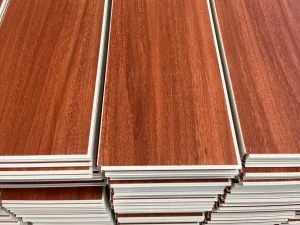
Solution: High-definition UV marble & wood grain PVC sheets backed withIXPE foam acoustic underlay. Delivers sophisticated stone aesthetics at 10% of natural marble material and labor cost.
High-Humidity & Marine Interiors
Requirement: Salt-spray resistance, zero mold proliferation.
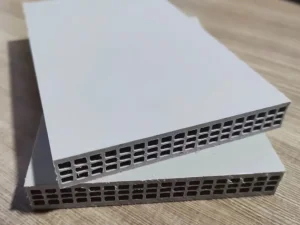
Solution: Hollow-core structured PVC fluted panels for luxury yacht interiors, coastal hotels, and underground metro stations where moisture intrusion renders organic wood paneling useless.
Regional Regulatory Compliance Standards
Exporting PVC wall panel sheets internationally requires adhering to country-specific building codes and environmental certifications:
- North America (US & Canada): Must comply with ASTM E84 flame spread (< 25) and smoke development (< 450), alongside FloorScore or GREENGUARD Gold certifications for indoor air quality compliance under LEED v4 guidelines.
- European Union (CE Marking): Must satisfy EN 13501-1 fire classification (typically B-s1, d0), REACH regulation (zero SVHC substances including phthalate plasticizers DEHP, DBP, BBP), and RoHS hazardous substance restrictions.
- Middle East (GCC Countries): Demands high thermal deflection temperatures (HDT > 75°C) to prevent panel distortion in un-conditioned summer storage, as well as Civil Defense approval for fire safety compliance.
- Australia & New Zealand: Compliance with AS/NZS 3837 standard test method for heat and smoke release rates for materials in building interiors.
Technical Evolution & Sustainable Innovations
Next-generation polymer chemistry, circular economy integration, and smart decorative surface technology driving the future of wall panels.
1. Bio-Based PVC Resins & Recycled Composites
The industry is transitioning toward bio-attributed PVC resins synthesized from tall oil and agricultural waste feedstocks, drastically reducing cradle-to-gate carbon footprints. Closed-loop manufacturing loops enable factory scrap to be re-granulated into core substrate layers without degrading structural rigidity.
2. Nanotechnology-Enhanced Scratch & Anti-Fingerprint Surfaces
Integrating nano-silica ($SiO_2$) and ceramic micro-spheres into UV-curable topcoats yields super-hydrophobic, anti-fingerprint, and self-healing matte surfaces. Minor micro-scratches dissipate under low thermal exposure, maintaining pristine commercial wall finishes.
3. Co-Extruded Acoustical Core Structures
Developing multi-chamber extruded hollow micro-cells engineered specifically to trap acoustic waves at speech frequencies (250 Hz – 2000 Hz). This eliminates the need for auxiliary mineral wool acoustic batts in commercial office partitions.
4. Smart Tactile & Synchronized Embossing (EIR)
Embossed-in-Register (EIR) press technology perfectly synchronizes visual timber grain or natural marble veining with physical surface textures. This achieves 100% optical and tactile realism indistinguishable from natural stone or hardwood.
Export Packaging Engineering & Global Logistics
Mitigating ocean transport risk, container payload optimization, and ensuring zero-damage delivery across international shipping routes.
Polymer wall panel sheets are susceptible to edge chipping, flexural cracking, and surface scratching during multi-modal ocean transit if packaging engineering is compromised. Professional exporters execute stringent packaging and containerization protocols:
| Logistics Stage | Protection & Optimization Protocol | Risk Mitigation Target |
|---|---|---|
| Primary Surface Wrapping | PE Protective Film (50–70 microns) applied directly onto UV face, peelable after final site installation. | Prevents abrasive scratching and dust contamination during site installation. |
| Corner & Edge Shielding | High-density L-shaped corrugated paperboard angle bead corner protectors secured with PET strapping. | Eliminates corner crushing during forklift handling and side-wall container impact. |
| Palletization & Bundling | Fumigated solid wood or non-coniferous plywood pallets with bottom corrugated buffer sheets. Fully shrink-wrapped. | Prevents moisture vapor ingress and secures bundles against container vibration. |
| Container Space Optimization | Customized panel dimensioning tailored to 20GP/40HQ internal dimensions (e.g., 1220x2440mm, 1220x2800mm, or 1220x2900mm). | Maximizes volumetric payload utilization up to 98%, reducing freight cost per unit. |
Frequently Asked Questions for B2B Importers
Direct technical answers addressing engineering parameters, minimum order quantities, customization options, and quality assurance.
What is the exact chemical distinction between rigid PVC wall sheets, SPC wall panels, and foam PVC boards?
Rigid PVC Wall Sheets (UV Marble Sheets): Typically possess a 30:70 ratio of PVC resin to calcium carbonate, extruding into a high-density, semi-flexible sheet with a high-gloss UV layer imitating natural marble.
SPC Wall Panels (Stone Plastic Composite): Utilize a higher mineral ratio (approx. 20:80 PVC to CaCO3), creating a completely rigid, heavy-duty core that utilizes click-lock profile joints for floating dry-wall installations.
Foam PVC Boards (Celuka / Free Foam): Incorporate blowing agents (such as azodicarbonamide) during extrusion to reduce density to 0.45 – 0.70 g/cm³, resulting in a lightweight, workable board ideal for signages, ceiling panels, and lightweight cabinetry.
How do PVC wall panel exporters guarantee fire retardancy compliance for commercial interior projects?
Fire retardancy is engineered by combining chlorine-rich PVC resin (which is naturally self-extinguishing) with inorganic flame retardant fillers like alumina trihydrate and antimony trioxide. Batches are tested according to ASTM E84 (Standard Test Method for Surface Burning Characteristics of Building Materials) to secure a Class A Flame Spread Index (< 25) and EN 13501-1 (Euroclass B-s1, d0), ensuring negligible smoke emission and zero flaming droplets.
Can PVC wall panel sheets be installed directly over existing ceramic tiles or rough concrete sub-walls?
Yes. PVC wall panel sheets can be retrofitted directly over existing ceramic tiles, drywall, or clean masonry using high-tack polyurethane structural adhesive or silane-modified polymer (SMP) adhesives. For uneven or damp concrete masonry walls, installing a timber or aluminum furring strip framing system allows tongue-and-groove or click-lock PVC panels to be mechanically fastened, creating a ventilated air cavity that prevents moisture trapping.
What are the standard factory lead times, Container Load Quantities (MOQ), and shipping terms?
Standard manufacturing lead times range from 7 to 15 business days following deposit confirmation and art proof approval. Standard Minimum Order Quantities (MOQ) are typically one 20-foot GP container (approx. 1,200 to 1,600 sheets depending on thickness). We offer flexible international trade terms including FOB (Free on Board), CIF (Cost, Insurance, Freight), and DDP (Delivered Duty Paid) directly to destination warehouses.
How does outdoor UV exposure affect PVC wall sheets, and are exterior grade panels available?
Standard indoor PVC wall panel sheets will experience color degradation and embrittlement if exposed to long-term direct outdoor sunlight due to UV-induced polymer chain scission. For exterior cladding applications, exporters formulate specific exterior-grade ASA-PVC co-extruded panels or apply specialized PMMA (Acrylic) weatherable protective films containing ASA (Acrylonitrile Styrene Acrylate) UV stabilizers engineered for 10+ years of weather resistance.
What custom OEM/ODM services are available for wholesale buyers?
We provide full OEM/ODM manufacturing capabilities including custom decor print matching (stone, wood, metallic, concrete patterns), customized sheet lengths (up to 3500mm to eliminate vertical wall seams), bespoke sheet thicknesses (1.5mm to 10mm), specialized joint profiles (micro-bevel, seamless V-groove, fluted wall battens), and custom private-label protective films and carton branding.
Explore Our Export Product Catalog
Review our complete spectrum of factory-direct flooring, formwork, and architectural wall systems ready for international shipment.