
High-Demand China Export Products for New Zealand Infrastructure & Commercial Fit-outs
Engineered to withstand Oceania maritime humidity, seismic soil shifts, and stringent environmental criteria.
The New Zealand Commercial & Residential Construction Landscape
Analyzing trade imbalances, supply vulnerabilities, and structural material transition across the North and South Islands.
New Zealand’s built environment is currently undergoing a structural transformation. Driven by high urbanization pressures in Greater Auckland, seismic reinforcement mandates in Wellington, and widespread residential intensification throughout Canterbury, the demand for high-performance, cost-efficient, and climate-resilient building materials has reached an all-time peak. Historically reliant on localized timber processing and high-cost European imports, the Pacific nation faces persistent supply-chain bottlenecks, elevated material inflation, and strict carbon-reduction mandates under the New Zealand Building Code (NZBC).
In response to these macro-economic dynamics, tier-one main contractors, property developers, and building material distributors across Auckland, Tauranga, Christchurch, and Dunedin are strategically shifting toward reliable international supply corridors. China’s advanced manufacturing sector—specifically in polymer technology, rigid-core mineral composites, and reusable structural formwork—has emerged as the paramount strategic partner capable of satisfying New Zealand's dual requirements for rigorous compliance and financial sustainability.
Key Industry Dynamics Driving Demand for Chinese Hot Products
Understanding the paradigm shift toward stone-plastic composites and circular construction formwork.
Moisture Mitigation & NZBC E3 Compliance
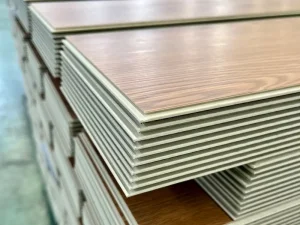
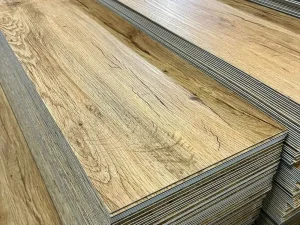
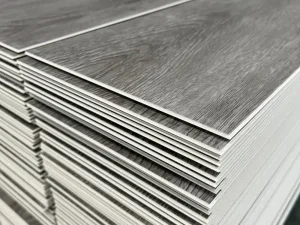
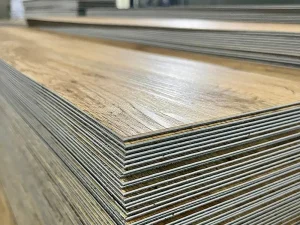
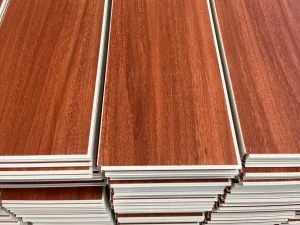
New Zealand's temperate maritime climate exposes subfloors to significant ambient humidity and seasonal moisture ingress. Traditional organic timber floorings frequently fail under standard NZBC Clause E3 guidelines. Engineered SPC (Stone Plastic Composite) rigid core vinyl and LVT (Luxury Vinyl Tile) deliver non-porous, hydrophobic surfaces that eliminate warping, cupping, and mold growth in wet zones like kitchens, bathrooms, and high-density apartments.
Circular Economy in Formwork (Timber Phase-Out)
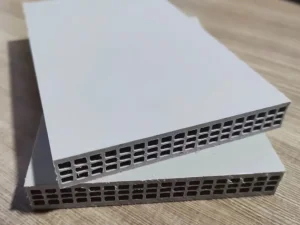
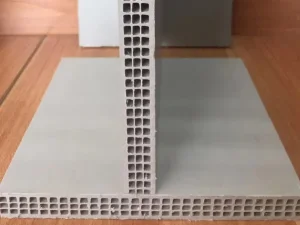
Traditional structural concrete casting relies heavily on single-use phenolic plywood formwork, creating massive waste sent to regional Kiwi landfills. Polypropylene (PP) hollow plastic formwork panels offer an innovative circular solution. Allowing over 60 to 100 pour cycles per sheet, PP formwork eliminates timber consumption, drastically reduces site carbon emissions, and aligns with the waste minimization criteria enforced by local councils across New Zealand.
Acoustic & Seismic Adaptability
Multi-story developments governed by the National Policy Statement on Urban Development (NPS-UD) mandate stringent impact sound insulation (IIC ratings). Modern Chinese SPC/LVT export configurations integrate pre-attached acoustic IXPE/EVA underlays that satisfy NZBC Clause G6. Furthermore, flexible vinyl and lightweight plastic shuttering panels perform exceptionally under seismic lateral shifts during concrete curing.
Export Material Specifications & Technical Matrix
Comprehensive engineering evaluation for New Zealand architects, structural engineers, and procurement directors.
To establish true Information Gain and Technical Authority, procurement managers must evaluate materials based on empirical performance indices rather than generic sales claims. Below is the direct physical engineering comparison between conventional Kiwi building standards and China's optimized export-grade materials.
| Performance Metric | Traditional Timber / Plywood Standard | China Export SPC Flooring (4mm-6mm) | China Export PP Hollow Formwork (18mm) |
|---|---|---|---|
| Moisture Absorption | High (Swells, delaminates) | 0.00% (100% Hydrophobic Core) | < 0.01% (Zero swelling under rain/sea breeze) |
| Dimensional Stability | Medium to Low (>0.35% expansion) | ≤ 0.10% (ISO 23999 compliant) | High Tensile Polymer Structure |
| Formaldehyde Emission | Varies (E1 to E2 classes) | E0 / FloorScore Certified (Zero VOC) | N/A (Inert Polymer Construction) |
| Service Life / Reusability | 1-3 years (Plywood: 3-5 reuses) | 15-25 Years Heavy Residential/Commercial | 60 to 100+ Pour Cycles per panel |
| Fire Safety Standard | Combustible (Requires treatment) | Bfl-s1 (EN 13501-1 / NZBC C3 Compliant) | Flame Retardant Custom Formulations Available |
| BPS / Biosecurity (MPI NZ) | Requires Timber Fumigation / Treatment | Exempt from Timber Pest Regulations | 100% Synthetic Plastic - Instant Customs Clearance |
End-to-End Localization & Compliance Service Framework
Bridging Chinese manufacturing velocity with strict New Zealand port entry and building site regulations.
1. China-NZ FTA Zero-Tariff Advantage
Leveraging the upgraded China-New Zealand Free Trade Agreement (NZ-CN FTA), imported plastic building products, SPC vinyl floorings, and hollow PP formwork enter New Zealand under preferential zero-duty tariffs. Our dedicated export documentation team provides accurate Certificates of Origin (Form N) to ensure seamless customs clearance at Port of Auckland, Port of Tauranga, and Lyttelton Port.
2. CodeMark & ISO Verification Support
Navigating the New Zealand Building Code requires rigorous batch testing data. We provide comprehensive independent laboratory test reports for slip resistance (AS/NZS 4586 Class P3/P4), sound insulation (ASTM E492/E989 IIC), and fire reaction (ISO 9239-1). Full mill test certificates (MTC) accompany every container shipment.
3. Biosecurity NZ (MPI) Clearance Efficiency
Unlike imported timber, untreated plywood, or bamboo products that are subject to strict Ministry for Primary Industries (MPI) quarantine holdtimes, fumigation costs, and brown marmorated stink bug (BMSB) seasonal restrictions, synthetic PP plastic formwork and SPC vinyl flooring are 100% exempt from timber pest fumigation, streamlining port turnaround.
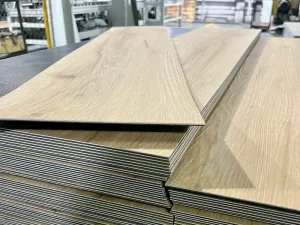
Complete Portfolio of China Hot Products Exported to New Zealand
Select your required product specification below to access direct manufacturer service and bulk pricing structures.
Material Innovation & Future Technical Roadmap (2025–2030)
Strategic technology developments poised to transform building efficiency across the South Pacific.
1. Next-Generation Nanotechnology Coatings for SPC Surfaces
Future iterations of our export SPC flooring line feature ceramic-bead infused UV coatings engineered with anti-microbial silver ion matrices. This technological enhancement addresses the heightened hygiene standards required in New Zealand healthcare, aged-care, and early childhood education facilities, offering superior scratch resistance (AC5 rating) and 99.9% surface bacterial inhibition.
2. Ultra-Lightweight Matrix Reinforcement in Hollow PP Formwork
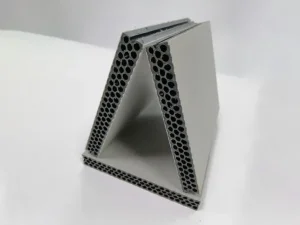
Through advanced gas-assisted co-extrusion technology, our R&D labs have optimized the internal honeycomb web structure of polypropylene panels. The resultant third-generation formwork achieves a 12% weight reduction while increasing flexural modulus by 18%. This allows Kiwi formwork carpenters to handle larger panel spans effortlessly on site, reducing crane overheads and accelerating floor pour schedules in high-rise Auckland projects.
3. Full Circular Recycling Loop & Carbon-Offset Credit Tracking
To support New Zealand's target of Net-Zero Carbon by 2050, our manufacturing plants are implementing direct closed-loop material recovery. Spent PP formwork panels used across NZ job sites can be crushed, re-pelletized, and fed back into secondary structural plastic extrusions, providing property developers with verifiable carbon offset documentation for Green Star NZ certification.
Frequently Asked Questions (FAQ) for New Zealand Importers
Addressing essential technical, logistical, and compliance inquiries from Kiwi trade buyers.
How do Chinese SPC and LVT floorings satisfy New Zealand Building Code (NZBC) Clause E3 for damp areas?
Under NZBC Clause E3 (Internal Moisture), floor surfaces in wet areas must prevent water penetration into underlying building elements. Our SPC flooring features a 100% waterproof stone-polymer core with a high-density, factory-molded click joint system. When installed using compliant perimeter sealant details, it forms an impermeable barrier that fully complies with E3.2 and E3.3 performance requirements without requiring secondary liquid membrane applications in residential sanitary rooms.
What is the typical transit lead time from Chinese manufacturing facilities to main New Zealand ports?
Direct ocean freight sailings from Shanghai, Ningbo, or Qingdao ports to Auckland and Tauranga generally require 14 to 20 days transit time. Deliveries to South Island ports (Lyttelton/Christchurch, Port Chalmers/Dunedin) take approximately 21 to 26 days. Factory order production lead times typically range from 7 to 15 days, allowing New Zealand distributors to maintain lean inventory cycles.
Why is Polypropylene (PP) hollow formwork superior to traditional marine plywood on NZ job sites?
Unlike wood plywood which absorbs rainwater, swells, delaminates, and degrades after 3 to 5 pours, PP hollow plastic formwork is completely impervious to moisture and UV exposure. It delivers over 60 to 100 concrete pour cycles, requires zero release oil (due to polypropylene's low surface energy), yields a smooth fair-face concrete finish, and eliminates expensive timber disposal fees across New Zealand councils.
Can we request customized wear layers, acoustic backings, and private-label packaging?
Yes. As an integrated manufacturer and exporter, we support OEM/ODM customization for New Zealand wholesalers and retail brand networks. You can select wear layer thicknesses from 0.3mm to 0.7mm, incorporate pre-attached IXPE/EVA acoustic underlays (1.0mm to 2.0mm), specify custom EIR (Embossed in Register) wood grain decors, and apply custom-printed brand cartons with local barcode integration.
Are these products subject to Ministry for Primary Industries (MPI) biosecurity inspections?
Synthetic vinyl flooring (SPC/LVT) and pure polypropylene hollow formwork panels contain no organic timber material. As non-wooden synthetic products, they bypass the costly fumigation, heat treatment, and specialized biosecurity quarantine procedures mandated for timber imports under MPI regulations, ensuring rapid port release.
Ready to Optimize Your New Zealand Supply Chain?
Partner directly with China's leading manufacturer of high-performance SPC/LVT flooring and reusable PP hollow concrete formwork. Get instant factory quotes, technical datasheets, and door-to-port logistics support.
Send Inquiry Now