
Australian Heavy-Duty Formwork & Subfloor Core Line
Premium grade 18mm polypropylene structural shuttering boards and high-durability resilient panels engineered for Australian build specs.
1. The Australian Construction Shift: Economic & Regulatory Drivers
Australia’s commercial infrastructure, high-density residential developments, and civil engineering projects across Sydney, Melbourne, Brisbane, and Perth are undergoing a major transition. Structural engineers, site managers, and Tier-1/Tier-2 head contractors face mounting pressures caused by rising site labor costs, strict environmental sustainability mandates (such as Green Star ratings enforced by the Green Building Council of Australia - GBCA), and the inherent performance limitations of traditional timber Formply.
Historically, hardwood plywood and F17 film-faced formwork dominated Australian concrete pours. However, traditional timber formwork suffers from progressive moisture absorption, delamination under wet coastal climate conditions, and rapid structural degradation—often limiting reuse counts to 3 to 8 pours before disposal. In an environment where skilled site carpentry labor rates in Australia hover between AUD $65 and $95 per hour, the downtime associated with frequent panel stripping, cleaning, oiling, and timber replacement significantly erodes project profit margins.
To meet the National Construction Code (NCC) requirements and adhere strictly to AS 3610.1:2010 (Formwork for Concrete), the Australian construction sector is aggressively turning toward engineered polymer matrix systems. High-density Polypropylene (PP) Hollow Plastic Formwork Panels have emerged as the premier technological solution. Combining high flexural strength, zero water absorption, and absolute resistance to concrete slurry chemicals, these panels redefine structural concrete framing efficiency across Australia’s diverse climate zones—from the freezing winter mornings of Victoria to the scorching heat and intense UV exposure of Western Australia and Queensland.
AS 3610 Integrity
Engineered to handle concrete lateral pressure ratings up to 60 kN/m², guaranteeing deflection compliance under heavy slab pours and vertical column vibratory loads.
Green Star Rating Boost
Made from 100% recyclable polyolefin polymers. Eliminates timber waste sent to Australian landfills and earns vital GBCA circular economy credits.
Unmatched TCO Savings
Achieves 60+ reuses per panel without face degradation, lowering the per-pour material amortization cost by up to 75% compared to F17 phenolic plywood.
2. Technical Architecture & Material Polymer Matrix
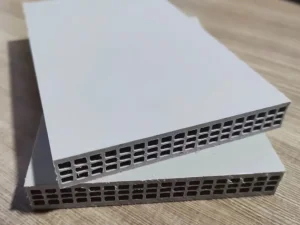
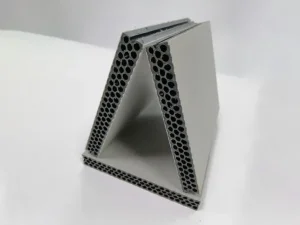
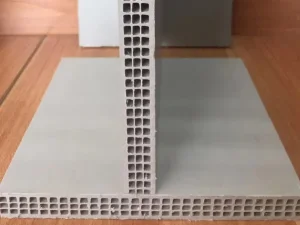
The performance superiority of our 18mm PP Hollow Plastic Formwork Panels lies in their advanced micro-structural engineering. Unlike solid plastic sheets which suffer from heavy weight and thermal sagging, or conventional PVC boards that become brittle under cold temperatures, our panels utilize a proprietary modified Polypropylene co-polymer matrix combined with a vertical double-tier honeycomb rib structure.
Polymer Matrix Chemistry
The raw material mix incorporates high-impact polypropylene resin infused with thermal stabilizers, anti-UV agents, and structural glass fibers. This chemical formulation ensures that the panel maintains structural modulus stability across extreme thermal ranges (-20°C to +85°C). In Australian outdoor summer conditions where surface temperatures on site can exceed 50°C, our panels retain their flexural rigidity without warping or expanding beyond specified tolerances.
Honeycomb Vertical Rib Design
The internal geometry consists of continuous vertical I-shaped ribs spaced engineered distances apart. This geometry provides high moment of inertia and bending stiffness while keeping panel weight to approximately 13.5 kg per standard sheet (1220 x 2440 x 18mm). Site workers can lift, position, cut, and fasten these panels easily without requiring crane assistance for individual board positioning, reducing ergonomic injury risks on site.
Comprehensive Material Performance Matrix
The table below highlights the performance metrics of PP Hollow Plastic Panels against traditional timber, steel, and aluminum shuttering solutions used in Australia.
| Performance Parameter | PP Hollow Plastic Panel | F17 Australian Plywood | Aluminum Formwork | Steel Shuttering |
|---|---|---|---|---|
| Average Reuse Cycles | 60 – 100+ Pours | 3 – 8 Pours | 150 – 300 Pours | 200+ Pours |
| Weight per m² (18mm) | ~4.5 – 5.0 kg/m² | ~10.5 kg/m² | ~22.0 kg/m² | ~45.0 kg/m² |
| Water Absorption Rate | 0.00% (Non-porous) | 15% – 35% (Swells) | 0.00% | 0.00% |
| Release Agent Requirement | Not Required (Self-demolding) | Mandatory Every Pour | Mandatory Every Pour | Mandatory Every Pour |
| Concrete Surface Finish | Class 2 / Smooth Off-Form | Class 3 / Variable | Class 2 / Architectural | Class 2 / Architectural |
| On-Site Workability (Cut/Nail) | Standard Wood Tools | Standard Wood Tools | Requires Special Sawing | Non-cuttable on site |
| Scrap Recyclability Value | 100% Recyclable Polymer | Zero (Landfill Expense) | High Scrap Value | Medium Scrap Value |
3. Global Procurement & Australian Enterprise Supply Chain Solutions
For Australian commercial builders, national formwork hire agencies, and building material distributors, establishing a resilient international supply chain is vital. Greenstar New Materials provides a fully integrated OEM/ODM manufacturing pipeline tailored specifically to Australian market specifications.
Dimensional Precision & Tolerances
Our automated extruders produce panels adhering to millimeter-accurate tolerances. Standard Australian dimensions—such as 18mm thickness with 1220 x 2440mm, 18mm x 1200 x 2400mm, and custom project-specific lengths—are continuously monitored via laser scanning technology during manufacturing. Edge squareness, surface parallelism, and wall thickness uniformity are kept strictly within ±0.3mm tolerances to eliminate grout leakage during concrete vibration.
Container Loading & Logistics Optimization
Recognizing the sea freight costs from international manufacturing hubs to major Australian ports (Fremantle, Melbourne, Port Botany, Sydney, and Brisbane), our packing methodology maximizes cube utilization. Panels are strapped onto heat-treated ISPM-15 compliant wooden pallets or recyclable plastic bases, wrapped in heavy-duty weatherproof shrink film, and fitted with edge protectors. A standard 40ft High Cube (HQ) container accommodates up to 400–420 sheets of 18mm formwork panels, drastically reducing freight cost per unit.
Step 1: Specification Audit
Evaluation of structural loading requirements, slab thickness, wall heights, and desired AS 3610 finish class.
Step 2: Sample Validation
Direct delivery of test samples to Australian sites for nail pullout, flexural, and release testing.
Step 3: Quality Controlled Run
Continuous extrusion with online ultrasonic thickness monitoring and raw material batch tracking.
Step 4: Port-Direct Delivery
Streamlined clearance and logistics coordination directly to Australian distribution yards or job sites.
Ready to Upgrade Your Formwork Fleet in Australia?
Request our comprehensive technical datasheet, AS 3610 test documentation, and wholesale FOB/CIF pricing for major Australian ports.
Send Inquiry Now4. Australian Job-Site Handling & Installation Protocol
To maximize panel longevity and achieve off-form architectural concrete finishes, site crews should follow standardized handling protocols tailored to hollow PP panels.
Cutting, Drilling, and Fastening
PP Hollow Plastic Formwork Panels work just like timber. Standard circular saws, table saws, and hand tools achieve clean, burr-free edges when using carbide-tipped blades (60+ teeth recommended). Conventional steel nails, wood screws, or formwork tie-rod systems can be used without pre-drilling. Thanks to the tough polymer matrix, nails hold tightly without tearing or splitting board edges during dismantling.
Stripping and Demolding Operations
Because polypropylene has low surface energy, concrete does not bond to the board surface. Chemical release agents or form oils are completely unnecessary for standard pours. Once the concrete reaches design stripping strength (typically 15–25 MPa under Australian standards), formwork striking can proceed rapidly using standard pry bars. The panels separate effortlessly, leaving a smooth surface with minimum residue, requiring only a light water spray clean prior to the next pour.
Storage & UV Protection
Although infused with UV stabilizers, panels stored long-term in Australian regional depots should be stacked flat on timber dunnage to avoid permanent curvature and covered with light-colored tarpaulins during months of intense direct sun exposure.
5. Innovation Roadmap: Smart Formwork & Circular Economy
As the global construction sector marches toward Net-Zero carbon goals, Greenstar New Materials is leading technological innovation in reusable polymer construction supplies.
Closed-Loop Recycling Network
At the end of their operational lifecycle (after 60+ to 100 uses), damaged or worn PP panels do not go to landfills. They are 100% recyclable. Through our Australian distributor buy-back initiatives, discarded panels can be granulated, re-melted, and re-extruded into non-structural plastic pallets, spacers, or secondary grade core panels, eliminating construction waste fees.
AI-Optimized Structural Rib Geometry
Our R&D center is leveraging finite element analysis (FEA) and generative AI modeling to engineer next-generation rib geometries. By strategically varying wall thicknesses across high-stress zones, upcoming panel iterations will achieve a further 12% reduction in panel weight while boosting flexural modulus by 18%, simplifying high-rise deck handling.
Frequently Asked Questions (FAQ)
Clear, technical answers to common queries raised by Australian structural engineers, buyers, and site supervisors.
Complete Formwork & Resilient Interior Solutions Catalog
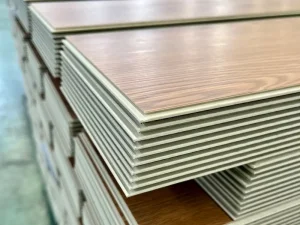
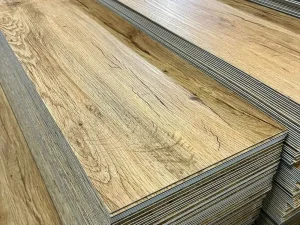
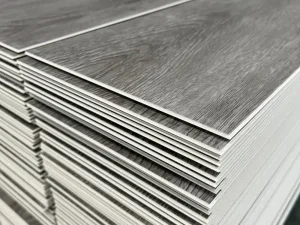
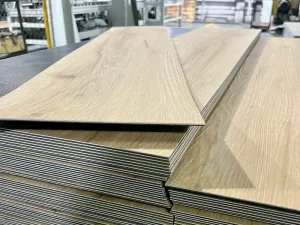
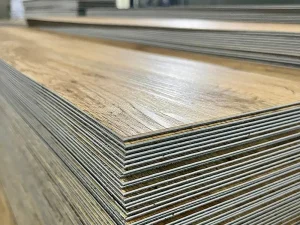
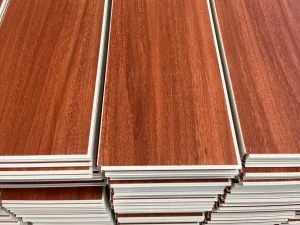
Explore our full range of certified concrete formwork boards, SPC rigid core planks, and commercial vinyl tiles exported to Australia.
Partner with Australia's Trusted Hollow Plastic Formwork Supplier
Get in touch with our engineering support team for volume pricing, wholesale container quotes, factory audit reports, and direct sample shipments to your Australian office or site.
Send Inquiry Now