
Thailand-Grade Standard PP Formwork Systems
Precision-extruded polypropylene panels optimized for Thailand construction standards, featuring high thermal stability and 60–100+ structural reuse cycles.
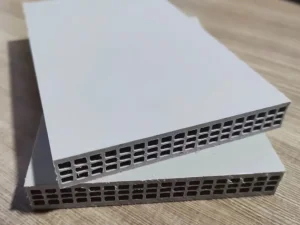
Bangkok High-Rise Standard 18mm PP Slab Formwork Panel Exporters
View Product Specs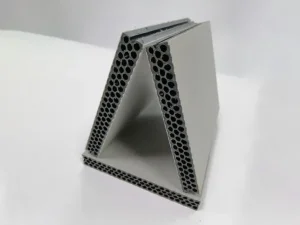
EEC Project Heavy-Duty Reusable Concrete Shuttering Formwork Supplier
View Product Specs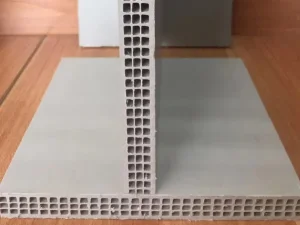
Tropical Grade China 18mm Hollow Plastic Panel for Thailand Structural Concrete
View Product Specs
Thailand Commercial Building Project 18mm Structural PP Formwork Board
View Product SpecsThailand’s Industrial & Infrastructure Expansion: The Structural Formwork Revolution
Thailand’s construction sector is undergoing a profound transformation driven by large-scale public infrastructure initiatives, the development of the Eastern Economic Corridor (EEC) spanning Chachoengsao, Chonburi, and Rayong, and an escalating demand for high-density vertical residential structures across Greater Bangkok. As main contractors, structural engineers, and property developers accelerate execution timelines to meet tight deadlines, traditional construction materials—specifically marine plywood and film-faced timber formwork—have encountered severe performance bottlenecks.
In tropical climates like Thailand, characterized by annual relative humidity exceeding 85%, torrential monsoon cycles, and prolonged ambient temperatures reaching 38°C to 42°C, wood-based formwork suffers rapid degradation. Delamination, water swelling, warping, and organic decay severely limit plywood shuttering to a mere 3 to 5 reuses before total structural failure. This limitation creates excessive material wastage, elevates labor overheads due to constant formwork repair, and drives up project carbon footprints.
To address these systemic inefficiencies, wholesale **Polypropylene (PP) Hollow Plastic Formwork Panels** have emerged as the definitive modern replacement. Engineered via advanced co-extrusion technology using high-density polypropylene copolymer resins reinforced with nano-calcium carbonate and UV stabilizers, PP hollow panels deliver 100% waterproof performance, non-stick smooth demolding properties, and an extraordinary service lifespan exceeding **60 to 100 reuse cycles** under rigorous job-site conditions in Thailand.
Key Driving Factors in the Thai Construction Sector
The rapid transition from traditional plywood to wholesale plastic shuttering across Thai building sites is powered by three major economic and operational catalysts:
- EIA & Green Building Certifications: Thai developers aiming for TREES (Thai's Rating of Energy and Environmental Sustainability) and LEED compliance are mandated to reduce timber usage and job-site construction waste. PP plastic formwork is 100% recyclable, eliminating timber consumption.
- Escalating Thai Labor Costs: Skilled carpenters in Bangkok and Eastern Seaboard zones are costly. PP hollow panels are lightweight (approx. 13.5 kg for a standard 1220x2440x18mm sheet), enabling fast manual handling, quick stripping, and zero requirement for chemical mold release oils.
- Superior Fair-Faced Concrete Finish: The mirror-smooth hydrophobic surface of hollow plastic formwork yields smooth, fair-faced concrete surfaces, eliminating the need for thick secondary plastering or mortar skimming across shear walls and ceilings.
Comparative Engineering Analysis: Polypropylene vs. Traditional Shuttering
A rigorous empirical evaluation comparing PP Hollow Plastic Formwork against Marine Plywood and Aluminum Formwork under high-temperature tropical job-site conditions in Thailand.
| Performance Parameter | PP Hollow Plastic Panel (18mm) | Marine Plywood / Film-Faced | Aluminum Formwork System |
|---|---|---|---|
| Average Reuse Cycles | 60 – 100+ Times | 3 – 5 Times | 200 – 300 Times |
| Water Absorption Rate | 0.00% (100% Impermeable) | 15.0% – 28.0% (Swells/Warps) | 0.00% |
| Unit Weight (1220x2440x18mm) | ~13.5 kg / sheet (Lightweight) | ~22.0 – 26.0 kg / sheet | Very Heavy (Requires Crane/System) |
| Chemical Release Agent | Not Required (Self-Stripping) | Mandatory Every Pour | Mandatory Every Pour |
| Workability (Nail/Cut/Saw) | Excellent (Standard Tools) | Good (Splinters Easily) | Impossible On-Site |
| Weather & UV Endurance | -20°C to +75°C Stable | Delaminates in Monsoons | Oxidizes without maintenance |
| Recyclability & Scrap Value | 100% Recyclable (Buy-Back Value) | Zero (Burned/Landfilled) | High Metal Scrap Value |
| Cost Per Concrete Pour (THB) | Lowest (Approx. 12-18 THB/m²) | High (Approx. 85-110 THB/m²) | High Initial Capital Outlay |
Information Gain: Quantitative Financial Return (ROI) for Thai Contractors
When calculating the total operational expenditure (OPEX) across a standard 30-story residential condominium project in Sukhumvit, Bangkok (requiring approximately 20,000 m² of concrete shuttering contact area):
Using 18mm marine plywood requires purchasing fresh timber shuttering boards every 4 floors due to moisture warping and edge splitting, incurring a total material cost exceeding 3.2 Million Thai Baht (THB) along with high disposal fees. Conversely, implementing **wholesale PP hollow plastic formwork panels** allows contractor teams to complete the entire 30-story tower using just a single allocation of panels, reducing material costs to approximately 1.1 Million THB. This results in an immediate 65.6% direct material savings, excluding additional savings from reduced crane hoisting time, lower plastering labor, and complete elimination of chemical mold oils.
Advanced Polymer Science & Micro-Cellular Technology Roadmap
Discover the structural engineering innovations integrated into our next-generation polypropylene formwork manufactured for extreme climatic conditions.
Tri-Rib Micro-Cellular Core
Features an internal triangular hollow rib matrix that distributes hydraulic concrete pressure evenly. Provides superior flexural modulus while reducing panel mass by 35% compared to solid plastic boards.
Tropical Zone UV Stabilization
Formulated with specialized anti-UV masterbatches and hindered amine light stabilizers (HALS). Prevents polymer chain degradation, brittleness, and thermal discoloration under intense Thai solar radiation.
Hydrophobic Surface Physics
A zero-porosity surface design yields a water contact angle >105°. Cement slurry cannot adhere, allowing effortless demolding by hand without damaging concrete corners or structural edges.
R&D Engineering Roadmap (2025–2030)
Our dedicated 3,000m² material research institute in Shuyang, Jiangsu continuously advances PP formwork capabilities to serve evolving global building codes:
- Phase 1 (Current Generation): Nano-CaCO3 reinforced polypropylene copolymer with a thermal expansion coefficient optimized for tropical delta zones (<0.08 mm/m°C).
- Phase 2 (Smart Formwork Integration): Incorporation of embedded RFID tracking chips inside panel edge structures, allowing large construction enterprises in Bangkok to digitally log pour cycles, stock inventory, and maintenance history.
- Phase 3 (Closed-Loop Circular Buy-Back): Establishing regional plastic recycling hubs in Laem Chabang and Rayong to collect retired panels, re-pelletize the high-purity PP matrix, and produce 100% recycled structural panels with zero degradation in mechanical load capacity.
Localized Structural Application Scenarios in Thailand
From Bangkok metro extensions to Eastern Seaboard mega-factories, see how PP hollow plastic shuttering delivers superior structural results.
High-Rise Condominiums & Commercial Towers (Bangkok)
High-density urban cores require rapid, floor-by-floor structural casting cycles. Standard 18mm PP hollow panels are extensively specified for post-tensioned floor slabs, lift cores, shear walls, and perimeter beams. The smooth surface finish allows direct painting or tiling, eliminating thick sand-cement rendering and reducing total building dead loads.
EEC Industrial Warehouses & Logistics Hubs (Chonburi & Rayong)
Large-span industrial facilities require expansive foundation footings, retainment walls, and heavy concrete columns. PP plastic formwork panels can be easily sawed, nailed, and spliced on-site using conventional woodworking tools, providing contractor crews with flexibility to construct custom column sizes and underground drainage culverts.
Coastal & Infrastructure Civil Engineering (Southern Thailand & Ports)
Coastal bridge piers, deep sea port retaining walls, and flood barriers in marine environments expose shuttering to aggressive saltwater and elevated alkali concrete mixes. Polypropylene is completely inert to chemical corrosion, acid-alkali attack, and chloride exposure, ensuring consistent panel integrity over dozens of saltwater contact cycles.
Eco-Resort & Island Developments (Phuket, Koh Samui & Krabi)
Transporting heavy timber or steel shuttering to island construction sites incurs high marine freight costs. Lightweight PP panels significantly reduce shipping volume and transport fees. Furthermore, zero chemical releasing agents are required, preventing oil leaching into fragile coastal soil and marine ecosystems.
China Direct Factory Supply Chain & Seamless Logistics to Thailand
As a vertically integrated manufacturer based in Shuyang, Jiangsu Province, China, Greenstar New Materials Shuyang Co., Ltd. operates 8 high-speed automated extrusion lines dedicated strictly to polypropylene hollow formwork production. By controlling raw polymer sourcing, melt-flow indexing, co-extrusion calibration, and quality control under one roof, we guarantee unmatched dimensional accuracy and material purity.
For engineering firms, building material importers, and main contractors across Thailand, our direct factory-to-site export mechanism delivers significant supply chain advantages:
7 to 10 Days Sea Transit
Direct maritime shipping routes from Shanghai / Ningbo ports to Laem Chabang Port or Bangkok Klong Toey Port ensure rapid container delivery, preventing site delays.
High Production Capacity
Daily production exceeding 3,000 sheets allows us to fulfill multi-container wholesale orders within 7 to 15 business days, accommodating sudden site requirement surges.
OEM & Custom Sizes
While standard 1220x2440mm (4x8 ft) in 15mm and 18mm thicknesses represent our main production, custom panel lengths up to 6000mm can be extruded to order.
Quality Testing Standards & Localized Compliance Assurance
To guarantee structural reliability across heavy commercial pours, every batch of PP hollow plastic formwork undergoes rigorous mechanical laboratory testing prior to export bundling. Our products meet or exceed international testing benchmarks aligned with Thai Industrial Standards Institute (TIS) expectations and international ASTM protocols:
- Flexural Modulus & Load Capacity (ASTM D790): Withstands concrete pressure exceeding 60 kN/m² without permanent structural deformation or core collapsing.
- Shore D Surface Hardness (ASTM D2240): Rating above 70 Shore D, ensuring extreme resistance to heavy steel rebar abrasion, boot impact, and vibrating poker strikes.
- Heat Deflection Temperature (HDT - ASTM D648): Maintains rigidity under direct sunlight exposures up to 85°C without softening or thermal bowing.
- Alkali & Chemical Resistance (ISO 175): Zero degradation when exposed to saturated calcium hydroxide solutions representative of high-alkali hydration in fresh concrete.
Frequently Asked Questions by Thai Engineering Teams & Importers
Expert answers addressing practical field questions, procurement details, and structural performance criteria.
How does PP hollow plastic formwork handle Thailand’s intense heat and monsoon rain?
Our PP hollow formwork is specifically formulated with anti-UV masterbatches and heat-stabilizing additives designed for Tropical Zone climates. Polypropylene has a 0.00% water absorption rate, meaning torrential monsoon rain will never cause swelling, delamination, or weight increase. Under high heat (up to 40°C ambient in Thai summers), the micro-cellular internal rib matrix prevents wave-like thermal expansion when properly nailed to secondary timber or steel battens.
Can standard woodworking tools, nails, and saws be used on plastic shuttering?
Yes, absolutely. PP hollow panels can be sawn, nailed, drilled, routed, and planed using standard circular saws and carpentry equipment already present on Thai job sites. The material holds nails with high pull-out resistance and does not split or splinter along edges during cutting.
Is chemical mold release oil necessary before pouring concrete?
No release agent is required. Polypropylene is inherently hydrophobic and non-adhesive to cement paste. Once the concrete cures, panels effortlessly strip away from the concrete surface by hand, significantly cutting site material costs, labor hours, and environmental contamination.
How many reuses can a contractor realistically achieve in high-rise building projects?
Under standard construction practices (proper clearing, gentle stripping, and standard batten spacing of 200–250mm for 18mm panels), contractors typically achieve 60 to 80 reuses for slab shuttering and up to 100+ reuses for vertical wall and column applications.
What is the typical shipping time and port of entry for orders bound for Thailand?
Orders are dispatched from our factory near Ningbo/Shanghai ports. Sea freight transit time to Laem Chabang Port or Bangkok Port (Klong Toey) is usually between 7 to 10 calendar days. Total lead time, including factory extrusion and container stuffing, ranges from 12 to 18 days.
Do you offer damaged panel recycling or buy-back options in Thailand?
Because our formwork is constructed from 100% pure polypropylene copolymer, retired or scrap pieces can be sold directly to local Thai plastic recyclers at high scrap values, or recycled back through our regional partner network to support zero-landfill construction goals.
Full Range Formwork & Architectural Surface Solutions
Explore our complete export collection for Thailand, including structural PP formwork systems and resilient architectural flooring solutions.
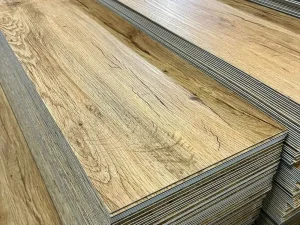
High-Quality Waterproof Plastic Vinyl LVT Glue Down Flooring Exporters
View Details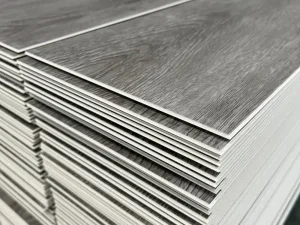
Thailand Modern Resort SPC Rigid Vinyl Plank Wood Grain Indoor Flooring
View Details
Wholesale Reusable Plastic Concrete Shuttering Formwork for Building Projects
View Details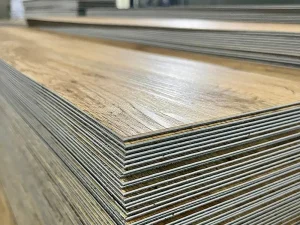
High-Quality Self-Adhesive Vinyl Tiles PVC LVT Plank Flooring Exporter
View Details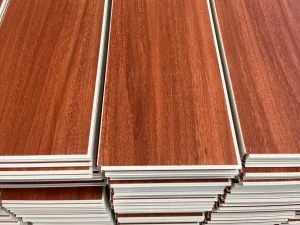
High-Quality Waterproof SPC Vinyl Plastic Flooring for Thailand Indoor Projects
View Details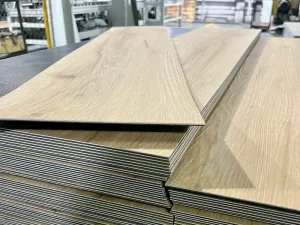
High-Quality LVT SPC Luxury Vinyl Tile Flooring Exporters & Technical Service
View Details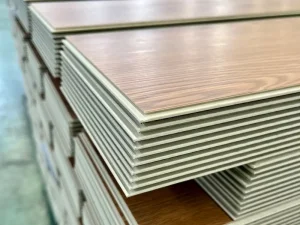
Waterproof SPC Flooring 4mm Marble & Wood Colors for Thailand Luxury Interiors
View Details
Wholesale PP Plastic Slab Concrete Hollow Formwork 18mm Exporters & Service
View DetailsAccelerate Your Construction Efficiency in Thailand
Request technical specification sheets, factory-direct container pricing, and free sample boxes delivered to Bangkok or regional engineering offices within 3-5 business days.
Send Inquiry Now