
Flagship Shuttering & Interior Solutions for Japan
Precision-engineered polymer building systems designed to replace legacy plywood in high-density urban developments across Tokyo, Osaka, and Nagoya.
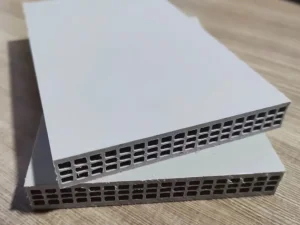
Japan Standard 18mm PP Plastic Slab Concrete Hollow Formwork Panel
View Product Specs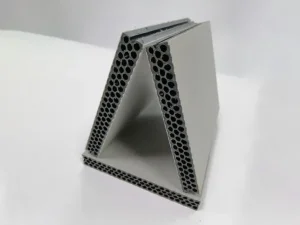
High-Cycle Reusable Plastic Concrete Shuttering Formwork for Construction
View Product Specs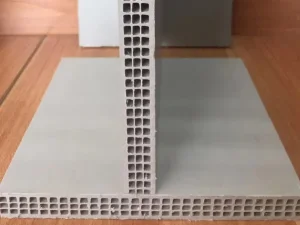
China Heavy-Duty PP Hollow Plastic Formwork Panel 18mm for Concrete
View Product Specs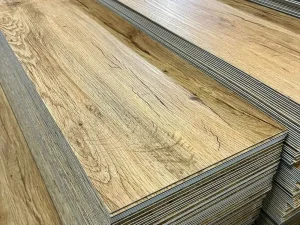
Waterproof Plastic Vinyl LVT Glue Down Flooring for Japanese Commercial Interiors
View Product SpecsThe Japanese Construction Paradigm: Navigating Labor Shortages, ZEB Mandates, & Formwork Evolution
Why Japan's General Contractors (Zenecons) Are Transitioning from Traditional Tropical Plywood (Kapan) to Advanced Polypropylene Matrix Panels.
The Japanese construction industry is currently experiencing a historic structural transformation. Driven by stringent environmental directives from the Ministry of Land, Infrastructure, Transport and Tourism (MLIT / 国土交通省), severe demographic shifts, and the enforcement of the 2024 Work Style Reform Law (*Hatarakikata Kaikaku*), general contractors (*Zenecons* / ゼネコン) such as Kajima, Obayashi, Taisei, Shimizu, and Takenaka are urgently revising their procurement frameworks. The long-standing reliance on single-use tropical hardwood plywood formwork (*Kapan*) imported from Southeast Asia is no longer economically or environmentally viable.
1. The Demographics of Construction: Overcoming the "Kenten" Aging Labor Force
Japan faces an unprecedented shortage of skilled shuttering carpenters (*Kentaishi* / 型枠工). Over 36% of registered formwork specialists in Japan are above 60 years old, with fewer young apprentices entering the trades. Traditional plywood formwork requires intensive manual cutting, measuring, oiling, and heavy lifting, placing extreme physical stress on job sites. PP Hollow Plastic Formwork Panels mitigate this critical operational bottleneck:
- Ultra-Lightweight Ergonomics: Polypropylene hollow structure reduces panel weight by up to 30% compared to equivalent 18mm damp plywood, allowing a single worker to manipulate and erect large-format sheets without crane assistance.
- Release Agent Elimination: The non-polar molecular structure of modified polypropylene prevents concrete adhesion. Workers completely eliminate the time-consuming process of chemical release agent (form oil) spraying, reducing site chemical exposure and labor hours by 40%.
- Nail-Holding & Sawing Versatility: Designed to fit Japanese standard *Shaku* grid dimensions (3x6 ft / 910x1820mm and 4x8 ft / 1220x2440mm), panels can be cut, drilled, and nailed using standard woodworking power tools already present on Japanese job sites.
2. Carbon Neutrality & The "Zero Emission Building" (ZEB) Mandate
Under Japan's Green Growth Strategy for 2050, MLIT has enforced rigorous Scope 3 embodied carbon accounting across all major commercial and civil engineering tenders. Tropical timber deforestation associated with legacy *Kapan* formwork incurs severe penalty scores under the *Sogo Evaluation System* (Comprehensive Evaluation Award System for Public Works). Modern PP hollow panels provide an unmatched Information Gain metric in ESG compliance:
ESG & Lifecycle Footprint Superiority
While tropical plywood yields only 3 to 5 reuses before splintering, warping, and ending up in industrial incinerators, high-density PP hollow panels easily achieve over 50 to 100 reuse cycles under standard job-site handling. Upon ultimate retirement, 100% of the PP plastic material is re-granulated into raw polymer pellets for industrial re-manufacture, closing the circular construction loop completely.
3. Extreme Seismic & Climatic Resilience (Hokkaido to Okinawa)
Japanese concrete specifications require exceptionally tight dimensional tolerances to withstand high seismic shear dynamics (Earthquake Resilient Reinforced Concrete Design). Furthermore, Japan experiences vast climate fluctuations—from sub-zero freezing snow in Hokkaido to oppressive humidity and heavy typhoons in Kyushu. Timber formwork absorbs up to 20% water content under rain, leading to severe swelling, delamination, and structural bowing during concrete pour. Greenstar's PP Hollow Plastic Panels feature zero water absorption (0.00%), ensuring absolute structural stability regardless of torrential weather or standing rainwater.
Material Engineering Performance Matrix
Quantitative analysis evaluating Hollow PP Plastic Formwork against conventional Japanese architectural shuttering substrates.
| Performance Metric | PP Hollow Plastic Panel (Greenstar) | Japanese Plywood (Kapan 18mm) | Aluminum System Formwork | Steel Shuttering Board |
|---|---|---|---|---|
| Average Reuse Cycles | 50 – 100+ Times | 3 – 5 Times | 150 – 300 Times | 100 – 200 Times |
| Water Absorption Rate | 0.00% (Absolute Zero) | 15% – 25% (High Swelling) | 0.00% | 0.00% |
| Thermal Expansion Control | Modified Anti-UV (-20°C to +90°C) | Stable (Swells with moisture) | High Thermal Conductivity | High Thermal Expansion |
| Weight (kg/m² @ 18mm) | Approx. 8.0 – 9.5 kg | Approx. 11.5 – 13.0 kg | Approx. 18.0 – 22.0 kg | Approx. 25.0 – 35.0 kg |
| Demolding Oil Requirement | None Required (Self-Releasing) | Mandatory (Chemical Oil) | Mandatory (Chemical Oil) | Mandatory (Oil/Wax) |
| Concrete Surface Quality | Mirror / Fair-Faced Concrete Finish | Rough, Grain Transfer | Smooth with Seam Lines | Smooth, Risk of Rust Stains |
| Recyclability at End-of-Life | 100% Thermoplastic Melting | 0% (Incineration / Landfill) | 100% Scrap Metal | 100% Scrap Metal |
| On-Site Workability (Cut/Nail) | Excellent (Standard Tools) | Excellent (Standard Tools) | Poor (Requires Factory Mod) | Poor (Requires Welding/Cutting) |
Advanced High-Density Polypropylene Structural Architecture
Discover the proprietary chemical formulation and mechanical rib matrix that power our export-grade shuttering boards.
Proprietary Hollow Rib Core Structure
Engineered with an internal I-beam cellular rib geometry that distributes high hydrostatic concrete load evenly across the panel surface. Prevents sagging, deflection, or blowouts during high-frequency vibration consolidation.
Alkaline & Chemical Passivation
Concrete slush possesses high alkaline levels (pH 12-13). Greenstar’s modified polypropylene matrix is completely inert to chemical attack, calcium hydroxide reactions, and industrial additives, guaranteeing non-degrading surface integrity.
Nano-Composite UV Stabilization
Compounded with specialized Hindered Amine Light Stabilizers (HALS) and carbon-black nano-additives. Panels withstand intense UV exposure on open Japanese job sites without embrittlement or thermal distortion up to 90°C.
Localized Applications in Japanese Civil & Commercial Construction
From High-Rise RC Towers in Tokyo to Subsea Caissons and Shinkansen Retaining Walls.
1. High-Rise Urban RC Residential Towers (Mansion Construction)
Urban high-density housing projects in Tokyo, Yokohama, and Osaka demand pristine exposed concrete (*Katawaku Finish* / 打放しコンクリート). Greenstar PP hollow formwork delivers flawless, mirror-smooth concrete surfaces straight after stripping, completely eliminating the need for expensive secondary plastering or rendering labor.
2. Shinkansen Bullet Train Viaducts & Underground Infrastructure
In heavy civil engineering works managed under JR East/West specifications, structural durability is non-negotiable. PP panels are widely applied in casting curved tunnel linings, bridge piers, and retaining walls where continuous concrete hydration is critical. Zero water absorption ensures concrete retains its optimal water-cement ratio for maximum compressive megapascal (MPa) strength.
3. Precast Concrete (PCa) Manufacturing Plants
Japanese PCa factories require formwork that withstands accelerated steam curing at elevated temperatures. Our thermal-stabilized hollow PP boards maintain structural flatness under automated steam curing cycles, allowing precast elements to be demolded rapidly with pinpoint millimeter accuracy.
4. Coastal Retaining Sea-Walls & Port Infrastructure
Working in maritime environments across coastal Japan exposes shuttering materials to aggressive salt fog and high humidity. Unlike steel formwork which rusts rapidly or plywood which rots upon saltwater saturation, PP plastic is immune to marine salinity and corrosive tidal zones.
Strict Alignment with JIS Standards & Japanese General Contractor Requirements
Ensuring Full Regulatory Assurance for Procurement Officers and General Import Traders.
Exporting construction materials to Japan demands rigorous compliance with Japanese Industrial Standards (JIS). Greenstar operates an in-house 3,000㎡ R&D and Quality Assurance Testing Facility adhering strictly to international ISO 9001, ISO 14001, and relevant Japanese testing criteria:
- Flexural Strength & Elastic Modulus Test (JIS A 1408 equivalent): Evaluates beam load deflection under heavy concrete pouring pressure. Panels exhibit superior elastic recovery, returning to flat orientation even after max loading limits.
- Dimensional Precision & Flatness Tolerance: Manufactured under ultra-precise extrusion lines, ensuring diagonal length variance within ±1.0mm and thickness tolerance within ±0.2mm for seamless panel butt-joining.
- Construction Waste Recycling Compliance (建設リサイクル法): Meets all regional Japanese environmental guidelines regarding zero toxic off-gassing, heavy metal compliance (RoHS certified), and ease of site scrap segregation.
Technical Roadmap & Next-Generation Formwork Innovation (2025–2030)
Advancing Circular Polymer Science and Smart Construction Integration for Japan's Future Skyline.
IoT Sensor-Integrated Panels
Development of embedded micro-RFID and thermal curing sensors within the PP hollow channels to give site managers real-time concrete maturity and hydration data directly to BIM models.
Bio-Based Polypropylene Matrices
Pioneering second-generation bio-attributed PP resins derived from organic waste oils, reducing raw polymer carbon footprints by an additional 65% for ultra-green ZEB tenders.
Standardized Modular Fastening Systems
Introducing quick-clamp locking interfaces engineered specifically for Japanese scaffold tube and tie-rod systems (*Formwork Tie Rod 12mm / 15mm*), eliminating custom timber batten backing.
Extensive Range of Formwork & Resilient Flooring for Overseas Markets
Explore our full catalog of export-ready PP hollow panels, rigid core SPC flooring, and acoustic LVT solutions.
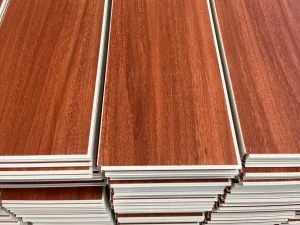
Waterproof SPC Vinyl Rigid Core Flooring for Commercial & Residential Interiors
View Product Specs
Wholesale PP Plastic Slab Concrete Hollow Formwork 18mm Exporters & Service
View Product Specs
China PP Hollow Plastic Formwork Panel 18mm for Heavy Concrete Pouring
View Product Specs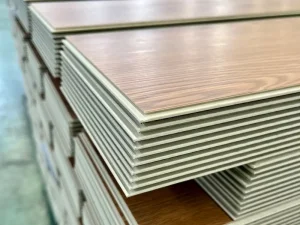
High-Quality Waterproof SPC Flooring 4mm in Natural Marble & Wood Aesthetics
View Product Specs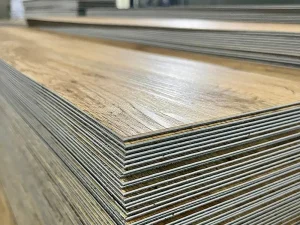
Self-Adhesive Vinyl Tiles PVC LVT Plank Flooring for Quick Renovations
View Product Specs
Wholesale Reusable Plastic Concrete Shuttering Formwork for Building Projects
View Product Specs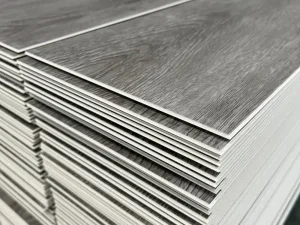
SPC Rigid Vinyl Plank with Japanese Wood Grain Design for Indoor Flooring
View Product Specs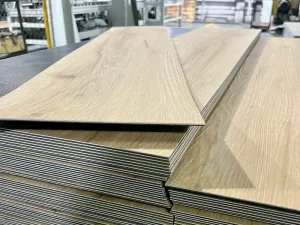
Commercial Grade LVT / SPC Luxury Vinyl Tile Flooring Exporter Service
View Product SpecsFrequently Asked Questions for Japan Procurement & Engineering Teams
In-depth responses covering technical compliance, lifecycle economics, and direct factory container logistics.
Ready to Upgrade Your Formwork Supply Chain in Japan?
Partner directly with Greenstar New Materials Shuyang Co., Ltd. for factory-direct wholesale pricing, OEM custom sizing, and rapid sample delivery.
Send Inquiry Now